

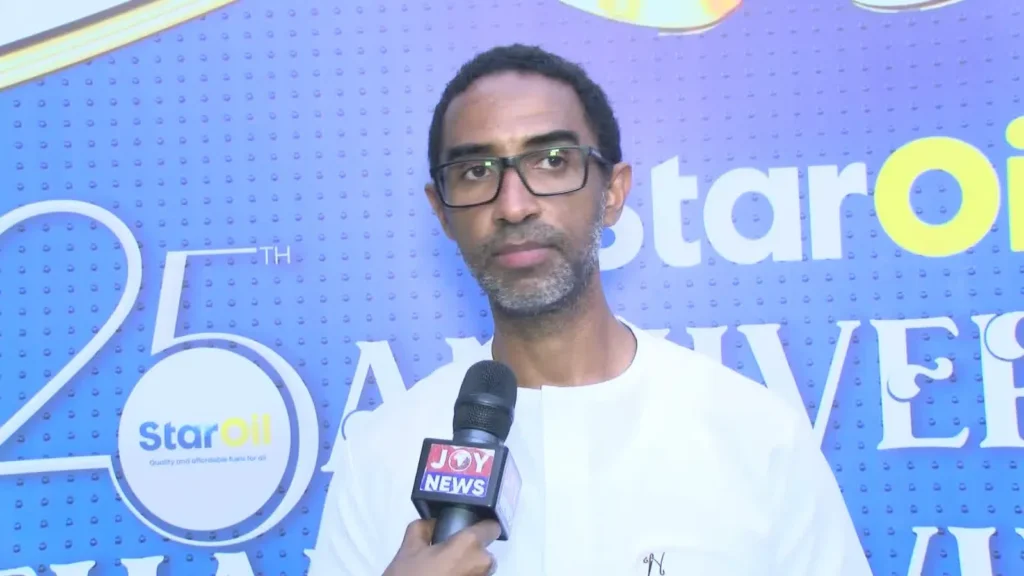
Star Oil’s Chief Executive Officer Philip Tieku has said building direct customer trust through social media, rather than relying on traditional advertising, has been the single biggest driver of the company’s growth relative to competitors who sell fuel at similarly competitive prices, telling participants at SYPALA 2026 that indifference is the least profitable outcome a brand can produce.
Speaking in Accra, the chief executive said Star Oil could have implemented every internal automation and welfare reform the company pursued and still failed to grow meaningfully without a deliberate strategy to engage customers directly and confront misconceptions the market’s larger players had cultivated over years.
Star Oil’s customer strategy began with something the chief executive described as simple but powerful in marketing terms: giving its customer base a name.
The “Star Savers” identity, the chief executive said, has created a sense of community around the brand, tapping into a broader human tendency to want to belong to a shared, positive story rather than simply purchasing a commodity product.

The chief executive said that approach helped distinguish Star Oil in a market where established multinational players and a dominant state-owned entity had long benefited from strong customer goodwill.
This has positioned Star Oil, a company with what the chief executive called significant baggage from its own history since 1998, as needing to build trust from a considerably weaker starting position.
Confronting the Quality Narrative Head-On
The chief executive said established competitors had, over years of marketing and advertising, cultivated a perception among Ghanaian consumers that fuel sold outside the major multinational brands was inferior or doubtful, sometimes suggesting their own products used superior technology unavailable elsewhere.

Selling fuel at affordable prices alone was not enough to overcome that perception. “You have no choice but to confront that narrative,” the chief executive said, arguing that failing to do so directly would leave customers suspicious regardless of how competitively a company priced its product.
Star Oil built an active social media campaign specifically to challenge that narrative, a strategy the executive said the company has pursued more aggressively than its competitors appear willing to match.
“I do not believe so much in the power of the traditional media anymore,” the chief executive said, arguing that customers now engage directly with information about fuel products through their phones, making platforms like Facebook a far more effective channel for education and market penetration than conventional advertising.
The chief executive acknowledged this approach put Star Oil at odds with established players, given that the campaign was effectively challenging assumptions those competitors had spent years building. “You are about to take the cheese off their table,” the executive said.

Taking On the RON91 Versus RON95 Debate
Among the specific narratives Star Oil targeted was the industry’s framing of fuel octane grades.
The chief executive said that in the years before Star Oil entered the conversation, the wider market had left the topic largely unaddressed, allowing a narrative to take hold that RON95 fuel was categorically superior for vehicles and that RON91, the grade Star Oil sold, amounted to short-changing consumers.
At the time, the chief executive noted, established competitors marketed RON95 prominently while continuing to sell RON91 alongside it, a detail Star Oil says its own market education efforts brought to public attention.
The chief executive closed the customer-focused portion of the presentation with a broader marketing principle underlying the entire strategy. “A brand must stand for something,” the chief executive said. “Normality is ignored. Make people feel something.”
The point, the chief executive argued, is that indifference toward a brand is the outcome marketers should fear most, since it produces neither loyalty nor the kind of engaged community the Star Savers identity was designed to build.
The chief executive said the data on Star Oil’s market share growth, shared elsewhere in the presentation, demonstrates that competitive pricing alone does not explain the company’s trajectory relative to other price-competitive operators in the market.
He pointed instead to the combined effect of automation-driven cost savings, worker welfare reforms and the customer engagement strategy built around direct, social-media-led communication.
READ ALSO: Kofi Bentil Pushes Free Markets, Economic Freedom to Drive Africa’s Development