The Importers and Exporters Association of Ghana (IEAG) has appealed to the Minister for Transport to intervene in a growing dispute over port charges, warning that non-compliance by some shipping lines is driving up the cost of doing business in Ghana.
The Association is asking the Minister to urgently convene a high level stakeholder meeting to address what it describes as an impasse surrounding the regulated Container Administrative Charge (CAC) at the country’s ports.
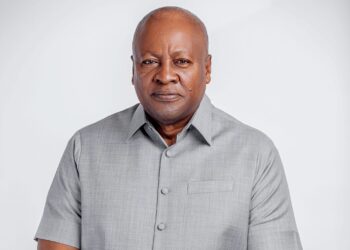
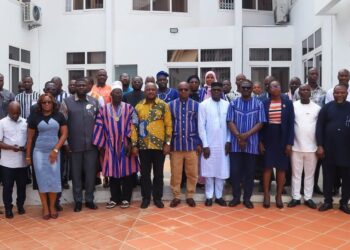
At a press briefing held in Accra, the President of the Association, Mr. Sampson Awingobit, expressed concern that despite a clear regulatory directive on the fee, some shipping lines and their local agents continue to charge above the approved ceiling.
According to the IEAG, the approved ceiling for the Container Administrative Charge, which is also referred to as the local handling charge, is GH¢720 per Twenty-Foot Equivalent Unit (TEU). The charge applies to both import and export containers and the directive, the Association insists, is still in force.
The Ghana Shippers’ Authority, which is the state agency mandated to regulate shipping business in the country, has on several occasions reinforced this directive and instructed all shipping lines and their agents to strictly adhere to the approved amount.
However, the IEAG says it continues to receive reports that some shipping lines are flouting the regulation.
‘’The IEAG is concerned that reports of some shipping lines continuing to impose charges above the approved ceiling have the potential to increase the cost of doing business at Ghana’s ports, create uncertainty for importers and exporters, and undermine ongoing efforts to make the country’s ports more competitive.’’
Mr. Awingobit
He explained that when shipping lines impose arbitrary charges, the extra cost is ultimately passed on to the final consumer, making imported goods more expensive and Ghanaian exports less competitive on the international market.
The Association believes the situation, if not addressed quickly, could erode confidence in Ghana’s port system and derail the government’s efforts to position the ports as the preferred gateway for trade in West Africa.
To forestall any disruption to port operations and international trade, the IEAG is proposing a roundtable discussion that brings together all relevant parties.
“We respectfully appeal to the Honourable Minister for Transport to convene an urgent stakeholder meeting involving the Ghana Shippers’ Authority, shipping lines, shipping agents, freight forwarders, importers and exporters, and other relevant port stakeholders to resolve the impasse.’’
Mr. Awingobit
The IEAG is of the view that a frank dialogue will provide an opportunity for the regulator to clarify compliance expectations while allowing shipping lines to raise any operational concerns they may have.
Calls for Expansion at Tema Port
Beyond the issue of administrative charges, the Association also drew attention to persistent congestion at the Tema Port, Ghana’s largest commercial port. According to the IEAG, the build-up of containers within the port enclave is causing heavy vehicular traffic and slowing the movement of goods.
The situation affects not only activities inside the port but also traffic flow in adjoining communities and on access roads. To address the challenge, the Association has called on the Ghana Ports and Harbours Authority (GPHA) to take a second look at its land use policy within the port.
Specifically, it is urging the GPHA to consider reclaiming and repurposing some spaces currently leased to private businesses for the development of additional container handling and storage facilities when those leases expire.
The Association argues that creating more capacity for container terminals will significantly improve cargo handling efficiency, decongest the port, reduce turnaround time for trucks, and facilitate smoother movement of goods and vehicles.
Security and 24-Hour Economy
The IEAG also touched on security at the country’s ports, linking it directly to the successful implementation of the government’s 24-hour economy policy. The Association cited what it described as a recent isolated attack on transporters and individuals who were offloading cargo at the port, and called for enhanced security measures to protect life and property.
It noted that for the 24-hour economy policy to thrive at the ports, importers, exporters, truck drivers and other port users must be assured of their safety when operating at night and during odd hours.
On trade facilitation, the Association raised concerns about the stability of digital platforms that support port operations. The IEAG pointed to a reported week-long disruption of government digital payment and service platforms at the ports, which it said hampered business and caused delays in cargo clearance.
The Association therefore, calls on the Ghana Revenue Authority (GRA) and other relevant state agencies to strengthen their digital infrastructure and put in place robust contingency measures to prevent prolonged downtime of critical trade systems.
Despite the challenges highlighted, the Association commended government for the introduction of the Public an Artificial Intelligence Trade Solution, an AI-driven system for customs valuation.
According to the IEAG, the system has improved revenue mobilisation and brought more transparency to the customs valuation process. Citing data from the implementation period, the Association said assessed customs collections increased by more than US$300 million between the pilot phase and the full rollout period ending July 17, 2026.
During the same period, the system is reported to have analysed approximately 366,000 import declarations, helping to identify discrepancies and curb under-valuation. While expressing support for the initiative, the Association however called for improvements in its implementation.
It wants authorities to strengthen the appeals mechanism, enhance the valuation database, and deepen stakeholder engagement to ensure that legitimate importers who have genuine concerns about valuations receive timely and fair redress.
The Association concluded that an efficient and competitive port system must achieve a balance. It must protect national revenue while at the same time reducing the cost of doing business, facilitating the free movement of goods, boosting investor confidence, and ultimately supporting Ghana’s economic growth.
READ ALSO :FEC 2026 Shifts Focus From Energy Diagnosis To Industrial Transformation