The Executive Director of the African Centre for Parliamentary Affairs, Dr Rasheed Draman, has urged both sides of Parliament to restore decorum in their engagements, following the Minority’s walkout from the vetting of three Supreme Court nominees.
Dr Draman argued that disagreements are part of parliamentary business, particularly within an institution where competing political interests routinely meet. He, however, cautioned that political differences should remain within the boundaries of parliamentary conduct and constructive engagement.

His assessment followed a heated exchange between the Minority and Majority sides of Parliament during Thursday’s sitting of the Appointments Committee. The disagreement eventually resulted in the Minority, led by the Minority Leader and Member of Parliament for Effutu, Honourable Alexander Kwamena Afenyo-Markin, leaving the meeting.
Dr Draman noted that similar confrontations had occurred in previous Parliaments, including during proceedings of the Appointments Committee in the Seventh and Eighth Parliaments. He recalled exchanges involving former committee chairman Right Honourable Joseph Osei-Owusu and MPs including Honourable Suhuyini and the late Honourable Murtala Mohammed.
The ACEPA Executive Director identified the current pattern as particularly troubling because of what he considered a lack of sufficient agreement among parliamentary leaders before contentious matters reached public sittings. In his view, discussions between the First Deputy Speaker, who chairs the Appointments Committee, and the Minority Leader could help prevent disagreements from escalating before they become visible to the public.
“They should play the politics, but I think it should be decorous, from both sides.”
Dr Rasheed Draman
According to Dr Draman, the public nature of parliamentary proceedings places an additional responsibility on lawmakers to manage disagreements carefully. He observed that citizens watching such exchanges could reasonably question whether their political leaders were capable of reaching workable agreements on matters before the House.
The situation, he explained, affects both the Majority and Minority because Parliament’s institutional reputation is shared by all sides. Therefore, the responsibility for preserving the dignity of the legislature cannot rest with one political grouping alone.
Dr Draman further pointed to the importance of leadership in managing disagreements within committees. The positions held by the First Deputy Speaker and Minority Leader, he noted, carry significant influence within Parliament and require sustained engagement when disputes emerge.
He consequently urged parliamentary leaders to create room for disagreement without allowing it to descend into scenes that could diminish public confidence in the legislature. Such an approach, he suggested, would allow Parliament to retain its political character while protecting the standards expected of a national lawmaking institution.
The parliamentary scholar also stressed that the presence of political contestation should not be mistaken for disorder. In his assessment, vigorous debate can coexist with civility when lawmakers respect the rules governing their proceedings and allow opposing views to be properly presented.
Compromise Needed To Prevent Recurring Parliamentary Clashes
The Executive Director of the African Centre for Parliamentary Affairs, Dr Rasheed Draman, has called for sustained dialogue among parliamentary leaders to prevent repeated confrontations from becoming entrenched in the work of the legislature.
His recommendation follows a series of incidents in Parliament that have generated intense exchanges between the Majority and Minority sides. Dr Draman believes the solution requires leaders to establish common ground on the basic rules governing parliamentary business.
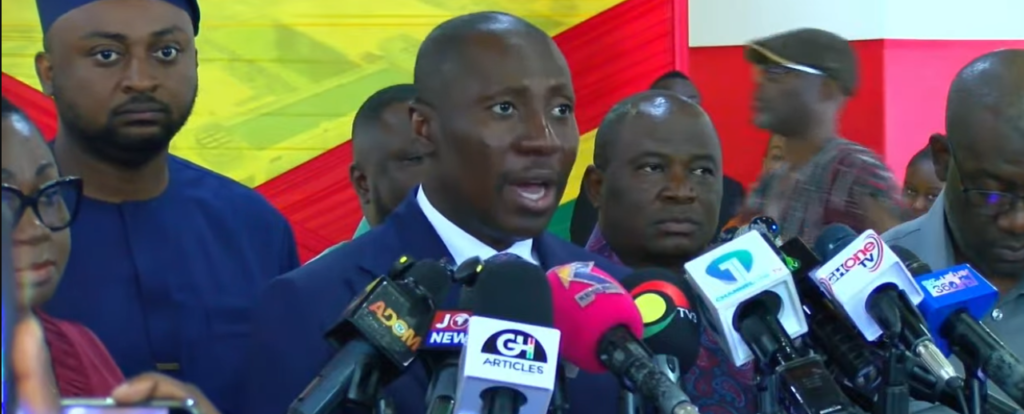
The ACEPA Executive Director also raised questions about an earlier parliamentary incident involving damage to public property during a ministerial vetting. He noted that a committee was established to examine the incident, yet the status of any action arising from its work remains an issue that parliamentary leadership should clarify.
Dr Draman encouraged journalists to seek answers from Parliament on the matter as part of the public’s interest in accountability. He linked the issue to the need for Parliament to respond firmly when disagreements result in damage to institutional property.
Turning to the latest dispute, he proposed greater emphasis on discussions before committees begin public sittings. Such pre-sitting engagements, he explained, can give leaders an opportunity to resolve difficult questions privately and establish a workable position before proceedings commence.
“There is no other way out except for a lot of compromise and dialogue.”
Dr Rasheed Draman
Dr Draman stressed that such an arrangement should extend beyond the personalities currently occupying leadership positions. Parliament changes with elections, he noted, meaning the Majority and Minority of today can occupy opposite positions in a future legislature.
This reality, he argued, makes agreement on basic parliamentary procedures particularly important. Without such an understanding, each change in political power could produce a new cycle of confrontations based on the same unresolved institutional weaknesses.
The ACEPA Executive Director also assigned an important role to the Speaker and other parliamentary leaders in preventing such a cycle. Their involvement, he suggested, could help establish a culture in which disagreements are settled through discussion before they reach a point of disruption.
Historical experience, he noted, shows that parliamentary disagreements are hardly new. Previous Appointments Committees also witnessed heated exchanges involving lawmakers and committee leadership, demonstrating that political contestation has long formed part of Ghana’s parliamentary life.
The distinction, Dr Draman emphasised, lies in how those disagreements are managed. He argued that the current Parliament must learn from previous experiences and develop practices that allow strong political positions to coexist with institutional discipline.
“If there is no agreement on the basic rules, then we’ll continue to see these things play out.”
Dr Rasheed Draman
He further warned that unresolved practices can eventually affect whichever political side occupies the Minority benches. Since parliamentary power changes hands, a procedure tolerated by one side today could become the same mechanism used against it tomorrow.
READ ALSO: Parliament Approves Mahama Ayariga and Zanetor Agyeman-Rawlings