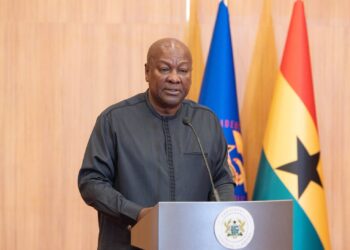
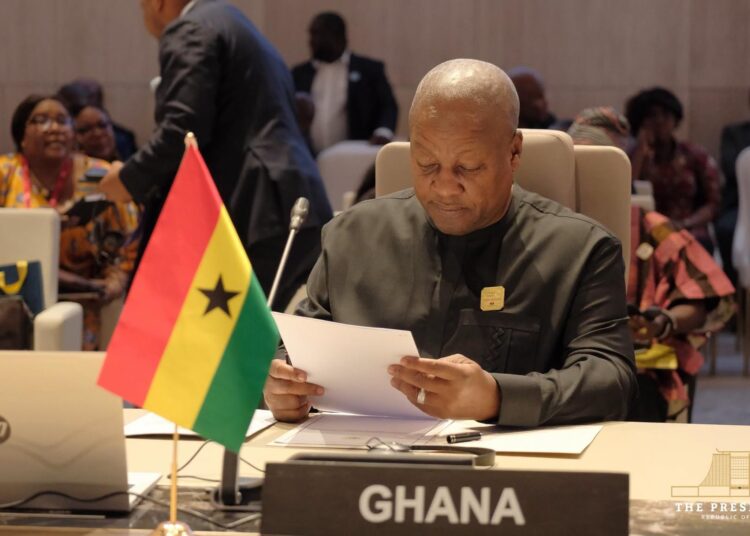
President John Dramani Mahama has told African leaders that the continent’s peace and security machinery fails not for want of design but for want of money, and has called for a financing architecture owned and funded by Africans. He was addressing the 21st Extraordinary Session of the African Union Assembly of Heads of State and Government, which opened in Luanda, Angola, on Sunday.
Ghana used its intervention to endorse the Luanda Action Plan, its implementation matrix and accompanying decision, along with the African Union trigger model. President Mahama tied that endorsement to a demand that the commitments carry clear responsibilities, timelines, measurable indicators, and credible financing arrangements.
Early Warning Without Early Action
The President framed the continent’s difficulty as one of execution rather than architecture. Africa continues to face persistent and evolving conflict despite the comprehensive mechanisms already established under its peace and security framework, he said, and the task before the summit is to ensure those mechanisms are effectively implemented, better coordinated and adequately resourced.
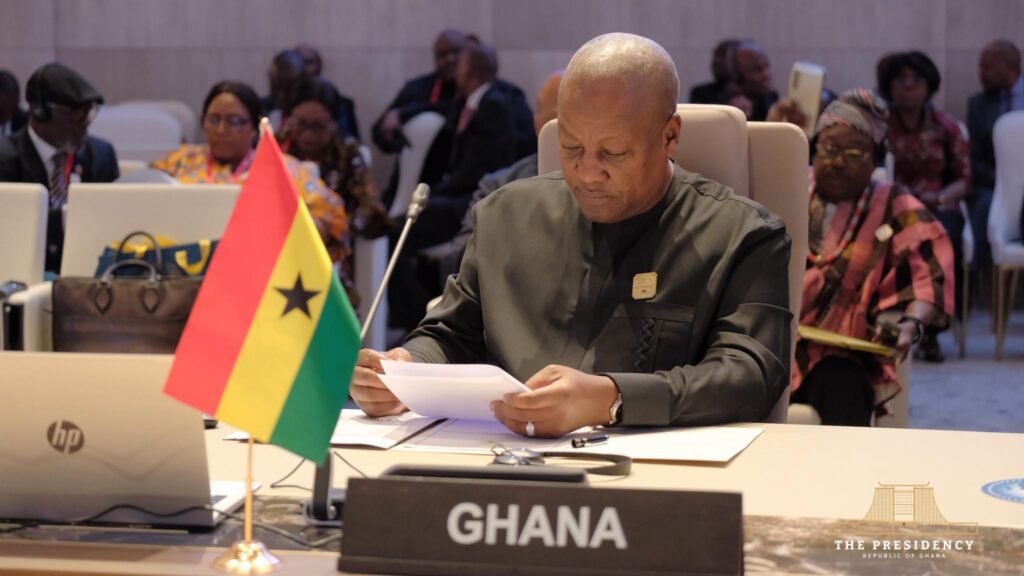
He located the weakest link in the gap between detection and response. “Early warnings must translate into early action,” he said, adding that early action requires resources available in a timely and predictable manner.
The formulation goes to a recurring criticism of the African Peace and Security Architecture, that its continental early warning system has repeatedly identified emerging crises that the Union then lacked the means to address before they escalated.
The Peace Fund and the Import Levy
Ghana welcomed the progress made in operationalising the African Union Peace Fund and backed its continued capitalisation towards a target of one billion United States dollars.
President Mahama pressed for accelerated implementation of the Fund’s resource mobilisation strategy, singling out the effective application of the 0.2 percent import levy through which member states are meant to finance the Union from their own trade.
He asked in the same breath for stronger mobilisation from African financial institutions, the private sector and other African sources. The levy has been the AU’s flagship self-financing instrument since it was adopted at Kigali a decade ago, and its uneven application across member states remains the principal reason the Union’s peace operations still depend heavily on partners outside the continent.
Resolution 2719 and the Limits of External Money
Ghana did not argue for withdrawal from international financing. President Mahama welcomed United Nations Security Council Resolution 2719 of 2023, which established a framework for funding African Union-led peace support operations through UN assessed contributions, and encouraged continued work towards making that framework operational.

He attached conditions to the endorsement. The framework should be operationalised consistent with the principles of African ownership, accountability and shared responsibility for maintaining international peace and security.
The balance he described is deliberate. Resolution 2719 offers the most substantial prospect in years of predictable funding for African-led deployments, but it routes decisions on individual missions through the Security Council, which is precisely where African states have least leverage.
Ghana’s position accepts the money while insisting the continent retains authorship of the operations it buys.
Prevention Belongs Inside the Development Agenda
President Mahama argued that conflict prevention cannot be treated as a security function separated from everything else the state does. It must be embedded within the broader development agenda, he said, and an early warning system should do more than identify imminent threats.
Such a system, on his account, should also enable the Union to detect and address the underlying grievances that produce conflict in the first place. The argument sits behind Ghana’s endorsement of the trigger model, an instrument intended to define what conditions oblige the Union to act rather than leaving intervention to political discretion.
The President drew a line from continental health financing to continental security financing. The Accra Reset, the health sovereignty initiative he launched to shift African health systems away from donor dependence, carries lessons that extend beyond healthcare into peace and safety.
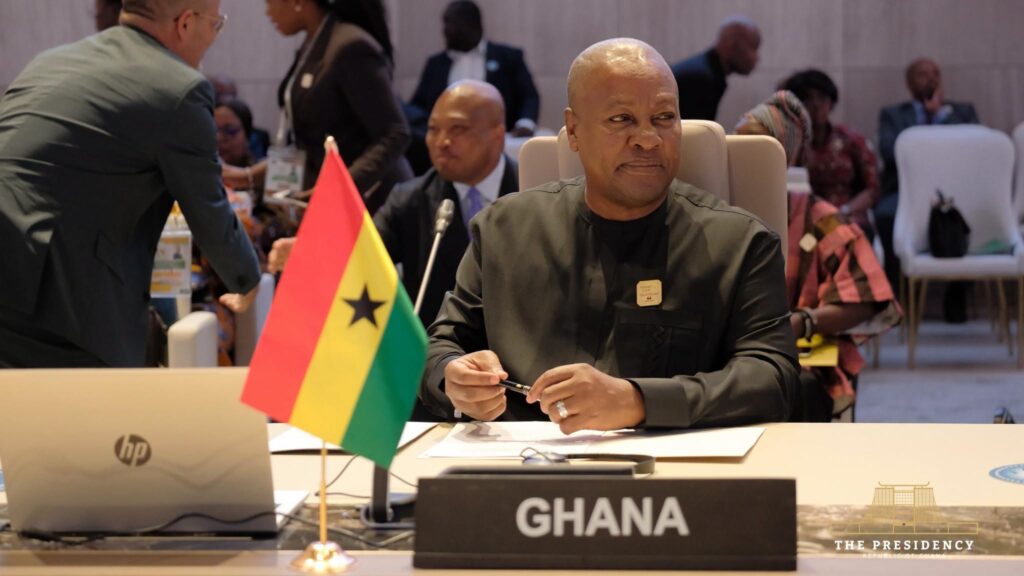
The comparison is apt in structure. Both agendas confront the same problem, that African priorities financed from outside the continent remain vulnerable to decisions taken elsewhere, and both propose domestic resource mobilisation as the answer.
Ghana has spent the past year arguing that case in health forums from Accra to Geneva, and Mahama is now applying the same framing to the peace file.
“African ownership of peace and security must be matched by African ownership of its financing,” he told the Assembly, calling for an architecture predictable enough to plan around, flexible enough to respond and sustainable enough to reduce excessive dependence on external resources.
From Words to Action
President Mahama closed the security portion of his address with an implicit criticism of the Union’s record. Africa has spoken on the subject for too long, he said, and the time has come to move from words to action.
The remark carries weight at a summit whose central documents were still under review by the Permanent Representatives Committee days before leaders arrived.
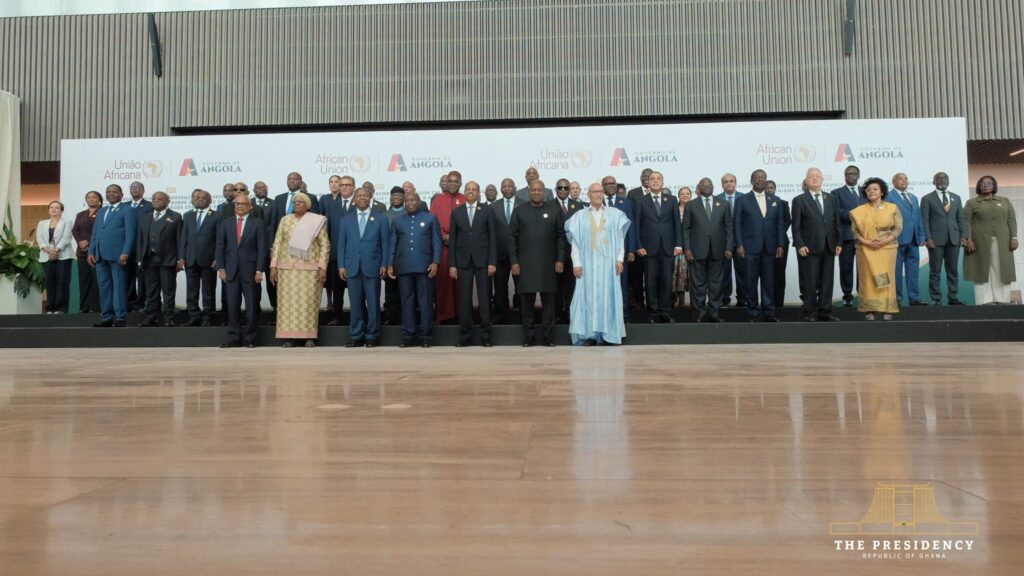
Ghana’s specific ask, that commitments arrive attached to responsibilities, timelines, measurable indicators and credible financing, is a request for exactly the accountability machinery that previous continental decisions on peace and security have tended to lack.
Ghana remains committed to a peace and security architecture that is effective, adequately resourced and anchored in African ownership, the President said. Whether Luanda delivers that will be measured against the implementation matrix rather than the communiqué, with the next checkpoint the coordination meeting between the Union and the regional economic communities in October.
READ ALSO: The Decline of Civility in Public Discourse