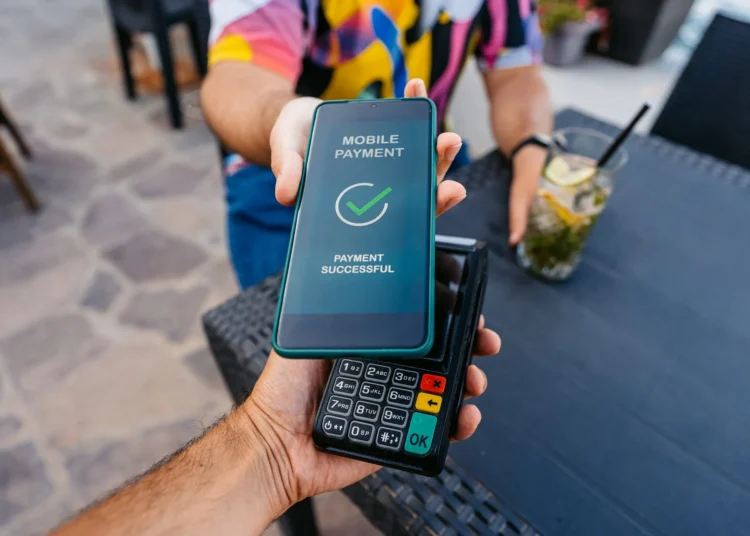
Ghana has emerged as Africa’s standout performer in mobile money regulation after securing the top position globally in the 2025 Mobile Money Regulatory Index, reinforcing the country’s growing reputation as a leader in digital payments and financial inclusion.
According to the Bank of Ghana’s Payment Systems Annual Report 2025, Ghana ranked first in the Global System for Mobile Communications Association’s (GSMA) Mobile Money Regulatory Index (MMRI), placing the country ahead of established digital finance markets including Qatar and Brazil.
The achievement highlights the impact of Ghana’s regulatory reforms and interoperable payment infrastructure as African countries accelerate efforts to create seamless digital financial ecosystems.
Ghana Takes the Global Crown
The GSMA Mobile Money Regulatory Index assesses the regulatory environment for mobile money across 90 countries.
The index evaluates countries against six major dimensions and 26 indicators designed to determine how effectively regulations support the development, accessibility and sustainability of mobile money services.
Ghana’s first-place ranking therefore represents more than simply a strong performance in digital payments. It reflects the effectiveness of the country’s regulatory architecture in creating an environment where mobile money providers, banks, fintech companies and consumers can participate in an increasingly connected financial ecosystem.
Ghana’s performance also places it ahead of other African countries that have made significant progress in digital payments.
Rwanda ranked second globally, while Lesotho secured seventh position, demonstrating the increasing strength of Africa’s mobile money regulatory frameworks.
Interoperability Powers Ghana’s Digital Revolution
At the centre of Ghana’s success is interoperability.
The country’s payment ecosystem has been significantly transformed through the Ghana Interbank Payment and Settlement System (GhIPSS), which has helped establish connections between banks and mobile money platforms.
The interoperable infrastructure allows customers to transfer funds between different mobile money wallets and bank accounts without being restricted by the platform or financial institution they use.
This development has been particularly important in a market where mobile money has become an essential financial tool for millions of Ghanaians.
Rather than operating as isolated networks, payment platforms can interact with one another, allowing money to move more efficiently across the financial system.
The impact extends beyond convenience. Interoperability can reduce barriers to financial access, encourage competition among service providers and make digital payments more attractive to consumers and businesses.
For Ghana, the achievement demonstrates how regulatory policy and technological infrastructure can work together to accelerate financial inclusion.
Africa Races Toward Connected Payment Systems
Ghana’s success comes as countries across Africa intensify efforts to develop faster, cheaper and more connected payment systems.
Interoperability has become an increasingly important objective because fragmented payment systems can increase transaction costs and make cross-platform transfers more difficult.
For individuals and businesses, seamless payment connectivity can make digital transactions easier while creating opportunities for greater participation in the formal financial system.
The continent’s growing emphasis on instant and interoperable payments also reflects the broader digital transformation taking place across African economies.
As mobile phone ownership and digital financial services expand, policymakers are increasingly under pressure to ensure that payment infrastructure remains accessible, secure and affordable.
Ghana’s experience offers an important example of how these objectives can be pursued through coordinated regulation and payment infrastructure.
Kowri Breaks New Ground With Voice Payments
Ghana’s digital finance innovation did not stop at interoperability.
In 2025, local fintech company Kowri introduced a voice command feature designed to allow users to execute financial transactions and manage their accounts using spoken instructions.
The technology represented another significant development in Ghana’s digital payment ecosystem and was described as a first for payment platforms in Sub-Saharan Africa.
One of its most notable features is support for local languages, including Twi and Hausa, alongside English.
The innovation could prove particularly valuable for people with visual impairments and individuals with limited digital literacy.
By allowing customers to interact with financial services through voice commands, the technology seeks to remove some of the barriers associated with conventional digital interfaces.
It also demonstrates how fintech innovation can complement regulatory progress by making digital financial services more accessible to wider sections of the population.
South Sudan Joins the Payment Revolution
Elsewhere in Africa, South Sudan reached an important milestone with the launch of its first National Instant Payment System (NIPS).
The system was introduced by the Bank of South Sudan in partnership with the AfricaNenda Foundation to facilitate instant payments across the country’s financial ecosystem.
NIPS is expected to reduce transaction delays, lower costs and improve access to digital financial services.
The initiative is particularly significant for South Sudan, where millions of adults have historically faced limited access to formal banking services.
By establishing an instant payment infrastructure, the country is seeking to expand financial inclusion while creating a more efficient foundation for digital transactions.
Ghana’s Number One Ranking Raises the Stakes
Ghana’s first-place position in the GSMA Mobile Money Regulatory Index places the country at the forefront of the global conversation on mobile money regulation.
The ranking also raises expectations for Ghana to maintain its leadership as digital finance continues to evolve.
With interoperability, fintech innovation and instant payments becoming increasingly important across the continent, African countries are likely to continue investing in systems capable of connecting customers, banks, mobile money operators and businesses.
For Ghana, the challenge will be to preserve the regulatory strength that earned it the top position while continuing to innovate.
The country’s experience shows that effective regulation, interoperable infrastructure and inclusive technology can combine to transform financial services.
As Africa pushes toward a more connected digital economy, Ghana has already planted its flag firmly at the top of the mobile money regulatory race.
READ ALSO: T-Bill Yields Plunge 82 Basis Points Amid Strong Demand