A Russian drone has struck the central headquarters of Ukraine’s Security Service, the SBU, in Kyiv, in an attack that marked a significant escalation of Russia’s continuing aerial assaults on the Ukrainian capital.
The drone hit the SBU’s main building on Volodymyrska Street, one of Kyiv’s key government facilities and located opposite the historic St. Sophia Cathedral. Ukrainian authorities said five people were injured in the attack as emergency crews responded at the scene.
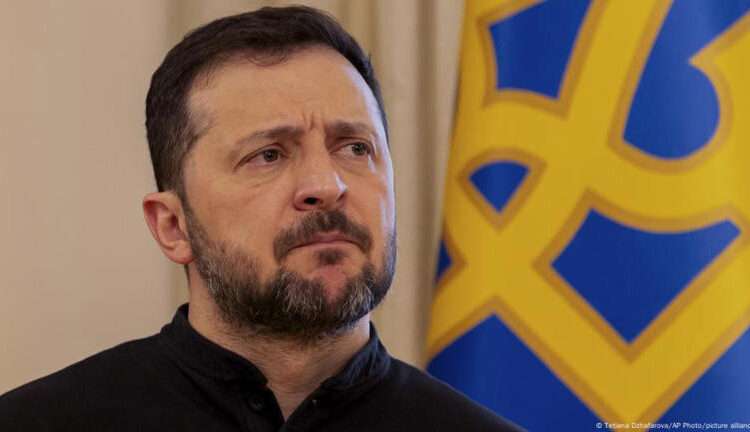
Ukrainian President, Volodymyr Zelenskyy said that the drone was directed specifically at the SBU headquarters and that he had spoken with the agency’s head, Oleksandr Poklad, following the strike. “Unfortunately, a Russian drone struck the central building of the Security Service of Ukraine on Volodymyrska Street in Kyiv, across from St. Sophia Cathedral,” Zelenskyy said. “The drone was aimed directly at the office of the Head of the Security Service in that building,” he added.

The assault on the SBU headquarters is particularly significant because of the building’s role as the central base of Ukraine’s principal domestic security agency. The agency is responsible for counterintelligence, national security investigations and other sensitive operations during the war.
Ukraine’s Foreign Minister, Andrii Sybiha warned that the Russian attack on Ukraine’s Security Service HQ is “a major escalation that demands absolute responses.”
“Moscow launched this strike during a renewed push for peace – laying bare its true rejection of diplomacy. Located nearby, the Unesco world heritage site – St. Sophia Cathedral – was also placed at risk.
“We call on international partners to unequivocally condemn these actions and step up pressure on the Putin regime. We also urge UNESCO to react decisively and increase its efforts to protect endangered heritage in Ukraine.”
Andrii Sybiha
Ukraine Orders Response To Attack
The Ukrainian President said that emergency services had been dispatched to the site and instructed Poklad to prepare a response to the attack.
“I instructed Poklad to deliver an appropriate, tangible response and, where possible, one that mirrors this strike, to the Russians once everything is ready. Our military will support this response.”
Volodymyr Zelenskyy
The strike occurred during another air-raid alert in Kyiv, after Ukraine’s Air Force warned that several Russian drones were heading towards the capital. Kyiv Mayor Vitali Klitschko initially reported that a fire had broken out in the city’s Shevchenkivskyi district after a drone fell onto the roof of a non-residential building.
He said that emergency services had been sent to the area. The subsequent confirmation that the SBU’s central headquarters had been directly struck underscored the intensity of the latest attacks on Kyiv, which has faced almost continuous Russian drone assaults in recent days.
The capital has now endured eight consecutive days of attacks, with strikes reported at several locations in the city centre as well as warehouses and factories in surrounding areas. Among the facilities hit in the suburbs was a factory producing Coca-Cola.
The sustained attacks have caused casualties and disrupted daily life across the capital and the wider Kyiv region. At least 53 people have been killed and 134 injured in Kyiv city and the surrounding region since the beginning of the near-continuous wave of attacks last month.
The strike also comes as Ukraine faces pressure on its air-defence capabilities. Ukrainian forces have relied heavily on interceptor missiles and other air-defence systems to protect Kyiv and other major cities from Russia’s extensive use of drones and missiles.
The latest attacks have emphasised the strain on those defences, with Ukraine facing shortages of interceptor missiles as Russia continues to launch repeated waves of unmanned aerial vehicles against the capital. The frequency of the attacks has increasingly exposed critical infrastructure and government facilities to the threat of direct strikes.
While Ukrainian air defences have intercepted large numbers of Russian drones during the war, the successful strike against the SBU headquarters demonstrates the difficulty of protecting every target amid sustained aerial bombardment.
Zelenskyy’s instruction for a response also signals the possibility of further Ukrainian military action in retaliation for the strike. He said the response would be prepared once Ukrainian authorities were ready and would be supported by the country’s military.
The attack comes as the war continues to place Kyiv under renewed pressure from Russian aerial operations. With repeated drone strikes now affecting both central government facilities and industrial sites around the capital, Ukrainian authorities face the dual challenge of protecting civilians and maintaining the security of critical state institutions.
For Kyiv, today’s strike therefore represents more than another incident in a series of aerial attacks. The direct hit on the SBU headquarters has demonstrated that even prominent government facilities in the heart of the capital remain vulnerable as Russia sustains its campaign of drone attacks against Ukraine.
READ ALSO: U.S.-Iran Hostilities Flare After Month-long Lull