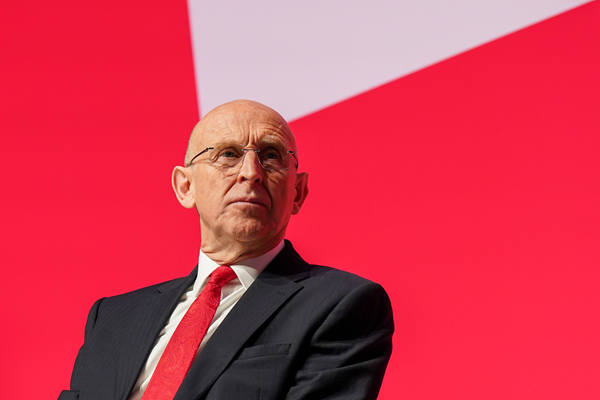
UK Chancellor John Healey has refused to rule out further tax rises ahead of his first Budget in October, as he warned that Britain continues to bear the financial consequences of the 2022 mini-budget under former Prime Minister Liz Truss.
Speaking in Coventry in his first major economic speech since becoming Chancellor, Healey struck an optimistic tone about the country’s economic prospects, describing Britain as “turning a corner” and arguing that the economy has “huge latent potential.”
With speculation building over the measures that could feature in the government’s first Budget under Prime Minister Andy Burnham, the Chancellor has faced repeated questions over possible tax increases.
Healey declined to provide an answer, arguing that responding to speculation before the Budget would only intensify uncertainty.
Asked about potential tax rises, he indicated that, “if I respond to speculation now, that will only fuel more speculation, and it’s quite right.”
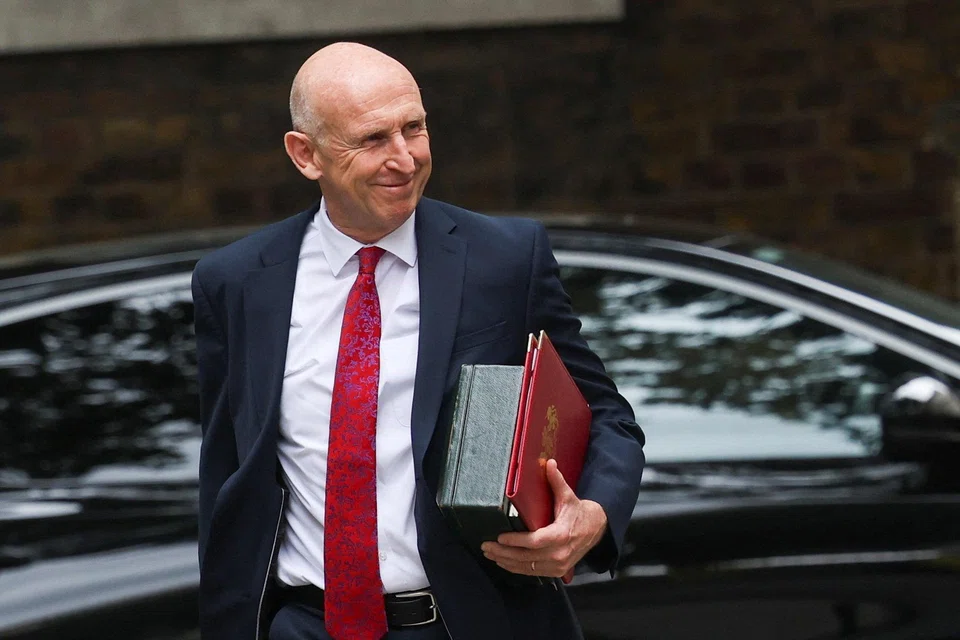
He added, “every chancellor would say that’s for the budget, and I’ll set out my plans and the future route for government for this country at that budget.”
His refusal to close the door on tax increases is likely to keep businesses and households watching closely as the October Budget approaches, particularly at a time when the government is attempting to balance its ambitions for economic growth with the need to restore confidence in Britain’s public finances.
Healey has placed fiscal discipline at the centre of his economic message, noting that he and the Prime Minister are committed to meeting the government’s fiscal rules while maintaining a buffer against economic uncertainty.
“The Prime Minister and I are in lockstep in our commitment to meeting the fiscal rules at the upcoming Budget, to balancing the books with a buffer to protect against uncertainty. To controlling borrowing to bear down on inflation and reducing long-term pressures on our public finances.”
John Healey
The Chancellor also pointed to the growing cost of servicing government debt as evidence of the need for tighter control over public spending.
He stated that the rising burden of debt interest demonstrated that “staying true to our values means being honest about the need to control government spending.”
Healey nevertheless insisted that there was an “optimistic story” to tell about Britain’s economic future.
Healey Sets Out Growth Agenda Amid Fiscal Pressure
A central element of Healey’s economic programme is an attempt to reduce the regulatory and legal obstacles that he believes are slowing major infrastructure projects.
The Chancellor announced plans to extend reforms to judicial review, which currently apply to energy projects, to cover all major infrastructure programmes.
He argued that the changes would ensure that “vexatious litigation and challenge can’t block economic growth.”
The proposal forms part of a broader attempt by the government to accelerate infrastructure development and reduce delays that businesses say can make investment projects more expensive and uncertain.
Healey also reiterated his commitment to transferring greater economic power away from Whitehall, promising to set out a “roadmap to fiscal devolution” at next month’s Budget.
Alongside the devolution plans, Healey announced that the British Business Bank would provide £150 million for fast-growing firms in northern England.
He also announced the creation of a “Northern 500” group made up of “the North’s most ambitious mid-sized businesses”, with the initiative set to be led by regional mayors.
The measures are intended to strengthen investment outside London and the South East and support businesses that the government believes could play a greater role in driving productivity and employment.
Healey’s broader economic message is focused on making Britain more attractive to businesses by reducing costs, improving infrastructure and encouraging innovation.
He has also pledged to address what he described as the growing burden on businesses, including energy costs, regulation, planning constraints and labour costs.
However, the Chancellor’s optimism faces a difficult test as businesses continue to navigate weak growth, high financing costs and international competition.
Meanwhile, Jaguar Land Rover (JLR) announced plans to cut 4,000 jobs in the face of growing global competition, US tariffs and the transition to electric vehicles.
UK government therefore faces the challenge of encouraging companies to invest and expand while simultaneously dealing with the immediate consequences of restructuring and job losses.
The “Truss penalty” as Healey described it, represents another challenge for the government. He argued that Britain has continued to pay more to borrow since 2022, when Truss’s government introduced its controversial mini-budget, prompting financial market turmoil and damaging confidence in the government’s fiscal credibility.
He accused the previous government of having “crashed the economy and collapsed confidence in Britain’s fiscal strength.”
READ ALSO: Rural Networks To Get 4G, 5G Upgrade — Minister for Communications