• About
  • Advertise
  • Privacy Policy
  • Contact
Thursday, September 10, 2026
  • Login
The Vaultz News
  • Top Stories
  • News
    • General News
    • Education
    • Health
    • Opinions
  • Economics
    • Economy
    • Finance
      • Banking
      • Insurance
      • Pension
    • Securities/Markets
  • Business
    • Agribusiness
    • Vaultz Business
    • Extractives/Energy
    • Real Estate
  • World
    • Africa
    • America
    • Europe
    • UK
    • USA
    • Asia
    • Around the Globe
  • Innovation
    • Technology
    • Wheels
  • Entertainment
  • 20MOBPL2DNew
  • Jobs & Scholarships
    • Job Vacancies
    • Scholarships
No Result
View All Result
The Vaultz News
  • Top Stories
  • News
    • General News
    • Education
    • Health
    • Opinions
  • Economics
    • Economy
    • Finance
      • Banking
      • Insurance
      • Pension
    • Securities/Markets
  • Business
    • Agribusiness
    • Vaultz Business
    • Extractives/Energy
    • Real Estate
  • World
    • Africa
    • America
    • Europe
    • UK
    • USA
    • Asia
    • Around the Globe
  • Innovation
    • Technology
    • Wheels
  • Entertainment
  • 20MOBPL2DNew
  • Jobs & Scholarships
    • Job Vacancies
    • Scholarships
No Result
View All Result
The Vaultz News
No Result
View All Result
in Business, Vaultz Business

SMEs Move Into 24-Hour Economy’s Jobs Debate

Collins Baffourby Collins Baffour
September 10, 2026
Reading Time: 6 mins read
Add as Preferred on Google
Portrait of Local African traditional woman entrepreneur, small business owner, SME, holding a clipboard at her outdoor market stall.

Portrait of Local African traditional woman entrepreneur, small business owner, SME, holding a clipboard at her outdoor market stall.

Ghana’s 24-Hour Economy is confronting a central employment question: whether the programme can move beyond flagship investments and help existing small and medium-sized enterprises expand output, hire more workers and become more productive.

National Development Planning Commission Chairman Dr Nii Moi Thompson has brought that issue to the centre of the policy debate, urging government to give smaller businesses greater attention as implementation deepens.

Job creation does not begin only when a new factory is commissioned. Existing firms hire when demand, finance, reliable power, technology and market access allow them to add shifts, machinery and workers.

Large investments remain essential for infrastructure, exports and industrial capacity, but often carry long gestation periods before employment reaches scale. A strategy focused only on headline projects can leave a near-term jobs gap.

ADVERTISEMENT

Dr Thompson put the trade-off plainly: “You don’t put all your eggs in the big businesses per se.” His point is not an argument against large firms.

It is an argument for a portfolio approach to employment, in which anchor investors coexist with thousands of smaller businesses that supply inputs, distribute products, provide services and absorb labour throughout the economy.
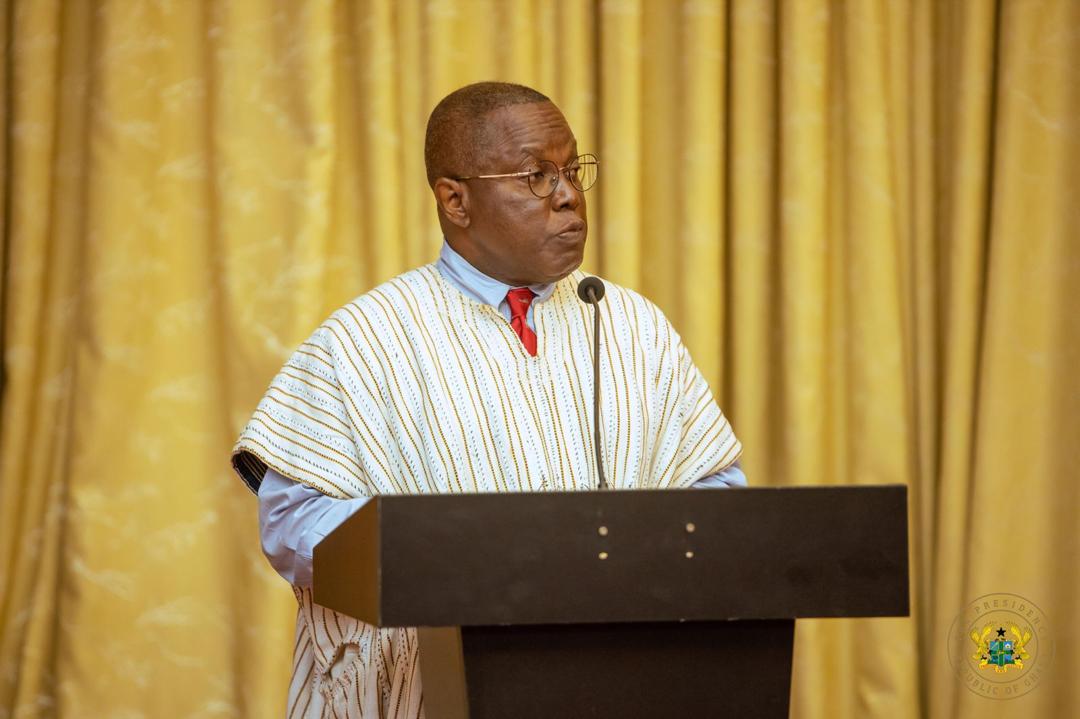
Chairman of the National Development Planning Commission, Dr Nii Moi Thompson

Existing Firms Can Shorten the Jobs Lag

The economics rests on employment elasticity: how strongly employment responds when output grows. Ghana can record robust GDP growth without a comparable increase in jobs when expansion is concentrated in capital-intensive activities.

By contrast, a productive SME that wins new orders may add workers quickly because its plant, customer base and management already exist. Helping viable firms scale can shorten the distance between macroeconomic recovery and household employment.

The scale of the small-firm economy makes that argument consequential. The GSS 2024 Integrated Business Establishment Survey counted 1.87 million establishments, including 1.69 million micro and 159,111 small businesses.

ADVERTISEMENT

Together, micro and small units represented about 99% of establishments. The statistic does not measure job quality, but it shows why productivity gains across viable small firms can matter nationally.

This is especially relevant as government tries to convert improved macroeconomic conditions into a New Economy centred on production and jobs.
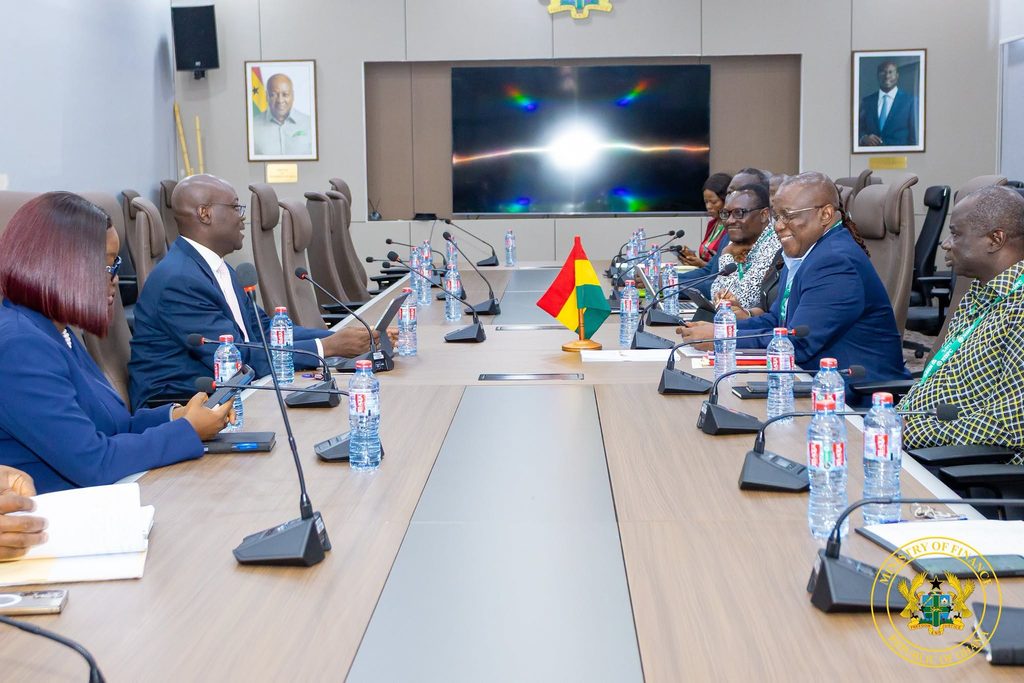
Dr Cassiel Ato Forson and his team face the NDPC delegation led by Chairman Dr Nii Moi Thompson at the Ministry of Finance in Accra. Photo: Ministry of Finance

The Vaultz News has already noted that implementation needs measurable outcomes rather than spending announcements. For SMEs, those outcomes should include net jobs, real earnings, sales growth, exports, productivity per worker and business survival after public support ends.

ADVERTISEMENT

Firm creation alone does not guarantee durable employment. Many new businesses remain small or exit quickly. Policy creates more value when productive enterprises can cross from micro and informal operations into formal, medium-sized firms with stronger management, technology and access to larger markets.

Finance Cannot Substitute for Productivity

Access to capital remains a major SME constraint, and the Presidency’s 24-Hour Economy incentives include duty-free machinery for qualifying businesses and faster port clearance. Development-finance institutions are also repositioning lending towards production, exports and employment, including Ghana Exim Bank’s shift toward projects aligned with the programme.

Cheaper finance, however, cannot rescue a weak business model indefinitely. Credit creates lasting employment when it funds machinery, working capital, certification, technology or market expansion that raises revenue-generating capacity.

If concessional funding is distributed without productivity tests, repayment discipline and market demand, the economy can socialise credit risk without creating competitive businesses.
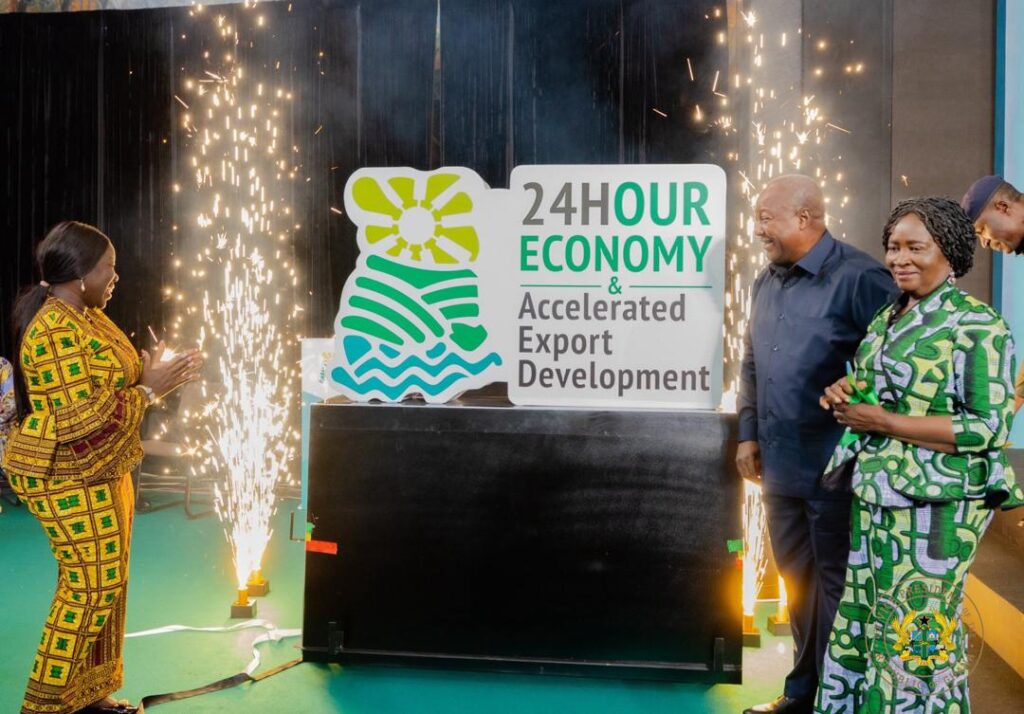
24-Hour Economy Launch
President John Dramani Mahama and Vice President Professor Naana Jane Opoku-Agyemang leading the 24-Hour Economy Launch

Policy should therefore connect financing to value chains. A garment factory may need local logistics, packaging, maintenance and training suppliers. An agro-processing plant needs farmers, aggregators, cold storage and transport.

Anchor firms create a stronger multiplier when procurement develops competitive local suppliers rather than relying overwhelmingly on imported inputs.

Longer Hours Need Cheaper Inputs and Demand

A 24-hour economy is not simply an instruction for firms to remain open longer. Additional shifts make economic sense only when expected revenue exceeds the extra cost of labour, electricity, security, transport and inventory.

A factory or logistics company will not profitably operate through the night because policy encourages it; it will do so when orders, customers and infrastructure make the additional hours commercially viable.

That is why electricity reliability, transport, digital payments, public safety and night-time mobility belong at the heart of the jobs strategy. Government’s 24-hour market model, combining trading space with storage, banking, security and transport services, reflects part of this logic.

The challenge is to extend the same enabling environment to productive firms beyond designated facilities.

Measure Jobs by Quality, Not Announcements

Government should ultimately judge SME participation by net employment, not gross announcements. If one supported firm hires while competitors contract because finance or procurement is distorted, the net gain may be far smaller than the headline. Wage quality, hours worked, worker productivity and job durability matter too.

Hon. Elizabeth Ofosu Adjare, Minister for Trade, Industries and Agribusiness

Putting SMEs at the centre therefore does not mean protecting every small firm from competition. It means lowering structural barriers so efficient firms can scale while allowing capital and labour to move away from persistently unproductive activities.

Ghana’s employment challenge requires more businesses, but above all better businesses. The 24-Hour Economy will succeed when smaller firms become productive enough to operate longer, pay better wages and compete for markets without permanent state support.

READ ALSO: Mahama Commissions Northshore Apparel Factory, Creates 2,000 Jobs

ADVERTISEMENT

Sign Up to Our Newsletter

Fresh updates, Straight to your inbox

Tags: 24-Hour Economydevelopment financeEmploymentGhana EconomyJob creationNii Moi Thompsonprivate sectorProductivitySMEs
Please login to join discussion
Previous Post

Nkrumah-Korsah Backs Nations FC to Overturn Deficit Against Diarra in CAF Confederation Cup

Next Post

Kow Essuman Gives Ato Forson Friday Deadline Over Unpaid Terminal Benefits

Related Posts

IMANI Logo
Extractives/Energy

Extractive-Sector Reforms Must Accompany Institutional Accountability – IMANI

September 10, 2026
Ghana's Agro-Export product
Agribusiness

Ghana’s Agro-Export Push Faces a Processing Gap

September 10, 2026
Officials of OPDAG and TCDA During a Handover of Agricultural Inputs, Including Weedicdes and Other Farm Equipment to Support Oil Palm Smallholders
Agribusiness

OPDAG, TCDA Boost Oil Palm Farmers with Major Input Support Package

September 10, 2026
ECG
Extractives/Energy

Transaction Report To Shape ECG’s Private Sector Future

September 10, 2026
ADVERTISEMENT

Sign Up to Our Newsletter

Fresh updates, Straight to your inbox

ADVERTISEMENT

Recent News

The Minority In Parliament

Minority Demands Full Records On GH¢49m Emergency Evacuation Spending

September 10, 2026
A guard of South Sudan People's Defence Forces

UN Commission Warns Violence and Impunity Threaten South Sudan’s Democratic Transition

September 10, 2026
Kow Abaka Essuman, former Legal Counsel to President Akufo-Addo, left, and Finance Minister Dr Cassiel Ato Forson, right, who has until Friday to settle the demand.

Kow Essuman Gives Ato Forson Friday Deadline Over Unpaid Terminal Benefits

September 10, 2026
Portrait of Local African traditional woman entrepreneur, small business owner, SME, holding a clipboard at her outdoor market stall.

SMEs Move Into 24-Hour Economy’s Jobs Debate

September 10, 2026
Dennis Nkrumah-Korsah in conversation his teammate in the FC Diarra game in Bamako

Nkrumah-Korsah Backs Nations FC to Overturn Deficit Against Diarra in CAF Confederation Cup

September 10, 2026
ADVERTISEMENT
Next Post
Kow Abaka Essuman, former Legal Counsel to President Akufo-Addo, left, and Finance Minister Dr Cassiel Ato Forson, right, who has until Friday to settle the demand.

Kow Essuman Gives Ato Forson Friday Deadline Over Unpaid Terminal Benefits

The Vaultz News

Copyright © 2025 The Vaultz News. All rights reserved.

Navigate Site

  • About
  • Advertise
  • Privacy Policy
  • Contact

Follow Us

Welcome Back!

Login to your account below

Forgotten Password?

Retrieve your password

Please enter your username or email address to reset your password.

Log In
No Result
View All Result
  • Top Stories
  • News
    • General News
    • Education
    • Health
    • Opinions
  • Economics
    • Economy
    • Finance
      • Banking
      • Insurance
      • Pension
    • Securities/Markets
  • Business
    • Agribusiness
    • Vaultz Business
    • Extractives/Energy
    • Real Estate
  • World
    • Africa
    • America
    • Europe
    • UK
    • USA
    • Asia
    • Around the Globe
  • Innovation
    • Technology
    • Wheels
  • Entertainment
  • 20MOBPL2D
  • Jobs & Scholarships
    • Job Vacancies
    • Scholarships

Copyright © 2025 The Vaultz News. All rights reserved.

This website uses cookies. By continuing to use this website you are giving consent to cookies being used. Visit our Privacy and Cookie Policy.