The NDC’s growing emphasis on personal wealth, self-interest and transactions risks weakening the party’s foundational values, NDC Chairman Aspirant and Former Deputy Minister for Local Government, Dr. Akwasi Oppong-Fosu, has warned.
Dr. Oppong-Fosu linked the trend to concerns emerging from engagements with grassroots members and other stakeholders across the party. He identified a seeming disconnect between the grassroots and the party’s top hierarchy, as well as between the party and government.

According to the NDC Chairman Aspirant, these gaps could help explain growing feelings of envy, anger and frustration within the party. He therefore called for a return to the values that established the NDC as a transformational political organisation.
Dr. Oppong-Fosu stressed that the party should not become a transactional organisation where influence depends on wealth, access and personal connections. Instead, he argued that the NDC must create structures that recognise members according to their contribution and commitment, regardless of social status or geographical location.
“Once the politics becomes transactional, systems break down,” he observed, arguing that the party’s structures must be designed to work fairly for all members. Furthermore, he pointed to the political progression of the NDC’s current Chairman as an example of an earlier culture where commitment and contribution could earn recognition.
He recalled that members operating from distant branches could previously gain recognition because the party valued their work and dedication. For him, that culture is essential to rebuilding confidence among members at the grassroots.
Dr. Oppong-Fosu also connected the party’s internal challenges to a wider shift towards transactional politics in Ghanaian society. He argued that political influence increasingly depends on who has the resources to shape decisions, a development he believes weakens established systems and structures.
Against this backdrop, the Former Deputy Minister for Local Government proposed a leadership model anchored in probity, accountability and social justice. He argued that these principles have guided his political and public service career and remain central to his ambition to lead the NDC.
He referenced Singapore’s People’s Action Party as an example of how consistent social democratic principles can support national transformation. Dr. Oppong-Fosu argued that the NDC can similarly strengthen itself by placing systems, structures and institutional fairness above personality-driven politics.
NDC Must Return Decision-Making Power To Grassroots
The NDC must move beyond relying on its grassroots mainly for election mobilisation and give branch-level members a meaningful role in shaping the party’s decisions, Dr. Akwasi Oppong-Fosu has proposed.
The NDC Chairman Aspirant and Former Deputy Minister for Local Government argued that branch members perform much of the organisational work required to secure electoral victories. However, he believes their responsibilities should continue beyond campaigning and election-day activities.
Dr. Oppong-Fosu called for structures that allow grassroots members to participate directly in the party’s decision-making processes. He further urged the NDC to empower branch members so they can develop a stronger sense of ownership over the organisation.
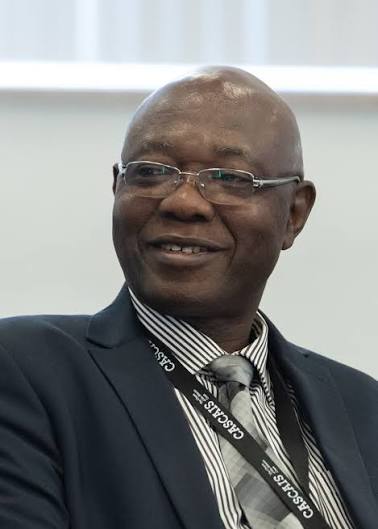
“We are not a transactional political organisation, but a transformational political organization that carries everyone along; that those at the base are ahead.”
Dr. Akwasi Oppong-Fosu
He criticised the traditional top-down approach where decisions are taken at the upper levels and subsequently passed down to branches for implementation. According to the Former Deputy Minister, such an arrangement limits the ability of grassroots members to influence the direction of the organisation they work to sustain.
To illustrate the problem, Dr. Oppong-Fosu compared branch members to warhorses used by generals during battles. He explained that the horses are taken into battle when victory is required but returned to the stable afterwards, until another conflict emerges.
Nonetheless, he believes modern technology provides the NDC with practical tools to change that arrangement. He proposed systems that could allow the party to identify qualified members, track branch participation and facilitate greater involvement in organisational decisions.
Furthermore, Dr. Oppong-Fosu argued that effective internal systems would make party structures more transparent and accessible. He suggested that technology could enable the NDC, “by the press of a button”, to determine who belongs to a particular branch and who qualifies for positions within the organisation.
The proposal forms part of his wider call for the NDC to restore, renew and rebuild its organisational structures. He has argued that a functioning party cannot depend solely on personalities, wealth or access to resources to determine who exercises influence.
Dr. Oppong-Fosu also wants recognition within the NDC to remain connected to commitment and contribution. He recalled an earlier period when members could rise within the party despite being located far from the national leadership or occupying modest social positions.
In addition, he believes empowering branches would help close the disconnect between the party’s grassroots and its top hierarchy. The approach, he argues, would create a more participatory organisation where members contribute to decisions instead of waiting for directives.
Consequently, the NDC Chairman Aspirant is advocating a shift from election-centred grassroots mobilisation to sustained grassroots participation. He believes such a system would strengthen ownership, accountability and internal cohesion across the party.
READ ALSO: GNAT Backs Double-Track System Until Infrastructure Expands