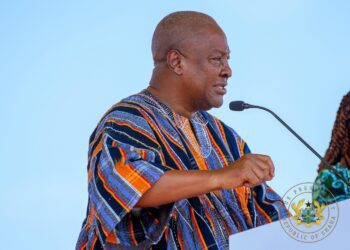
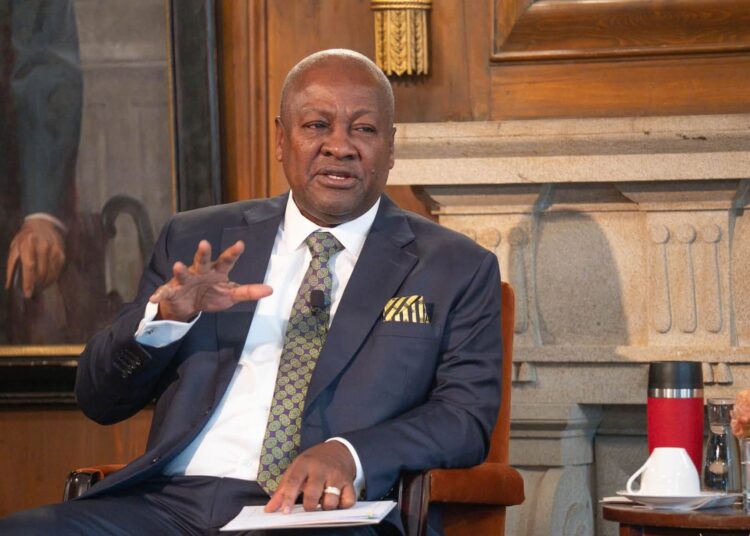
President John Dramani Mahama has called for cheaper and more flexible ways to finance homes, including mortgages, rent-to-own schemes and rental support, so that informal workers and low-income households can enter Ghana’s housing market.
He made the appeal today, October 7, 2026, as he opened the National Conference on Housing Financing, which was convened to mark World Habitat Day.
President Mahama argued that lenders still overlook traders, artisans, farmers and transport operators because they sit outside formal payrolls, and he urged financial institutions to judge their repayment capacity by savings history and verifiable business cash flows.
He also disclosed a new National Housing Fund programme, Easy Rent, designed to spare workers the burden of heavy rent advances.
“Substantial rent advances can deplete savings that were intended for a child’s education or to run a small business for the family, and so behind every housing statistic is a person seeking or family seeking security and hoping for a better future. And so this human reality is what must guide our deliberations in the next two days.”
President John Dramani Mahama
The two-day conference runs under the theme Adequate Housing for All, Innovative Financing for Ghana’s Housing Future. President Mahama opened his address with a story from his own life. When he left his father’s house to start a life with Lordina, the fee paid to the agent who found their home almost ruined their finances before married life had begun.
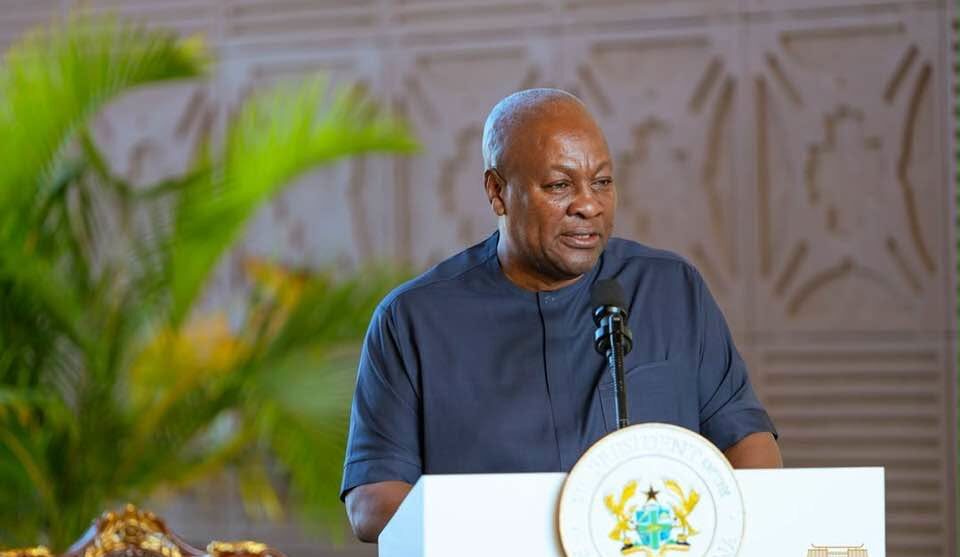
He warned that the same pressure weighs on young Ghanaians today. He stated: “Substantial rent advances can deplete savings that were intended for a child’s education or to run a small business for the family.” He then declared: “Adequate housing is a matter of human dignity and is a human right.”
Rent-to-Own and Easy Rent Offer New Routes
President Mahama pressed for ideas beyond the conventional mortgage. As his flights land across the country, he sees countless unfinished houses, a sight he called “mind-boggling.” He floated a product that would identify uncompleted houses in an area, send engineers and architects to prepare a bill of quantities, and help owners finish the work.
The rent those occupants pay elsewhere would then convert into a rent-to-own arrangement. He argued that the country must “think outside the box when it comes to these things.”
He also proposed that district assemblies invest part of their internally generated funds and common fund allocations in rental housing. Officers posted to a district could then rent a two-bedroom apartment and pay the assembly, which would lift its revenue.
Easy Rent follows the same logic. Under the programme, the National Housing Fund will pay the rent advance for a worker, who will then repay in monthly instalments.
President Mahama stressed that Ghanaian incomes call for “longer term financing, denominated in our local currency, manageable repayments, and clear terms that the household can understand.” The emphasis on local currency echoes earlier plans for cedi-priced district housing.
Informal Workers and Alternative Credit Assessment
President Mahama insisted that housing finance must look beyond workers on formal payrolls. Traders, artisans, farmers, transport operators and other self-employed people earn income, save money and support families, he noted. Financial institutions, he stated, must develop alternative ways to assess their repayment capacity.
“A system that cannot recognise these livelihoods excludes a substantial part of our nation from the opportunity to own a home.”
President John Dramani Mahama
He added that the measure of inclusion is whether policies reach women, persons with disabilities, informal workers and low-income households who are currently shut out. Affordable rental housing, he said, must also sit at the centre of the deliberations, especially for young people starting out, as he once did.
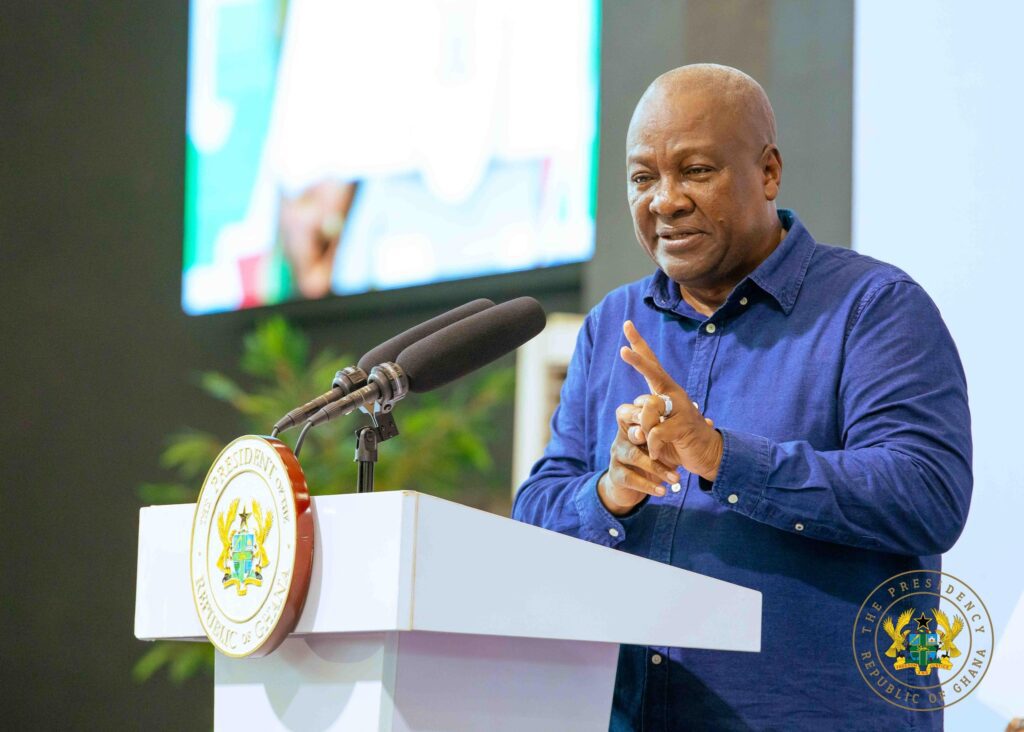
Mortgage Gains Still Fall Short of the Deficit
President Mahama credited the National Home Ownership Fund, which is set to become the National Housing Fund, for working with GCB Bank, Stanbic Bank and Republic Bank on government-backed mortgage facilities and rent-to-own arrangements.
He disclosed that the interventions have helped more than 1,000 people own homes, while mortgage rates under the National Mortgage Scheme now stand at 8.4%. He thanked the Ministry of Finance for managing an economy that has pushed interest rates down.
The pace still troubles him. Ghana’s housing deficit has also drawn pointed questions from Ahmed Ibrahim over delivery. President Mahama challenged the sector: “We must count new homeowners in the hundreds of thousands each year if we are to make up that 1.8 million housing deficit we face.”
Expensive short-term construction loans push up the final price of a home, President Mahama noted, and uncertain demand makes lenders cautious. He backed the fund’s proposed national database of prospective home buyers, which would let developers and lenders plan around demonstrated demand, suitable locations and realistic prices.
He also urged government, lenders and developers to consider guarantees and risk-sharing facilities for viable affordable projects.
A Six-Month Test for Banks
President Mahama closed with clear expectations. He wants commitments from at least three financial institutions to introduce or revise affordable housing loan products within six months, showing how households now excluded from formal finance can be reached.
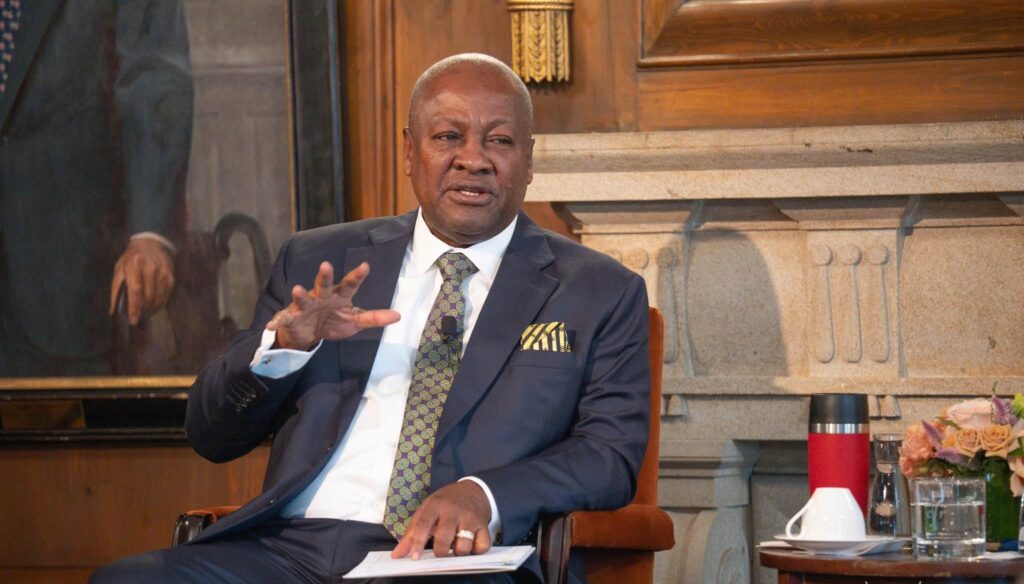
He also asked delegates to agree on pilot financing partnerships among the fund, lenders and developers, with realistic prices and clearly identified beneficiaries. He then declared the conference and its exhibition duly opened. Delegates now have two days to shape a communique with responsibilities, timelines and implementation milestones.
READ ALSO: Ghana Inflation Rises to 5.2% as Domestic Pressures Persist