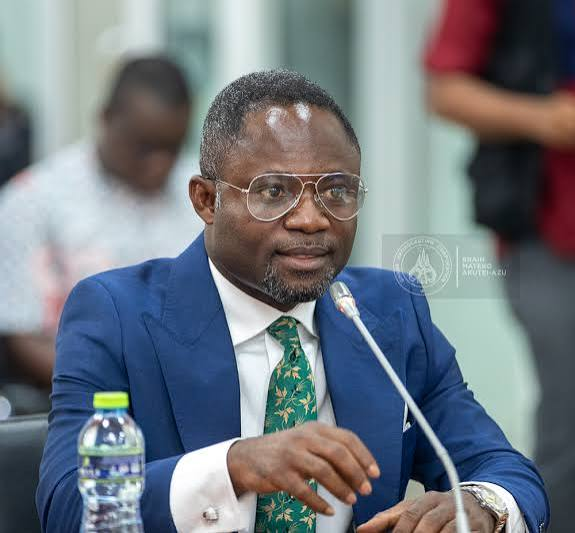
Health Minister Hon. Kwabena Mintah has announced that Ghana is exiting Gavi, the Vaccine Alliance, and will now pay for all the vaccines used in the country, with annual costs rising to about US$54 million by 2027.
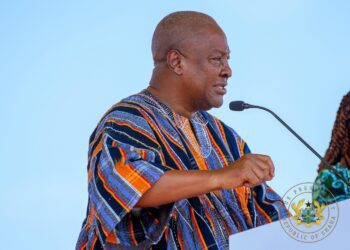
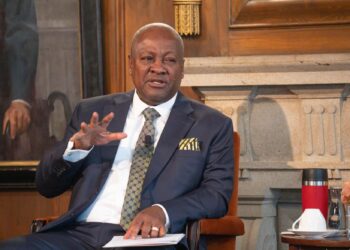
Hon. Mintah explained that Ghana’s exit from Gavi means the country must finance its entire vaccine requirement from domestic sources. He made disclosures at a health sector updates engagement, where he said President John Dramani Mahama had directed that no inherited health project be abandoned.
According to him, vaccine expenditure rose to US$24 million in 2025, and the government paid. In 2026 the bill is about US$48 million, and payment is under way. He said the ministry’s data show the 2026 obligation has been fully paid.
For 2027, he projected expenditure of about US$54 million. He said he raised the matter with the President, drawing his attention to Ghana’s exit from Gavi and the need to fund immunisation.
“Ghana will have to finance 100% of the vaccines we use in this country, and the government is committed to ensuring that the necessary funding is provided to protect the health of every citizen.”
Hon. Kwabena Mintah, Minister of Health

The President, he said, described vaccines as a public good that must be financed, and directed that money be found. Mr Mintah said funding for 2027 will therefore be clearly provided for, and called it a significant achievement.
Six new regions still lack hospitals.
He also mentioned that government has begun construction of three new regional hospitals, a 400-bed mother and child centre at Korle Bu, and a network of cardiac catheterisation laboratories and cardiology centres.
On infrastructure, the Minister noted that Ghana once had 10 regions and now has 16. Of the 10 regional hospitals in the original regions, he said, nine were built under the National Democratic Congress (NDC) government. That leaves six newer regions without regional hospitals.
Hon. Mintah stated that contracts have been signed for three of the six facilities, and contractors have moved to site this year. The three are in the Oti, Western North and Savannah regions. Each will be a 160-bed regional hospital.
He added that the finance minister has granted commitment authorisation for the ministry to begin processes for the remaining three next year.
Korle Bu gets a 400-bed centre.
At the Korle Bu Teaching Hospital, Mr Mintah said a contract has been signed and a contractor is on site to build a 400-bed mother and child centre.
The facility will have theatres and other specialised services, and he described it as a hospital within a hospital, forming part of the remodelling of the country’s premier teaching hospital.
He also mentioned plans for two additional specialised hospitals, but the details were not clear from the account of his remarks. Mr Mintah stressed that the government is continuing projects begun by its predecessors.
“His Excellency the President has given a clear directive that we are not abandoning any project we have come to inherit, and therefore we continue.”
Hon. Kwabena Mimtah
Cardiac care is now a priority.
He explained that government has decided to prioritise cardiology facilities, citing a case that led to the directive. A medical doctor being transported from a hospital in another part of the country to Accra, reportedly from Kumasi, died after the facility lacked a functioning catheterisation laboratory, he said. The cath lab at Korle Bu, procured under an earlier Mahama administration, had also broken down.
Following that, the President directed that three cardiology centres be established. Mr Mintah said the cath lab at Korle Bu has been commissioned. The one in Tamale is more than 70 per cent complete. A third cardiology centre is also more than 70 per cent complete.

The President has further directed that facilities be added in 2027 in the Western Region and another region, which Mr Mintah appeared to name as the Volta Region. He said anyone in the medical field would appreciate the importance of the centres.
READ MORE: Teacher Union Strike Talks Stall Over New Allowance Demand; Dr. Smith-Graham