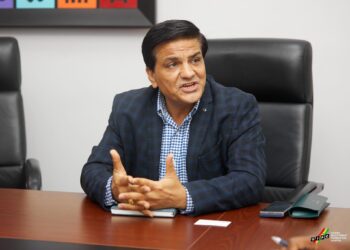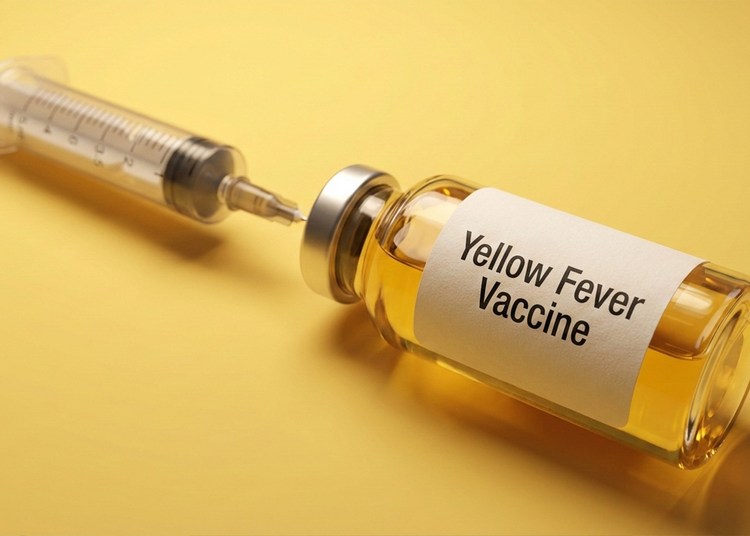
Health Minister Kwabena Mintah Akandoh says Ghana has recorded 450 suspected yellow fever cases across its 16 regions, of which three have been laboratory-confirmed. The Upper West Region accounts for 88 of the suspected cases.
The Minister said health authorities are widening vaccination beyond the routine childhood programme to include adults in the affected area, and have requested more than 187,000 additional vaccine doses. He gave a district-by-district breakdown for the Upper West, which he said is now the focus of the response.
Hon. Akandoh said the 450 suspected cases were picked up across all 16 regions. Of the 88 suspected cases in the Upper West, three have been confirmed.
The confirmations were done at the Institut Pasteur in Dakar, Senegal, which he described as the World Health Organisation (WHO) designated laboratory for confirming yellow fever in the sub-region.

He added that some deaths may be associated with yellow fever. He Further stopped short of attributing any death to the disease, as such a link requires laboratory confirmation.
District Breakdown in the Upper West
Because the focus is now on the Upper West, the Minister gave a breakdown of the 88 suspected cases. Wa West recorded 27, Sissala West 23 and Sissala East 21. He also reported deaths that may be associated with yellow fever, separating those that occurred in health institutions from those in communities.
Among institutional deaths, Wa West recorded three and Nadowli-Kaleo one. Daffiama-Bussie-Issa, Wa East and Wa Municipal recorded none. Among community deaths, Wa West recorded one and Sissala East four.
The Minister reported these as deaths that may be associated with the disease, not as confirmed yellow fever deaths. The three confirmed cases are the only ones verified in the laboratory so far.
Vaccination Moves Beyond Children
Yellow fever vaccination is already part of Ghana’s routine immunisation programme. It is given to children between 9 and 18 months of age, and the Minister said the country has no stock-out of the vaccine.
Existing supplies, however, are meant for that age group. In the current circumstances, the Minister said, the vaccination has to reach adults too.
“Yellow fever immunisation is part of our routine immunisation in this country, and it is done for children between 9 and 18 months. We don’t have a stock-out of those vaccines.”
Health Minister Kwabena Mintah Akandoh
The change matters because the routine programme protects only a narrow age group. Adults in the affected districts have no such cover, and the Minister said the response must be broadened to include them.
He set out the policy in direct terms.
“Under the circumstances, we have to widen the vaccination to include adults in the whole affected area.”
Health Minister Kwabena Mintah Akandoh

To support the wider campaign, health authorities have requested more than 187,000 additional vaccine doses. The extra doses are needed because the existing stock is allocated to the routine childhood programme.
The Minister did not say in the remarks available who the request was made to, when the doses are expected to arrive or when adult vaccination will begin. He also did not give the number of adults to be covered.
How the Figures Fit Together
Taken together, the figures show a large pool of suspected cases and a small number of confirmed ones. Of 450 suspected cases nationwide, three have been confirmed. In the Upper West, three of 88 have been confirmed.
The gap reflects the way surveillance works. Cases are first flagged on clinical signs and reported as suspected. They are then tested, with confirmation done at the Dakar laboratory. The number of confirmed cases can therefore rise as results come in, and the Minister did not say how many samples are still awaiting results.
The district data also show where the pressure lies. Wa West, Sissala West and Sissala East have the highest numbers of suspected cases and, in the case of Wa West and Sissala East, the community deaths that may be associated with the disease.
The Minister’s account of the death figures draws the line carefully between what is suspected and what is proven. Deaths are being tracked and reported, but they will not be counted as yellow fever deaths until laboratory results say so.
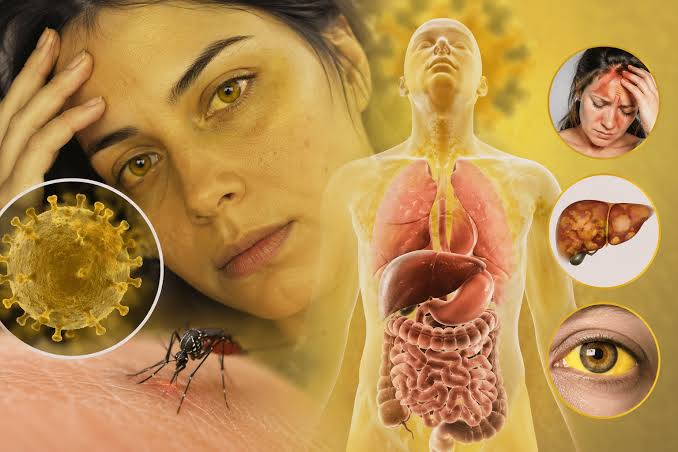
Two developments will shape the response. The first is whether the additional doses arrive, since the adult campaign depends on them. The second is the outcome of further laboratory testing, which will show how many of the suspected cases and associated deaths are confirmed as yellow fever.
The Minister’s remarks make clear that the Upper West is the priority, and that the vaccination effort in the affected area is being extended to adults. Further details on timing and coverage are yet to be announced.
READ MORE: PAC Agrees to Settle GH¢33,100 Debts from Mental Health Care