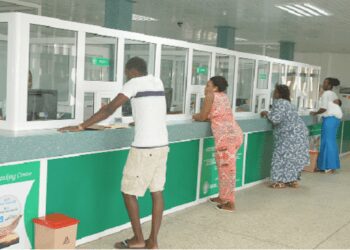
Ghana’s small and medium-sized enterprises (SMEs) could be missing out on critical financing opportunities as high interest rates, stringent collateral requirements and limited financial literacy continue to restrict access to credit, prompting renewed calls for reforms in the country’s lending system.
The Chartered Institute of Credit Management, Ghana (CICMG), is urging banks, regulators and policymakers to reconsider rigid lending conditions that make it difficult for viable businesses, particularly those in rural communities and the informal sector, to secure loans.
The Institute believes that improving access to finance requires a combination of flexible lending requirements, increased credit capital and stronger financial education to ensure borrowers can obtain funding without undermining the stability of financial institutions.
President of CICMG, Evelyn Osei Tutu, raised these concerns at the 2026 Ghana Credit Excellence Awards in Accra, where she called for a lending environment that supports business growth while maintaining responsible credit management practices.
Her concerns highlight a longstanding challenge in Ghana’s financial sector, where businesses that need financing to expand their operations often struggle to satisfy the conditions imposed by lenders.
High Lending Barriers Keep SMEs Struggling for Credit
Despite their contribution to economic activity and employment, many small businesses face considerable difficulties securing loans from traditional financial institutions.
Banks typically assess borrowers based on their repayment capacity, credit history and available collateral. While these requirements help lenders manage risks, they can disadvantage smaller enterprises that lack valuable assets or formal financial records.
According to Mrs Osei Tutu, these challenges are slowing the pace at which financial institutions extend credit to businesses that could otherwise benefit from additional capital.
“It’s making facilities a bit slow when banks are issuing to the SMEs because some of them don’t really have the requirements.”
Mrs Osei Tutu
Her comments point to a difficult situation confronting entrepreneurs who may have viable business ideas, steady customers and opportunities to expand but lack the property or other assets required to secure loans.
The problem can be particularly severe in rural communities, where businesses may operate on a smaller scale and have limited access to formal banking services.
Without appropriate financing, these enterprises may struggle to purchase equipment, increase inventory, employ additional workers or take advantage of new commercial opportunities.
Mrs Osei Tutu acknowledged that lenders must conduct proper credit assessments to prevent defaults. However, she argued that excessively rigid conditions could exclude borrowers who have the potential to repay their loans.
CICMG Wants More Capital and Flexible Lending Rules
Beyond collateral requirements, CICMG is calling for increased lending capital and a more flexible regulatory environment to expand financing opportunities for underserved borrowers.
The Institute believes that a combination of additional funding and practical lending reforms could help financial institutions reach businesses and individuals who remain outside the formal credit system.
Mrs Osei Tutu stressed the importance of extending these opportunities to rural communities and operators within the informal economy.
“If we are able to get more capital injected and if the regulators also make things a little flexible. I think we should be able to do more, especially with the rural areas and other markets we manage with the informal sector too.”
Mrs Osei Tutu
Her appeal raises important questions about how Ghana can widen access to credit without exposing banks and other lenders to excessive financial risks.
Greater flexibility does not necessarily mean abandoning credit checks or approving loans without proper assessment. Rather, lenders could explore appropriate ways of evaluating borrowers whose financial circumstances do not fit conventional lending models.
Such approaches could help capable entrepreneurs obtain financing while allowing lenders to maintain effective risk management practices.
For the wider economy, improved access to credit could give smaller businesses greater room to grow, strengthen local commercial activity and support employment creation.
Poor Financial Literacy Could Turn Loans Into Losses
While advocating easier access to financing, CICMG has also warned that lending reforms must be accompanied by stronger financial literacy programmes.
Mrs Osei Tutu believes that some borrowers receive loans without fully understanding the conditions attached to the facilities, their repayment obligations or the consequences of mismanaging borrowed funds.
She argued that financial institutions and credit professionals must do more to educate borrowers before disbursing loans.
“You realise that we are very much in a hurry to give out the credits to people, but we don’t tell them the consequences of what you tend to benefit and the things that you have to do right.”
Mrs Osei Tutu
Her concern reflects a challenge that affects both borrowers and lenders. A business owner who fails to understand repayment schedules, interest charges and the importance of maintaining sufficient cash flow could quickly encounter financial difficulties.
When several borrowers struggle to repay their facilities, lenders may face mounting recovery costs and reduced funds available for future lending.
Mrs Osei Tutu therefore called for stronger education programmes for borrowers and credit officers, alongside improved loan monitoring and recovery systems.
“Loans are easy to give but they are difficult in recovery,” she said.
The warning reinforces the need to treat financial education as an essential part of the lending process rather than an activity that begins only after borrowers encounter repayment difficulties.
Credit Unions Emerge as an Alternative for Rural Borrowers
Meanwhile, credit unions are being positioned as an important part of efforts to close the financing gap, particularly among individuals who cannot meet conventional bank collateral requirements.
General Manager of Emmanuel Cooperative Credit Union, William Atta-Pearce, said credit unions could help extend financing to people who lack property or other assets to pledge as security.
“Many individuals, particularly those in rural areas, are denied of credit because of issue of collateral, but we as Credit Union, that is where we come in, so that we make credit accessible for such individuals.”
William Atta-Pearce
Unlike lending arrangements that depend heavily on conventional collateral, credit unions can use their institutional structures and established relationships with members to support credit assessment and loan recovery.
This approach could provide opportunities for borrowers who might otherwise struggle to obtain financing from traditional banks.
Mr Atta-Pearce, whose institution was recognised as Cooperative Credit Union Brand of the Year at the awards, urged stakeholders to make credit more accessible regardless of where borrowers live.
“I think that it’s high time we look at how we can make credit accessible, irrespective of wherever you are, so that people can easily get access to money and that will also help us to grow the economy.”
Mr Atta-Pearce
His comments underline the potential role of credit unions in bringing more individuals and businesses into the formal financial system.
Balancing Easier Credit With Responsible Lending
The calls from CICMG and Emmanuel Cooperative Credit Union place renewed attention on the need to balance financial inclusion with sound lending practices.
Easing collateral requirements and expanding credit capital could create opportunities for underserved businesses, but the long-term success of these measures will depend on effective borrower assessment, financial education and repayment monitoring.
Banks, credit unions, regulators and policymakers therefore face the task of developing lending arrangements that accommodate the realities of small businesses without weakening credit discipline.
If Ghana is to unlock the productive potential of its SMEs and informal-sector operators, access to finance must become more responsive to the needs of viable borrowers.
The challenge extends beyond making loans available. It also involves ensuring that borrowers understand their obligations, businesses use funds productively and lenders can recover their investments.
Achieving that balance could help transform credit from an obstacle confronting smaller enterprises into a stronger source of business expansion, employment and economic growth.
READ ALSO: AshantiGold 04 Part Ways With Head Coach Karim Zito