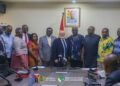
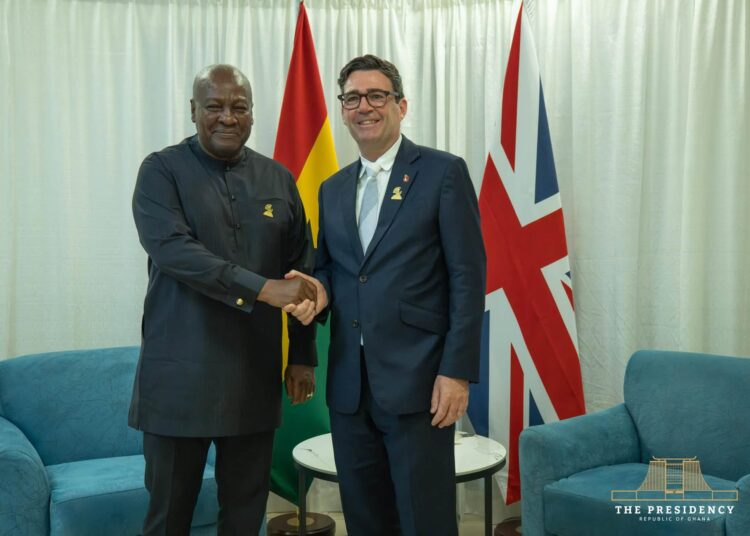
President John Dramani Mahama held talks with UK Prime Minister Andy Burnham on the sidelines of the 28th Commonwealth Heads of Government Meeting (CHOGM) in Antigua and Barbuda. The meeting put trade, shared democratic values and reparations for the transatlantic slave trade on the table.
President Mahama used the encounter to press for a deeper partnership for growth between Accra and London. He also welcomed Prime Minister Burnham’s recent announcement that the UK is open to a formal apology and a structured, good-faith dialogue on reparatory justice.
Ghana sees the shift as a chance to move past the legacy of slavery and colonialism while building trade and investment ties in a changing global order.
“The whole global architecture is unwrapping, and I think that this is a time for us to forge stronger partnerships between countries that believe in a multilateral system, a global system.”
President John Dramani Mahama
Mahama Sets the Tone for Ghana-UK Relations
President Mahama opened by congratulating Prime Minister Andy Burnham on his election as Prime Minister, then set the relationship in historic terms. He described Ghana and the UK as close partners and told Prime Minister Burnham that “the partnership for growth gives us the opportunity to develop our relations to an even higher level.”
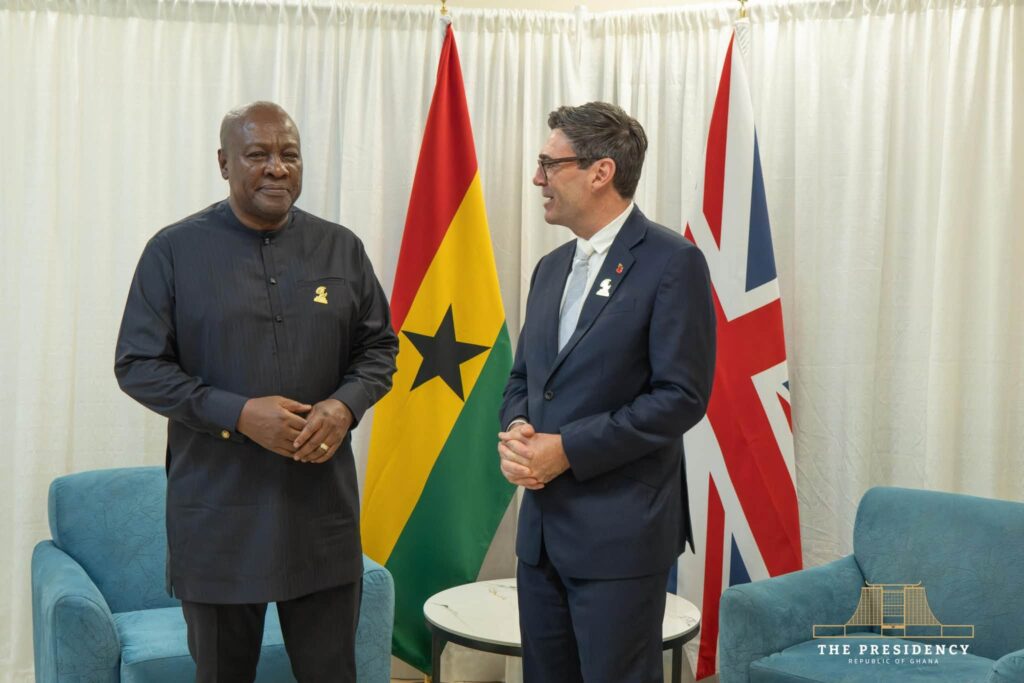
The remark builds on the partnership for growth agreement the two governments sealed in June. Shared values anchored his case. President Mahama pointed to “the value of democracy, the value of respect for human rights, the value of respect for constitutional governance” as common ground.
He argued that both countries can keep pursuing successful outcomes from that foundation.
A Changing UK Posture Toward the Commonwealth
President Mahama also read a shift in London’s outlook. He observed that the UK is “more open to interacting with the rest of the world, especially countries like Ghana and the larger Commonwealth.”
For a government that has made reset diplomacy a signature theme, that change opens room for the kind of partnership Accra wants. President Mahama commended Prime Minister Burnham for the new outcome in his relationships with other global partners and urged both sides to seek results from the many values they share.
Reparations Draw the Warmest Response
Reparations drew the most emphatic reaction from the Ghanaian side. President Mahama told Prime Minister Burnham, “We appreciate the statement that you made in relation to reparations.” He then framed what the statement could achieve.
“I believe that it creates a third step for us to continue to work to see how we can put this whole issue of the transatlantic slave trade and colonialism behind us.”
President John Dramani Mahama
Foreign Minister Samuel Okudzeto Ablakwa gave the government’s reading in plain terms. He wrote that his first bilateral meeting at CHOGM was with UK Foreign Secretary Ed Miliband, where he conveyed commendations from President Mahama, the government and the people of Ghana.
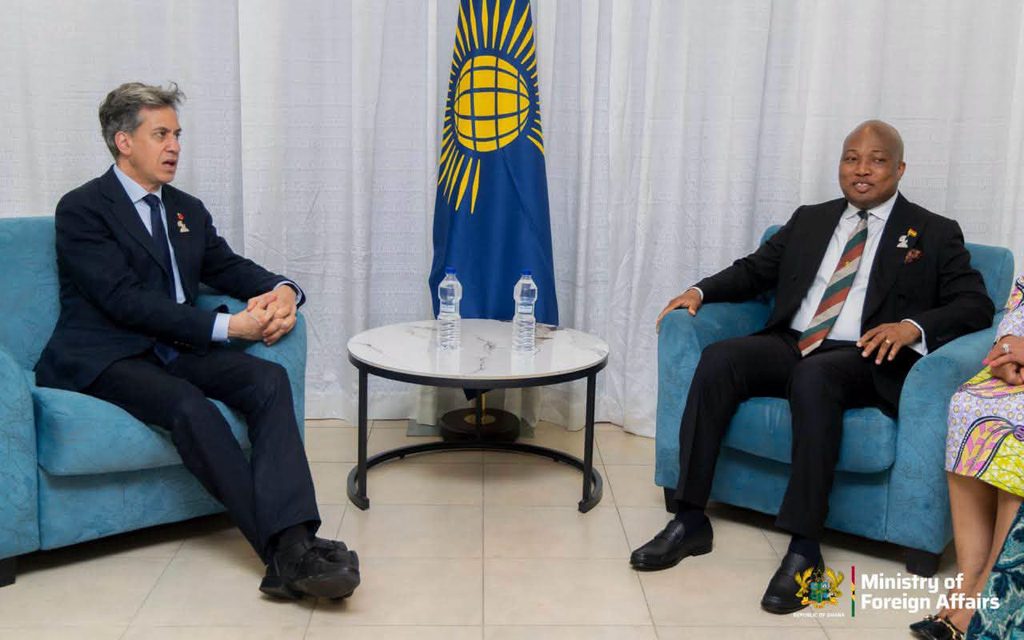
Hon. Ablakwa credited Prime Minister Burnham and Miliband with “admirable courage and moral leadership.” He added a pointed line of his own. “It is rather the weak and cowards who fear to say sorry,” he wrote.
Miliband and the Reset Agenda
Miliband figured in President Mahama’s remarks as well. The president noted that the two sides had already met the Foreign Secretary, who attended Ghana’s dialogue on the reset and delivered a speech in support of it. President Mahama said the speech backed breaking dependency syndrome and working together in a new atmosphere of trade and investment.
That message continues a thread from earlier engagements. President Mahama and Miliband previously discussed trade and investment in London, and Ghana has pushed for a new business cooperation framework with the UK. For Ghanaian exporters and investors, the Antigua talks suggest the commercial track and the reparations track now move side by side.
The UN Resolution Behind Ghana’s Push
Hon. Ablakwa tied the UK’s shift to Ghana’s diplomatic campaign at the United Nations. He pointed to the Ghana-led resolution that declared transatlantic enslavement the gravest crime against humanity, and he described its impact as monumental.
The UN resolution passed in March after Accra rallied the African Union, CARICOM and a wider global coalition. Hon. Ablakwa wrote that Ghana and those partners stand ready to work with the UK toward healing, reconciliation, restitution and repair.
He also extended a welcome to the European countries that abstained during the UN vote, signalling that Accra wants those doors open too. He called reparatory justice the real winner and promised to keep delivering results for Ghanaians and their ancestors.
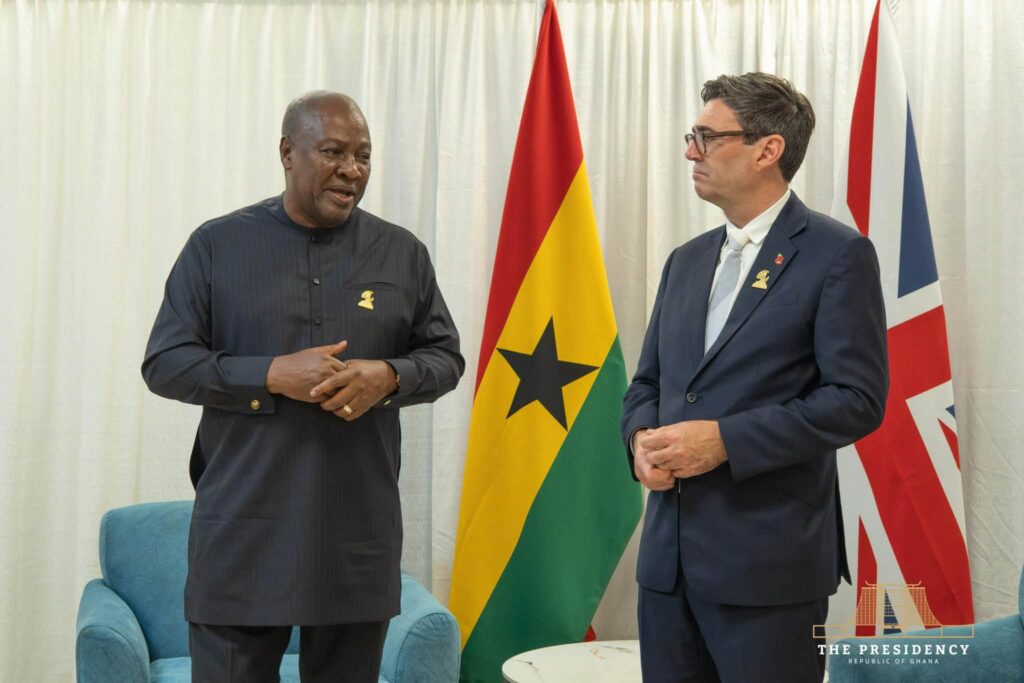
The meeting leaves Ghana with two parallel opportunities. The first is commercial, built on a partnership for growth that both governments have already endorsed. The second is moral and political, anchored in a UK leader who has signalled willingness to talk about apology and repair.
Neither the Prime Minister’s openness nor the President’s welcome has yet produced a formal dialogue, a timetable or an agreed process. Ghanaians will now watch to see whether warm words in Antigua become structured talks and measurable results.