Ghana is positioning industrial development, export expansion and private-sector participation at the centre of its investment strategy, with the government outlining a series of private sector specific projects and trade reforms aimed at strengthening local manufacturing and attracting long term capital.
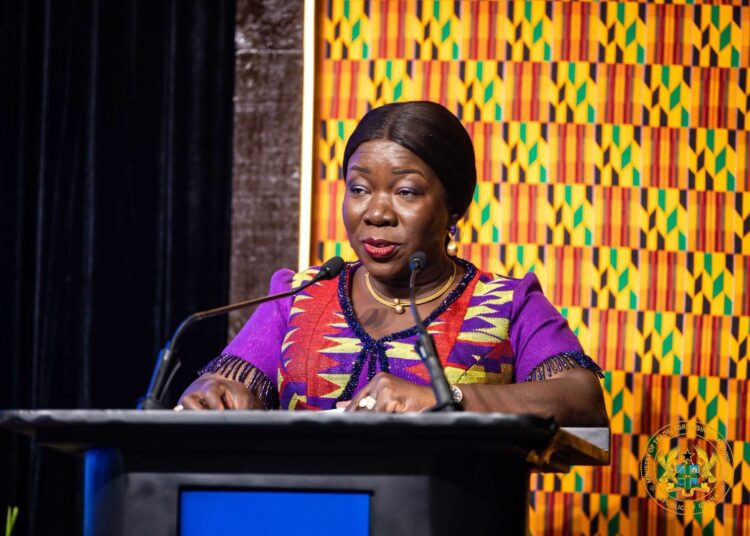
The Minister for Trade, Agribusiness and Industry, Hon. Elizabeth Ofosu-Adjare, announced the initiatives at the Ghana Invest Summit, 2026 at the Kempinski Hotel in Accra emphasising that the country’s investment ambitions must translate into factories, export contracts, stronger domestic supply chains and employment opportunities.
Addressing investors, policymakers, development partners and business leaders, she said Ghana’s priority was no longer simply attracting investment but creating the conditions for businesses to operate efficiently, access international markets and expand production.
“Ghana has never lacked product worth making. What we have lacked is scale, and the standards, market access that scale depends on.”
Minister for Trade, Hon. Elizabeth Ofosu-Adjare
Export Growth Strengthens Investment Case
The Minister pointed to Ghana’s improving non-traditional export performance as evidence of the country’s growing capacity to participate in international trade through value addition.
According to the Ghana Export Promotion Authority’s 2025 Non-Traditional Export Statistics Report, the country earned approximately US$5.0069 billion from non-traditional exports in 2025, representing a 30.7 per cent increase over the US$3.83 billion recorded in 2024.
Also, processed and semi-processed products generated US$3.09 billion, an increase of 52.78 per cent, demonstrating the growing contribution of value added production to export earnings. Cocoa paste, butter and powder remained among the leading contributors.
The Minister noted that Ghanaian non-traditional products already reach 152 countries, providing investors with an existing export network and commercial opportunities to build upon.
However, she acknowledged that international market access must be supported by effective standards, reliable certification and reduced trade barriers.
Her position comes against a global investment environment characterised by increasing competition for capital.
The United Nations Conference on Trade and Development’s (UNCTAD) World Investment Report 2026 indicates that Africa attracted approximately US$70 billion in foreign direct investment in 2025.
The report also found that the world’s 20 largest investment destinations accounted for more than 80 per cent of global foreign direct investment, highlighting the concentration of capital in a relatively small number of economies.
The World Trade Organization’s October 2026 outlook further projects global merchandise trade volume growth of 3.9 per cent in 2026, revised upwards from its earlier 1.9 per cent forecast.
The demand for semiconductors and servers accounted for 47 per cent of global merchandise trade growth in the first half of the year.
These developments, the Minister’s address suggested, make industrial competitiveness, export readiness and strategic investment partnerships increasingly important for Ghana.
Five Sectors Open for Investment
A major component of the government’s strategy is the implementation of industrial policies covering textiles and garments, pharmaceuticals, automotive components and agribusiness.
Hon. Ofosu-Adjare disclosed that Cabinet had approved the policies, creating opportunities for private-sector participation in projects expected to expand domestic production and employment.
In the textiles and garments industry, government plans to establish four garment factories in the Central, Bono East, Eastern and Greater Accra regions in 2027.
The facilities are projected to generate approximately 336,000 direct jobs at full capacity, with young people and women expected to constitute a significant proportion of the workforce.
In pharmaceuticals, the government intends to establish manufacturing hubs to reduce dependence on imported medicines and strengthen domestic production capacity.
The automotive sector will also benefit from a component manufacturing hub designed to enable vehicle assembly companies to source more parts locally, building on Ghana’s Automotive Development Policy.
Agribusiness initiatives include an integrated sugar development estate, bringing sugarcane cultivation, processing mills and refining operations together within one production system.
For the oil palm industry, government is developing a hub-and-spoke arrangement involving plantations and processing mills, with between 30,000 and 40,000 smallholder households expected to supply a central processing facility under guaranteed off-take arrangements, “Each Of These Projects Is Open For Private Sector Participation.”
The Minister said the projects were intended to create commercially viable opportunities while strengthening domestic value chains and reducing reliance on imported products.
Trade Reforms and Investor Support
The Accelerated Export Development Programme, her Ministry will work with the Ghana Export Promotion Authority and the Customs Division of the Ghana Revenue Authority to help businesses satisfy documentation and rules-of-origin requirements under the African Continental Free Trade Area, Ghana’s trade arrangements with the European Union and the United Kingdom, and other preferential trade schemes.
She also highlighted the need to address non-tariff barriers within the Economic Community of West African States, including unofficial charges, repeated inspections and unnecessary administrative procedures that increase exporters’ operating costs.
On product quality, the government is working with the Ghana Standards Authority under the National Quality Policy to align domestic standards with regional and continental requirements.
The objective is to secure wider recognition of testing and certification issued in Ghana, reducing the cost of repeated assessments when products enter other African markets.
The Minister further assured manufacturers that Ghana would apply trade remedies permitted under World Trade Organization rules through the Ghana International Trade Commission while strengthening Customs enforcement against smuggling and under invoicing.
Government procurement will also be used to stimulate domestic manufacturing, particularly in uniforms, office furniture, school feeding supplies and construction materials.
Another significant intervention is the establishment of a ministerial business clinic to address operational difficulties confronting companies.
The initiative brings relevant government agencies together to resolve business-related challenges, particularly those involving electricity supply, logistics, port clearance and access to industrial land, “Open Does Not Mean Unprotected Against Unfair Trade.”
Hon. Ofosu-Adjare urged investors to engage her Ministry early, plan for exports from the beginning and prioritise local sourcing wherever possible.
She said the Ministry would monitor commitments made at the summit and report on progress at the next edition, stressing that the success of Ghana’s investment agenda would ultimately be measured by completed factories, signed export contracts and employment created.
READ ALSO:2027 Budget: Cedi Loses 10.1% Against Dollar