Giving a commentary on the 2027 Budget during parliamentary proceedings, the Member of Parliament for Karaga and Ranking Member of Parliament’s Finance Committee, Dr Mohammed Amin Adam, has challenged the Government’s claims of economic progress, describing the reported stability as “artificial.”
The former Finance Minister argues that the budget has failed to address the priorities of Ghanaians, while key economic indicators “have begun reversing.” He also compared the country’s current debt position with that recorded during the first two years of the Akuffo-Addo administration, arguing that the figures undermine the Government’s account of its economic performance.
“Unfortunately, Mr Speaker, this budget failed the test. The budget failed the test because it could not account for jobs promised in the 2025 budget and in the 2026 budget.”
Dr Mohammed Amin Adam
Dr Adam cited a pre-budget survey by KPMG, which found that 71 percent of respondents identified employment as their foremost concern, while 54 percent prioritised the cost of living. He asserted that the Government has consequently “missed an opportunity to respond meaningfully to the expectations of citizens, especially young people seeking work.”
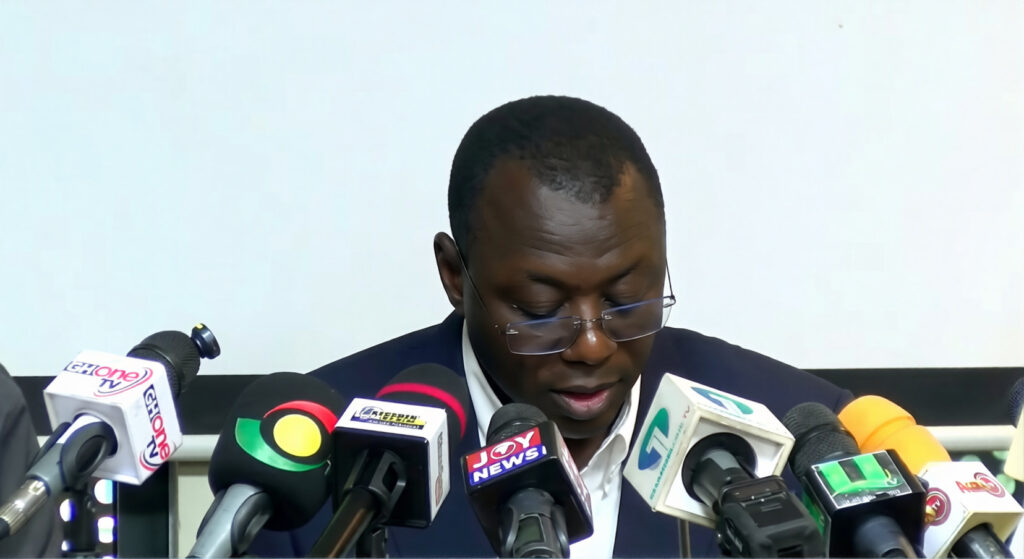
The Minority Ranking Member identified several employment commitments that, in his assessment, remain unaccounted for. These include the 800,000 jobs projected under the 2026 Budget, the 1.7 million expected from the 24-hour economy by the end of 2028 and the 490,000 anticipated through the Big Push programme.
He also questioned the status of the oil palm development initiative, which was projected to create 250,000 jobs, noting that its loan agreement is yet to be laid before Parliament. In addition, he pointed to three proposed garment factories expected to generate 27,000 direct jobs, observing that the projects were still at the feasibility stage.
Beyond the employment commitments, Dr Adam problematised the progress as “artificial economic stability” citing the increase in the debt-to-GDP ratio from 44.7 percent to 47.5 percent by October 2026, alongside what he identified as “rising inflation and renewed pressure on the cedi.”
The former Finance Minister also contrasted the country’s debt stock under the two administrations. He indicated that Ghana’s debt declined from US$60.1 billion in 2021 to US$49.5 billion in 2024 under the Akufo-Addo administration, but rose to US$65.3 billion by October 2026 under President Mahama.
Moreover, Dr Adam asserted that the debt increase under the current administration averaged US$7.9 billion annually, compared with US$1.8 billion during the first two years of Akufo-Addo’s first term.
Minority Challenges 2027 Growth Projection Over ICT Dependence
Moving to the credibility of the 5.2 percent economic growth projection for 2027, the Member of Parliament for Karaga and Ranking Member of Parliament’s Finance Committee, Dr Mohammed Amin Adam contends that the underlying figures do not support the forecast.

The former Finance Minister identified “an excessive dependence on the information and communication sector, weak performance across other productive areas and rising government consumption” as factors undermining the projected expansion.
“If you are now assuming to grow at 5.2%, it simply means that with all the policies you are implementing like big push, you are allocating 28 billion; new economy is receiving 30 billion and you want to spend 100 billion in capital spending, and the contribution to growth would just be 0.3 percentage point. The numbers don’t add up.”
Dr Mohammed Amin Adam
Dr Adam observed that the Government’s Fiscal Strategy Document has established a baseline growth forecast of 4.9 percent for 2027. He therefore questioned how the proposed programmes and substantial capital allocations could produce only a marginal improvement on that baseline, describing the projected outcome as “inadequate.”
He also flagged the disproportionate contribution of information and communication to the country’s anticipated economic expansion. According to the Minority Ranking Member, the sector accounts for 41 percent of the projected growth despite representing only nine per cent of the economy.
Minority Faults Government Over Weak Returns on Capital Spending
Conversely, he pointed to the weak performance of sectors responsible for a significant share of employment, arguing that their contribution to economic expansion remains insufficient. Dr Adam warned that the forecast could conceal persistent weaknesses in agriculture, manufacturing and other productive activities.
The former Finance Minister also questioned the Government’s allocation for goods and services under the Office of Government Machinery. He identified an increase from GH¢749 million to GH¢1.2 billion, representing a 67 percent rise, and characterised the expenditure as “growing consumption at a time when productive investment remains constrained.”

In addition, Dr Adam scrutinised the Government’s capital expenditure performance over the previous two fiscal years. He indicated that the administration budgeted GH¢32.7 billion in 2025 but spent GH¢20 billion, while its 2026 allocation was revised from GH¢57.5 billion to GH¢52.5 billion, with actual expenditure reaching GH¢41 billion.
He further questioned the returns from the latter expenditure, noting that construction, which received a substantial share of the investment, contributed only 0.2 percent to economic growth in the first half of 2026. “Were the contract prices inflated?” he queried, demanding an explanation for the apparent disconnect between public expenditure and sectoral performance.
READ ALSO: Works and Housing Ministry Faces Questions Over Accra Flood Mitigation