Ghana’s proposed US$2.2 billion investment in new electricity infrastructure is facing questions over whether it complements or potentially duplicates commitments already made under the country’s National Energy Compact, after civil society organisations called on Government to reconcile the two investment programmes.
The Ghana CSOs Alliance on Mission 300, convened by the Strategic Youth Network for Development (SYND), raised the concerns, arguing that the 2027 Budget introduces a new generation and infrastructure programme without adequately explaining how it fits into Ghana’s existing commitments under the continental electrification initiative.
The intervention brings an important question into Ghana’s energy policy debate: is the country building a coordinated electricity investment pipeline, or developing separate project commitments that could compete for financing, implementation capacity and government attention?
The distinction matters because Ghana’s electricity challenge is not simply a shortage of installed generation capacity. The country must also improve transmission, distribution, financial sustainability and access while expanding renewable energy and reducing the cost of electricity for businesses and households.
The Government’s new programme includes a fully state-owned 1,450-megawatt thermal power plant, a 600-megawatt solar project supported by 2,000 megawatt-hours of battery storage, and wider investments in the electricity network.
Separately, the 2027 Budget outlines US$500 million for transmission modernisation between 2027 and 2030, the deployment of two million prepaid meters and preparations for a state-owned nuclear power programme.
These investments are intended to address generation constraints, reduce technical and commercial losses and improve the reliability of electricity supply.
However, the CSOs argue that Government must explain how the new projects relate to the National Energy Compact, particularly its renewable energy and electricity access commitments.
Two Investment Frameworks, One Electricity System
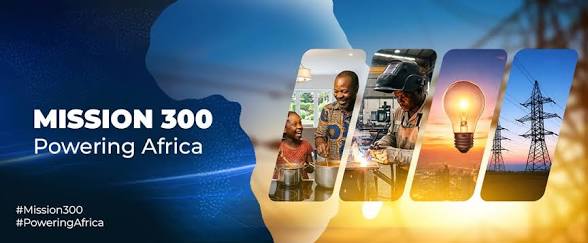
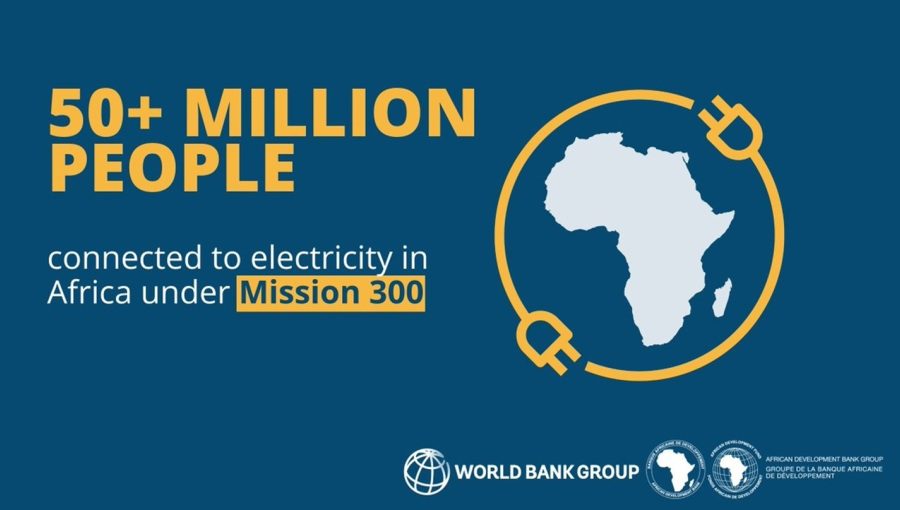
Ghana’s National Energy Compact was developed under Mission 300, an initiative supported by the World Bank and African Development Bank to expand electricity access to 300 million people across Africa by 2030.
Ghana’s compact was designed to mobilise approximately US$2.6 billion in private investment within a broader US$4.4 billion investment pipeline.
Its commitments include achieving 99 per cent electricity access and 50 per cent clean cooking coverage by 2030, alongside increasing renewable energy’s share of electricity generation to 10 per cent.
The renewable energy programme includes approximately 850 megawatts of solar generation through competitive procurement, 150 megawatts of hydropower and 200 megawatts of wind capacity.
The 2027 Budget, meanwhile, places considerable emphasis on state-owned generation infrastructure, including the proposed thermal plant and a separate 600-megawatt solar project.
The difference in the proposed generation mix does not automatically mean the two programmes are incompatible. State investment can complement privately financed renewable projects, while additional thermal generation may provide dispatchable electricity to support system reliability.
The difficulty is that Government has not yet clearly demonstrated how the projects fit together, which commitments remain unchanged and how the financing and implementation schedules will be coordinated.
Without that clarity, developers and investors may struggle to establish whether projects under the National Energy Compact remain part of the country’s priority investment pipeline or have been overtaken by the new budget programme.
The Risk of Competing Project Pipelines
The concern is particularly relevant to Ghana’s solar ambitions.
The National Energy Compact envisages 850 megawatts of competitively procured solar capacity, while the new budget proposes a 600-megawatt state-owned solar facility with battery storage.
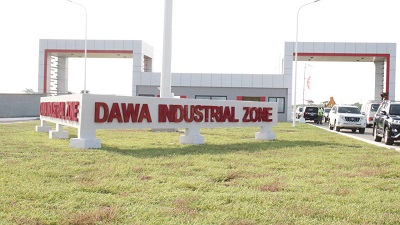
Other projects are also part of the country’s electricity development pipeline, including the Volta River Authority’s Pwalugu solar project, the proposed Dawa solar development and investments associated with the Bui Power Authority.
The challenge is not necessarily that Ghana has too many solar projects. It is whether these developments have been properly sequenced, financed and integrated into a coherent national generation plan.
If several projects pursue similar objectives without clearly defined responsibilities, they could create uncertainty over procurement, grid connection capacity, investment priorities and the availability of financing.
The implications extend beyond renewable energy developers.
Transmission infrastructure must be ready to evacuate electricity from new generation facilities, while distribution networks must be capable of delivering additional power to consumers.
Battery storage must also be integrated into system operations to ensure that electricity generated during periods of high solar output can be used when demand increases.
This means that generation targets cannot be assessed independently of the infrastructure and institutional arrangements required to make them operational.
Financing and Accountability Remain Central
The CSOs are also seeking greater clarity on how the Government’s proposed investments will be financed and monitored.
The distinction between the US$2.2 billion generation and storage programme, the separate US$500 million transmission allocation and other electricity-sector commitments is important.
Ghana’s energy sector continues to face financial pressures, with Government seeking to eliminate an annual sector shortfall estimated at approximately US$1.4 billion.

The ability to finance new infrastructure without creating additional fiscal pressure will therefore be a major consideration.
A programme may be technically justified but still encounter implementation difficulties if its financing arrangements, procurement schedules and expected returns are not clearly established.
The Alliance has called for stronger monitoring of the National Energy Compact, including a more effective delivery monitoring unit and public reporting arrangements.
It has also raised concerns about the need to clarify the proposed role of private-sector participation in electricity distribution, including how Ghanaian companies will be positioned within the process.
The coalition’s convenor, Chibeze Ezekiel, stressed the need for Government to reconcile its different investment commitments.
“It’s important that government reconciles its own numbers.”
The concern reflects a wider accountability issue: Ghana needs to demonstrate not only how much it intends to invest in electricity infrastructure, but also how each investment contributes to measurable national targets.
Ghana Needs More Than Installed Capacity
The debate ultimately goes beyond whether Ghana should invest in thermal, solar, hydro or wind generation.
The country needs an electricity system capable of supplying reliable and affordable power while supporting industrial expansion, improving access and reducing dependence on public financial interventions.
The proposed thermal plant could strengthen generation capacity, while solar and battery storage could diversify the supply mix and support peak demand management.
However, neither investment will independently resolve weaknesses in transmission, distribution, revenue collection or the financial arrangements underpinning the sector.
Similarly, Ghana’s Mission 300 commitments will require more than attracting investment on paper. Projects must reach financial close, secure procurement arrangements, connect to the grid and deliver electricity to consumers.
The Government therefore has an opportunity to address the CSOs’ concerns by publishing a clear reconciliation of the two investment frameworks, identifying which projects are additional, which are already captured under existing commitments and how the different financing arrangements will be coordinated.
It should also provide a transparent implementation timetable, including responsibilities for the relevant institutions and measurable indicators for tracking progress.
Ghana’s energy investment challenge is not simply about mobilising more capital. It is about ensuring that public expenditure, private investment and international development commitments reinforce one another.
As the country pursues its ambition to lower electricity costs and expand industrial capacity, the credibility of its energy strategy will depend on whether the different programmes deliver one coordinated system rather than a collection of competing projects.
READ MORE: Dr Matthew Nyaba Calls for National AI Education Roadmap for Ghana