
The Paramount Chief of the Dormaa Traditional Area and President of the Bono Region House of Chiefs, Osagyefo Oseadeeyo Dr. Nana Freduah Agyemang Badu II, has thrown his full support behind the Draft Reviewed Mining Policy and proposed amendments to the Minerals and Mining Act, 2006 (Act 703), describing the initiative as a landmark opportunity to align Ghana’s extractive sector with sustainable development principles.
Speaking during a stakeholder engagement session with officials from the Minerals Commission, Osagyefo Oseadeeyo Dr. Nana Freduah Agyemang Badu II commended government for deepening consultations with traditional authorities.
“The recognition of chiefs in policy formulation is both timely and essential, given our role as custodians of the land and key stakeholders in local development.”
Osagyefo Oseadeeyo Dr. Nana Freduah Agyemang Badu II, Paramount Chief of the Dormaa Traditional Area and President of the Bono Region House of Chiefs
He noted that royalties allocated to traditional authorities had made significant contributions to the prosperity of host mining communities and should be protected and enhanced under the reviewed framework.
“This approach shows that the government values inclusivity and understands the pivotal role traditional authorities play in shaping the success of mining in Ghana.”
Osagyefo Oseadeeyo Dr. Nana Freduah Agyemang Badu II, Paramount Chief of the Dormaa Traditional Area and President of the Bono Region House of Chiefs

As President of the Bono Regional House of Chiefs, Dormaahene has long championed initiatives that foster economic development in the region.
He urged paramount chiefs across the country to close ranks and work together to create jobs and expand opportunities for young people, stressing that partnerships between traditional leaders, government agencies, and the private sector are essential to translating mineral wealth into tangible benefits for local communities.
In his address, the Paramount Chief cautioned that the policy review would be a defining moment for the country.
“This review will determine whether Ghana leads Africa into a new frontier for responsible and sustainable mining or whether we remain trapped in the destructive patterns of the past.”
Osagyefo Oseadeeyo Dr. Nana Freduah Agyemang Badu II, Paramount Chief of the Dormaa Traditional Area and President of the Bono Region House of Chiefs
His concerns also extended to environmental protection, recalling his role at the National House of Chiefs in reviewing mining operations in forest reserves and proposing measures to halt mining activities in water bodies.
He argued that these measures were vital to safeguarding the long-term health of Ghana’s natural resources.
Chiefs Consulted Policy
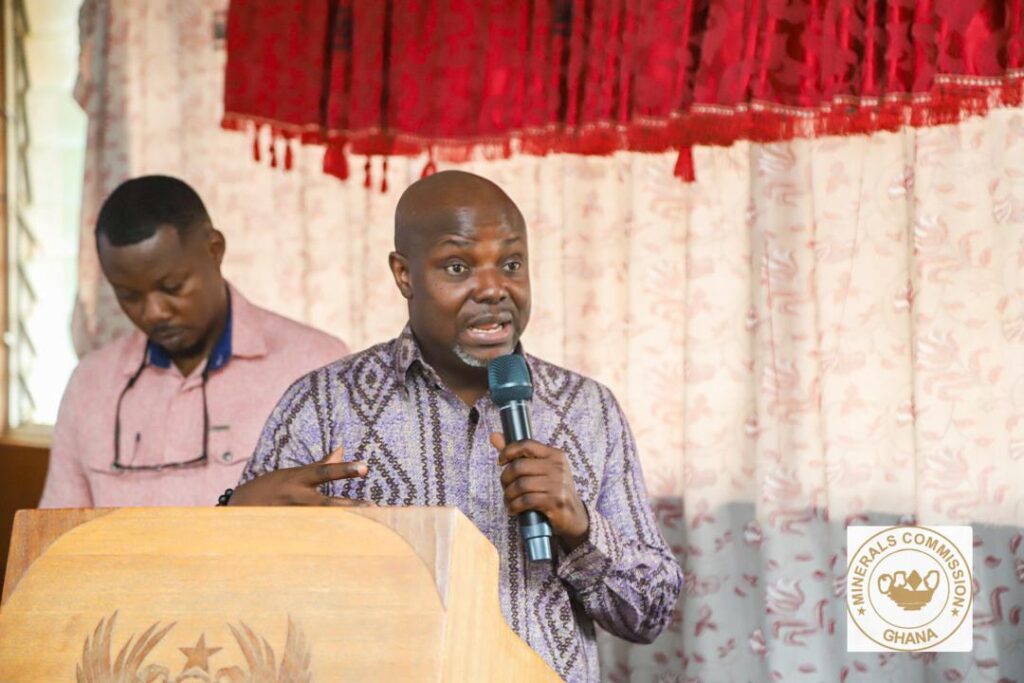
During the session, Dr. Ahmed Tijani outlined the mission of the Minerals Commission team, explaining that their visit aimed to hear directly from the chiefs and incorporate their insights into an all-encompassing policy framework.
Mr. Nelson Ahedor, another senior official, reinforced the point, stating that traditional authorities and community leaders are indispensable to the legislative process.
“Chiefs, as custodians of the land, play a vital role in shaping legal instruments for natural resource protection and utilisation.”
Mr. Nelson Ahedor, Minerals Commission Senior Official
Mr. Ahedor noted that the Minerals and Mining Policy, in place for over a decade, and the Minerals and Mining Act, which has seen multiple amendments in the past twenty years, require a comprehensive update.
The new review, he explained, reflects the government’s resolve to reposition the sector to meet global standards, address emerging challenges such as climate change, and unlock the full potential of Ghana’s mineral resources for national development.
“We firmly believe that no mineral right, whether for small-scale, medium-scale, or large-scale mining, should be granted without consultation with traditional authorities.”
Mr. Nelson Ahedor, Minerals Commission Senior Official
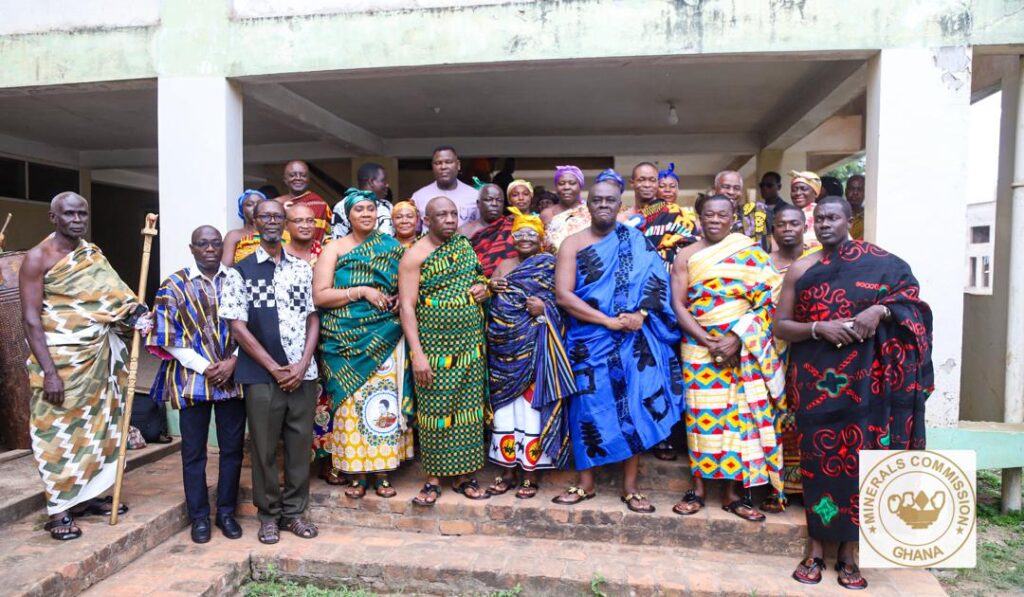
The chiefs were informed that they would be given two weeks to submit formal proposals reflecting their collective perspectives, which would then be considered by the review committee.
Former Minerals Commission CEO, Mr. Benjamin Aryee, provided a detailed review of the 2014 Mining Policy, noting that the revised framework would promote inclusivity, transparency, and sustainability while ensuring equitable benefits for all stakeholders.
On the legal front, Mr. Josef Iroko, Manager in charge of Legal Affairs, highlighted that the proposed amendments to Act 703 are designed to create a more resilient, transparent, and sustainable mining sector.
He said the reforms would address current vulnerabilities, bring Ghana’s laws into alignment with international best practices, and ensure prudent stewardship of the nation’s mineral wealth.
The discussions also touched on the interpretation of “mining rights” under Act 703, with participants stressing the need for stricter enforcement of licensing regulations.
Concerns were raised about land use compensation, with chiefs calling for more comprehensive consultations to build trust and confidence among all parties.
As the engagement concluded, it was clear that the dialogue had reinforced the shared commitment of government and traditional leaders to a mining sector that balances economic growth with environmental protection and community well-being.
For Osagyefo Oseadeeyo Dr. Nana Freduah Agyemang Badu II, this policy review is more than an administrative exercise—it is a chance to chart a new course for Ghana’s mineral future, one rooted in transparency, equity, and sustainability.
READ ALSO: IMF Urges BoG to Hold Tight on Policy Rate to Cement Disinflation Gains