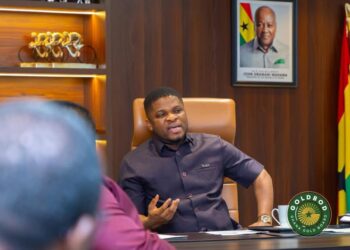
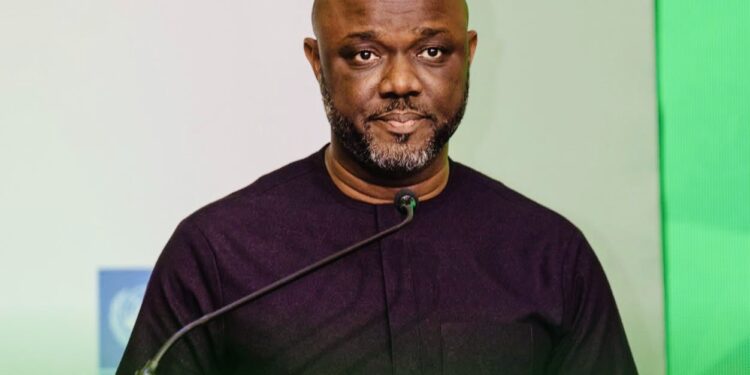
The Executive Director of the Africa Centre for Energy Policy (ACEP), Benjamin Boakye, has issued a stark warning about Ghana’s growing energy subsidies, describing the country’s current approach to managing the power sector as financially unsustainable and detrimental to national development priorities.
Speaking in Accra, Mr. Boakye revealed that the government is projected to spend an average of GHS 30 billion in the medium term on electricity subsidies and related costs in the energy value chain, a figure he said dwarfs the nation’s total investment in education, healthcare, and infrastructure.
“In the medium term, we are projecting to spend about 30 billion cedis to subsidise power.
“Contrast that with the country’s socioeconomic investment, which is less than 10 percent of that.”
Benjamin Boakye, Executive Director of ACEP
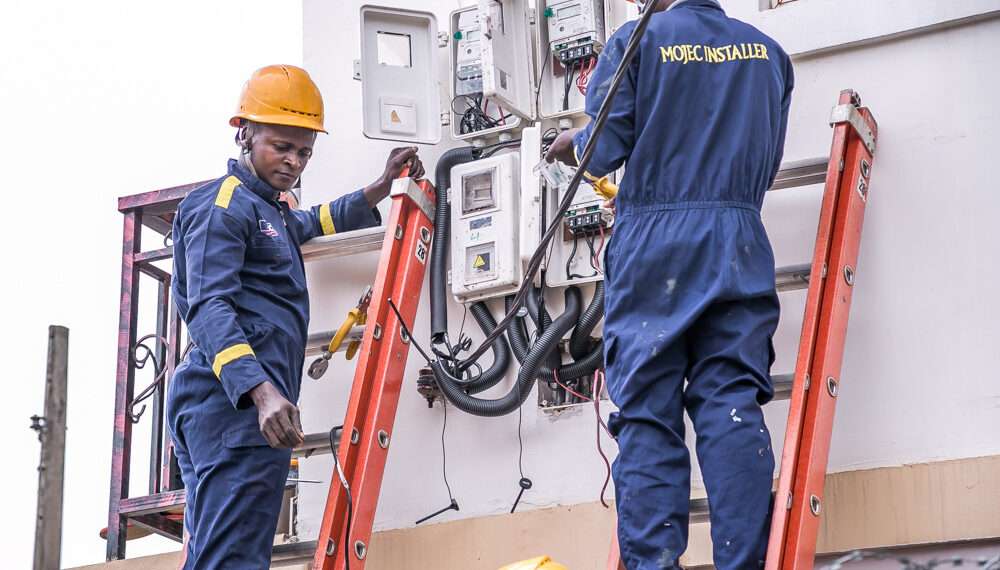
He added. “We are not building schools and hospitals or taking care of the vulnerable, we are just pumping everything back into the energy sector.”
He noted that the government’s flagship infrastructure initiative, popularly known as the “Big Push,” still represents less than half of the fiscal support being channelled into the power sector.
This, he explained, underscores the scale of inefficiency and misplaced priorities that continue to cripple Ghana’s public finances.
“If we could take the burden of the energy sector off the Ministry of Finance, we could perhaps double government investment in infrastructure, fix our roads, build hospitals, and improve public services.”
Benjamin Boakye, Executive Director of ACEP
Structural Weaknesses in the Power Sector
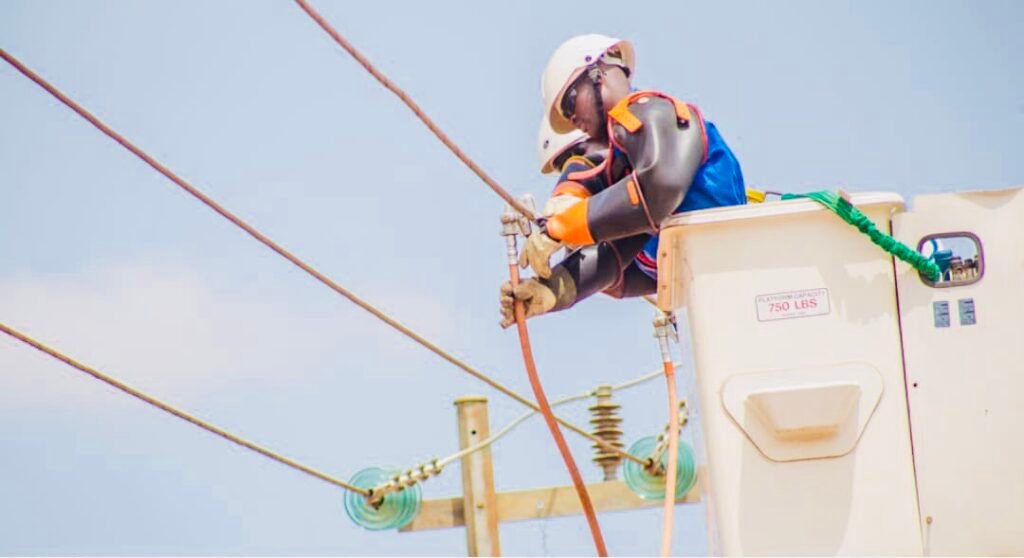
The ACEP Director attributed the deep-seated challenges to poor systemic planning and fragmented decision-making across the electricity value chain, from fuel supply to power generation, transmission, and distribution.
“The power sector is a system, and the way to deal with it is to plan with a systemic mindset.
“You can’t fix generation and ignore transmission or distribution. If you have generation capacity but can’t distribute, that’s worse than not having generation at all.”
Benjamin Boakye, Executive Director of ACEP
Mr. Boakye criticised historical policy decisions that allowed Independent Power Producers (IPPs) to construct their own fuel and gas infrastructure for individual plants, a practice he said inflated costs and reduced efficiency.
“Instead of planning for fuel supply holistically, we asked IPPs to build their own tanks and gas infrastructure, all of which come at a cost that is ultimately passed on to consumers.
“What we have now is a system that is expensive, disjointed, and unable to operate optimally.”
Benjamin Boakye, Executive Director of ACEP
He added that such inefficiencies have resulted in higher electricity tariffs, poor revenue recovery, and growing government liabilities to private power producers.
High Costs, Low Collection
Mr. Boakye stressed that reducing the cost of power generation should remain at the core of Ghana’s energy policy, warning that high tariffs without efficiency reforms would only exacerbate revenue leakages and non-payment.
“If we don’t fix the cost of power and people can’t afford to pay, they will steal it.
“Adjusting tariffs without addressing inefficiencies won’t solve the problem.”
Benjamin Boakye, Executive Director of ACEP
He highlighted the need for the Electricity Company of Ghana (ECG) to strengthen revenue collection and accountability mechanisms, arguing that improved financial discipline across the sector was key to long-term sustainability.
“We have always been collecting over a billion cedis monthly, but not all of it was declared.
“Now that we’re seeing the figures, the question is how to collect what’s still missing. We need to hold people accountable and get them working to collect.”
Benjamin Boakye, Executive Director of ACEP
Mr. Boakye acknowledged recent progress in revenue reporting but maintained that persistent gaps in billing, metering, and cash recovery continue to undermine the financial health of the sector.
He called for stronger oversight, the deployment of digital monitoring systems, and performance-based accountability for utility managers.
Cost of Inaction
The ACEP boss warned that Ghana’s energy subsidies, if left unchecked, could deepen the country’s fiscal challenges and crowd out vital public investment.
“Thirty billion cedis in energy subsidies is money that could have built new hospitals, funded free education sustainably, or supported industrial parks.”
Benjamin Boakye, Executive Director of ACEP
He further argued that the Ministry of Finance’s recurrent bailouts for power sector shortfalls are unsustainable, noting that the sector’s inefficiencies have become one of the biggest threats to Ghana’s macroeconomic stability.
Mr. Boakye also urged the government to take a long-term view of energy planning, integrating renewable energy solutions, efficient demand management, and private sector-led innovation.
He said this would require coherent regulation and an end to the culture of short-term political interventions that distort the energy market.