
• About
  • Advertise
  • Privacy Policy
  • Contact
Thursday, September 10, 2026
  • Login
The Vaultz News
  • Top Stories
  • News
    • General News
    • Education
    • Health
    • Opinions
  • Economics
    • Economy
    • Finance
      • Banking
      • Insurance
      • Pension
    • Securities/Markets
  • Business
    • Agribusiness
    • Vaultz Business
    • Extractives/Energy
    • Real Estate
  • World
    • Africa
    • America
    • Europe
    • UK
    • USA
    • Asia
    • Around the Globe
  • Innovation
    • Technology
    • Wheels
  • Entertainment
  • 20MOBPL2DNew
  • Jobs & Scholarships
    • Job Vacancies
    • Scholarships
No Result
View All Result
The Vaultz News
  • Top Stories
  • News
    • General News
    • Education
    • Health
    • Opinions
  • Economics
    • Economy
    • Finance
      • Banking
      • Insurance
      • Pension
    • Securities/Markets
  • Business
    • Agribusiness
    • Vaultz Business
    • Extractives/Energy
    • Real Estate
  • World
    • Africa
    • America
    • Europe
    • UK
    • USA
    • Asia
    • Around the Globe
  • Innovation
    • Technology
    • Wheels
  • Entertainment
  • 20MOBPL2DNew
  • Jobs & Scholarships
    • Job Vacancies
    • Scholarships
No Result
View All Result
The Vaultz News
No Result
View All Result
in Agribusiness

IMANI Questions Viability of Cocoa Processing in Ghana

Emmanuel Tibila Boasahby Emmanuel Tibila Boasah
November 3, 2025
Reading Time: 4 mins read
Add as Preferred on Google
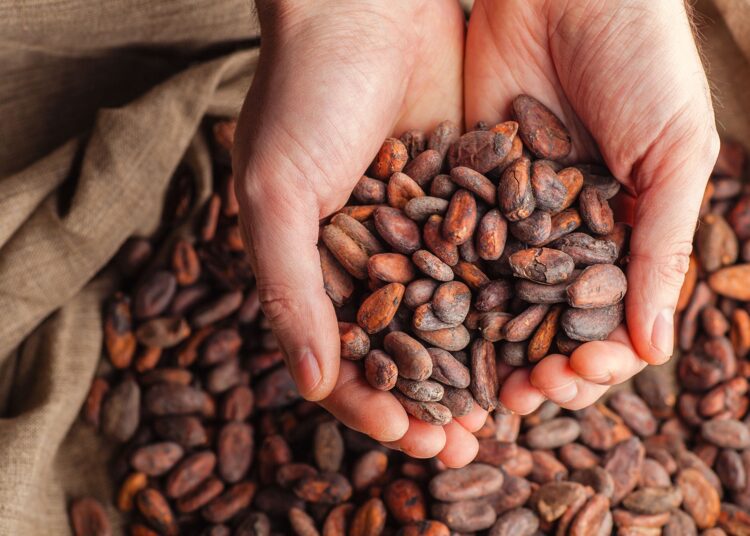
Cocoa beans

Cocoa beans

The IMANI Center for Policy and Education has questioned the poor performance of Ghana’s Cocoa Processing Company (CPC), given continued operational losses and major production bottlenecks.

In its latest “Critical Analysis of Governance and Economic Issues” report, IMANI stated that the Cocoa Processing Company has continued in operational losses, citing its numerous challenges within the Ghanaian cocoa production environment.

Noting these challenges of the company, IMANI therefore raised the question of whether cocoa processing is a business that will inure to Ghana’s benefit.

“Cocoa processing, in principle, should be one of Ghana’s most promising industries. The country remains the world’s second-largest producer of cocoa beans, and processing locally should add value, create jobs, and retain export earnings. However, the realities on the ground tell a different story.”

IMANI Center for Policy and Education

The report stated the factors that underpin the profitability of cocoa processing, including “reliable and steady raw material supply, access to finance, affordable energy, competitive tariffs, infrastructure, and market access for semi-finished and finished products,” emphasizing that in Ghana, almost all these underpinning factors are weak.

ADVERTISEMENT
IMANI Africa1

IMANI noted that the major underlying factor, the supply of raw materials, remains a major problem, stating that the Cocoa Processing Company and other processing companies struggle to get enough of the light beans required for production.

“Ghana sells the bulk of its cocoa forward on international contracts, leaving processors with limited access to quality beans. As a result, some processors have had to import beans from neighboring countries to sustain production, a costly and inefficient alternative.”

IMANI Center for Policy and Education

The second challenge IMANI identified was high operational cost, which is due to underlying factors such as energy tariffs and financing costs, including import duties on essential inputs like sugar and milk for finished cocoa products.

All these underlying factors contribute to making local processing of cocoa very expensive. The report further noted that “For many firms, the cost of production outweighs revenue, leaving them to operate at break-even or losses.”

Another underlying factor for the profitability of cocoa processing identified was limited value addition, whereby many Ghanaian producers mostly end up producing semi-finished products such as cocoa liquor and butter, rather than finished consumer products like chocolate.

IMANI further noted that due to this practice, local producers often do not get the higher profits from global value chains, which still end up being captured abroad.

ADVERTISEMENT

Also, the report stated that access to financing is a major problem, whereby difficulty in accessing loans often forces local producers to rely on self-financing.

“Access to finance is a structural bottleneck. The absence of syndicated loans or flexible credit facilities forces processors to self-finance their operations, which limits expansion and working capital.”

IMANI Center for Policy and Education
Cudjoe
Mr. Franklin Cudjoe, Founding President of IMANI

The report draws a comparative analysis between the Ghanaian situation and that of Côte d’Ivoire, taking into consideration government policies in terms of support, the availability of raw materials, market structures, and the predictability of access to raw materials.

“Comparatively, Côte d’Ivoire’s processors operate under a more supportive structure: access to beans is more predictable, energy tariffs are lower, and government policies deliberately link local processors to global buyers. Ghana’s processors, by contrast, operate under uncertainty and high-cost conditions.”

IMANI Center for Policy and Education

IMANI further gave an assessment of the situation of Ghana’s Cocoa Processing Company on the back of this comparison, emphasizing that given how the Ghanaian production environment is barely sustainable for the private processor, then “for a state-owned enterprise like CPC, the challenge is even greater.”

“Beyond operational constraints, CPC suffers from political interference, inefficient management, and delayed decision-making. Unlike private processors that mostly focus on semi-finished products, CPC produces finished goods, which require importing additional inputs like sugar and milk, all at a high cost. This means CPC’s operations carry heavier expenses but compete in the same weak market.”

IMANI Center for Policy and Education

IMANI therefore made the conclusion that the cocoa processing companies’ problem has to do with both internal challenges and operating in a system that does not reward processing, further emphasizing that “the broader environment, high costs, bean shortages, and weak financing make the entire sector unprofitable. But CPC’s politicized management makes its struggle even deeper.”

ADVERTISEMENT

READ ALSO: OPEC+ to Pause Oil Output Increases in Early 2026 Amid Market Stability

ADVERTISEMENT

Sign Up to Our Newsletter

Fresh updates, Straight to your inbox

Tags: Cocoa ProcessingCocoa Processing CompanyIMANI AfricaIMANI Center for Policy and EducationInefficient managementpolitical interferenceSemi-finished productsWeak market
Please login to join discussion
Previous Post

OPEC+ to Pause Oil Output Increases in Early 2026 Amid Market Stability 

Next Post

IGP Orders CID to Probe Attack on NAIMOS Director at Hwidiem, Asutifi North MP Invited for Questioning

Related Posts

Ghana's Agro-Export product
Agribusiness

Ghana’s Agro-Export Push Faces a Processing Gap

September 10, 2026
Officials of OPDAG and TCDA During a Handover of Agricultural Inputs, Including Weedicdes and Other Farm Equipment to Support Oil Palm Smallholders
Agribusiness

OPDAG, TCDA Boost Oil Palm Farmers with Major Input Support Package

September 10, 2026
Inside the GEXIM-Funded Nadkansco Processing Limited in Techiman
Agribusiness

GEXIM Inspects New Cashew Factory in Techiman Ahead of Launch 1,500 Jobs

September 9, 2026
Ghana's Delegation at the High Level Bilateral Meeting with Turkiye at the FAO Headquaters in Rome
Agribusiness

Ghana-Türkiye to Forge Landmark Partnership in Fisheries and Aquaculture at FAO

September 8, 2026
ADVERTISEMENT

Sign Up to Our Newsletter

Fresh updates, Straight to your inbox

ADVERTISEMENT

Recent News

The Minority In Parliament

Minority Demands Full Records On GH¢49m Emergency Evacuation Spending

September 10, 2026
A guard of South Sudan People's Defence Forces

UN Commission Warns Violence and Impunity Threaten South Sudan’s Democratic Transition

September 10, 2026
Kow Abaka Essuman, former Legal Counsel to President Akufo-Addo, left, and Finance Minister Dr Cassiel Ato Forson, right, who has until Friday to settle the demand.

Kow Essuman Gives Ato Forson Friday Deadline Over Unpaid Terminal Benefits

September 10, 2026
Portrait of Local African traditional woman entrepreneur, small business owner, SME, holding a clipboard at her outdoor market stall.

SMEs Move Into 24-Hour Economy’s Jobs Debate

September 10, 2026
Dennis Nkrumah-Korsah in conversation his teammate in the FC Diarra game in Bamako

Nkrumah-Korsah Backs Nations FC to Overturn Deficit Against Diarra in CAF Confederation Cup

September 10, 2026
ADVERTISEMENT
Next Post
Inspector-General of Police (IGP), COP Christian Tetteh Yohonu

IGP Orders CID to Probe Attack on NAIMOS Director at Hwidiem, Asutifi North MP Invited for Questioning

The Vaultz News

Copyright © 2025 The Vaultz News. All rights reserved.

Navigate Site

  • About
  • Advertise
  • Privacy Policy
  • Contact

Follow Us

Welcome Back!

Login to your account below

Forgotten Password?

Retrieve your password

Please enter your username or email address to reset your password.

Log In
No Result
View All Result
  • Top Stories
  • News
    • General News
    • Education
    • Health
    • Opinions
  • Economics
    • Economy
    • Finance
      • Banking
      • Insurance
      • Pension
    • Securities/Markets
  • Business
    • Agribusiness
    • Vaultz Business
    • Extractives/Energy
    • Real Estate
  • World
    • Africa
    • America
    • Europe
    • UK
    • USA
    • Asia
    • Around the Globe
  • Innovation
    • Technology
    • Wheels
  • Entertainment
  • 20MOBPL2D
  • Jobs & Scholarships
    • Job Vacancies
    • Scholarships

Copyright © 2025 The Vaultz News. All rights reserved.

This website uses cookies. By continuing to use this website you are giving consent to cookies being used. Visit our Privacy and Cookie Policy.