Rice importers in Ghana could be required to purchase locally produced rice equivalent to 50 per cent of their intended import volumes before obtaining permits to import the commodity, under a proposed government policy aimed at strengthening domestic agricultural production and reducing dependence on foreign supplies.
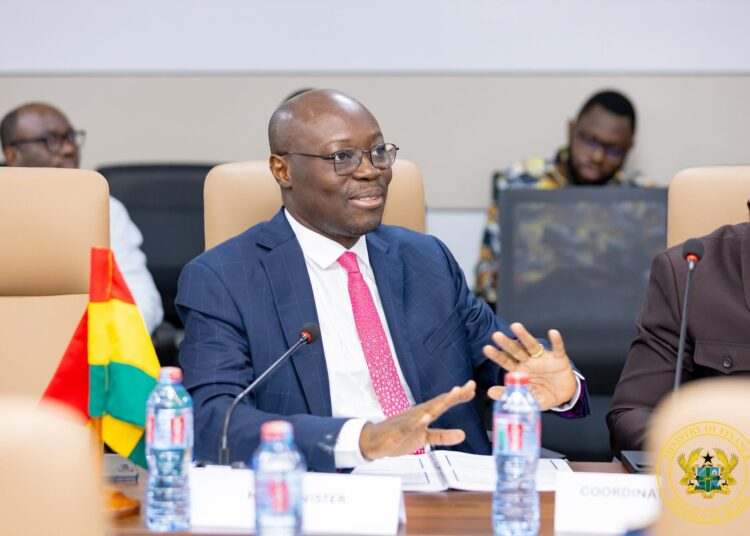
The proposal, announced by Finance Minister Dr. Cassiel Ato Forson, forms part of broader measures to guarantee markets for local rice farmers, stimulate domestic investment and ensure that international trade does not undermine the growth of Ghana’s agricultural sector.
Speaking during an interactive engagement with students and the Kwame Nkrumah University of Science and Technology (KNUST) community on the New Economy, Dr. Forson explained that the proposed arrangement would link access to rice import permits to demonstrated purchases from local producers.
“An importer seeking a permit to bring in 100,000 metric tonnes of rice could be required to demonstrate that they have purchased 50,000 metric tonnes from local farmers.”
Minister for Finance, Dr. Cassiel Ato Forson
The proposed 50 per cent requirement represents a significant shift towards using import licensing as an instrument for creating guaranteed demand for domestically produced rice.
Local Production Takes Centre Stage
Ghana’s continued reliance on imported rice has remained a major concern for agricultural policymakers, particularly as local farmers face difficulties securing reliable markets for their produce.
According to the Ministry of Food and Agriculture, milled rice production increased from approximately 650,000 metric tonnes in 2024 to 960,000 metric tonnes in 2025.
However, domestic production currently meets only about 56 per cent of national demand, leaving approximately 44 per cent to be supplied through imports.
The country also spends an estimated US$320 million to US$500 million annually importing rice, highlighting the potential economic benefits of strengthening domestic production and retaining more agricultural expenditure within the economy.
Against this background, the Finance Minister argued that increasing local production alone would not address the challenges confronting farmers without deliberate policies to guarantee access to markets.
He maintained that import arrangements must complement domestic production rather than create conditions that make it difficult for locally produced rice to compete.
“Government must take deliberate measures to protect domestic agricultural production and ensure that rice imports do not undermine the livelihoods of Ghanaian farmers.”
Minister for Finance, Dr. Cassiel Ato Forson
Free SHS Procurement Under Review
Dr. Forson announced plans to introduce stricter public procurement regulations requiring government-funded institutions to prioritise locally produced rice.
The proposed measures are expected to place particular emphasis on food procurement for students under the Free Senior High School (Free SHS) programme, which represents a significant public expenditure opportunity for domestic agricultural businesses.
The Finance Minister questioned why local rice farmers continued to struggle to sell their produce when government was spending approximately GH¢4.5 billion to GH¢5 billion annually on the Free SHS programme.
He indicated that about GH¢3.5 billion of the expenditure went towards feeding students, arguing that a substantial portion of the food budget could support local farmers and processors if procurement arrangements deliberately favoured Ghanaian produce.
“If government is spending billions of cedis on feeding students, we must ensure that our farmers also benefit from that expenditure.”
Minister for Finance, Dr. Cassiel Ato Forson
Textile Industry Also Targeted
The Finance Minister extended the argument for local procurement to Ghana’s textile and garment manufacturing industry, questioning the continued reliance on foreign suppliers for uniforms and other government-related purchases.
He cited the difficulties confronting domestic textile manufacturers, including Juapong Textiles and Akosombo Textiles, despite the availability of local production capacity.
Dr. Forson questioned why government continued sourcing uniforms for security agencies from overseas suppliers while Ghanaian manufacturers struggled to sustain their operations.
“We must use government expenditure to create markets for local producers, support businesses and generate employment within the domestic economy.”
Minister for Finance, Dr. Cassiel Ato Forson
Dr. Forson indicated that government intended to translate some of the proposed procurement measures into legislation, including sanctions for individuals and institutions that fail to comply with the new requirements.
Such legislative backing would establish a stronger framework for ensuring that public institutions align their purchasing decisions with national industrial and agricultural development priorities.
The proposed rice import condition and local procurement requirements could therefore represent an important change in how government approaches domestic production, international trade and public expenditure.
Their effectiveness, however, will depend on the capacity of local producers to supply sufficient quantities, maintain consistent quality and meet the delivery requirements of large institutional buyers.
For Ghana’s agricultural and manufacturing sectors, the central objective is to convert domestic demand into sustainable business opportunities, strengthen local industries and ensure that public spending contributes more directly to employment creation and economic transformation.
READ ALSO:Mahama Ayariga Advances Inner-City Big Push Ahead of Agbogbloshie Redevelopment