
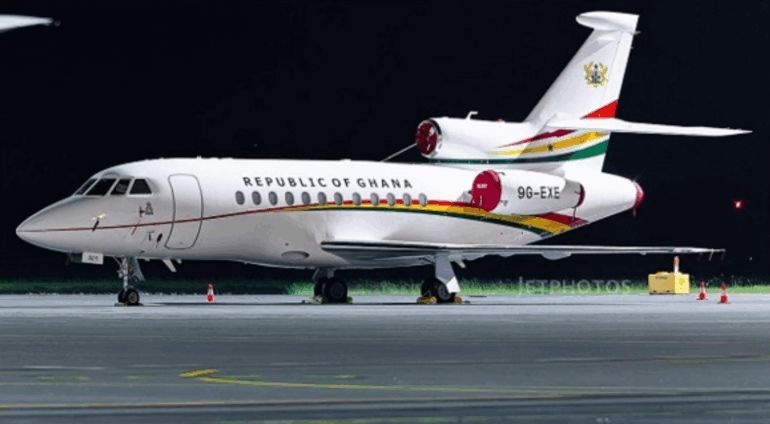
Ghana’s Presidential Jet has returned to the country after months of compulsory maintenance in France, but the Bureau of Public Safety (BPS) insists that only an independent safety certification can determine whether the aircraft is fit for presidential use.
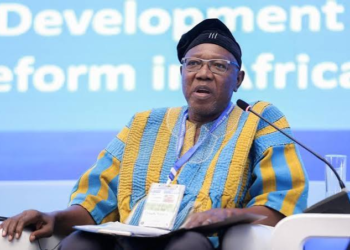
Executive Director Dr. Nana Yaw Akwada maintains that the nation deserves full, objective verification of the Falcon 900’s airworthiness following what officials described as extensive repairs and inspections at the Dassault Falcon Service facility in Paris.
The aircraft underwent mandatory 24-month and 1,600-hour checks, during which defects were reportedly identified and repaired with support from the manufacturer. While the return of the jet has triggered public conversation about its operational readiness, the BPS argues that transparency must precede any confidence-building measures.
“It is good news to hear that the jet is back, but before we can make any concrete statement on its safety or otherwise, it’s very important that we have an independent certification body to let us understand objectively what was established in relation to what the Ghana Armed Forces communicated to us”
Dr. Nana Yaw Akwada, Executive Director of BPS
Dr. Akwada stressed that Ghanaians must be fully informed of the actual work carried out during the repairs, arguing that without open disclosure of safety audits, certification processes and maintenance routines, public trust cannot be assured.

According to him, aviation systems operate on rigorous standards, and Ghana must uphold the same expectations when the safety of the President is at stake. “We need to know what kind of safety audit, certification, or maintenance routine the aircraft went through,” he emphasised.
The BPS maintained that anything short of this level of transparency risks turning national discussions into speculation. Dr. Akwada explained that only documented, independently verified findings can confirm the aircraft’s true status following months of repairs.
“In the absence of that, everything else will be rumour and rhetoric. We need to have full disclosure on the scope of the work done, the certified bodies involved, and the post-repair airworthiness status. Only then can we speak objectively and without any shadow of doubt”
Dr. Nana Yaw Akwada, Executive Director of BPS
He urged authorities to disregard unverified information circulating around the aircraft’s condition until a conclusive and transparent assessment is completed.
Prioritising Maintenance
The return of the jet has reignited national debate about whether Ghana should acquire a new presidential aircraft.

However, Dr. Akwada warned against rushing toward procurement without addressing the country’s maintenance culture. He argued that the age of the Falcon 900 should not be used as justification for replacement and that global aviation practice demonstrates that aircraft remain operational for several decades when maintained properly.
He noted that effective aviation safety depends not on the novelty of an aircraft but on strict adherence to manufacturer-approved maintenance protocols and accredited engineering systems. He thus cautioned that buying a new aircraft without structural reforms would create a recurring cycle of neglect.
“What is important is the kind of maintenance regime that is followed. Are the people who are performing the maintenance accredited by the manufacturer? Are they following manufacturer maintenance schedules? Those are the important things”
Dr. Nana Yaw Akwada, Executive Director of BPS
Dr. Akwada referenced commercial airlines and other state aircraft that remain in service for 15 to 25 years or more, highlighting that the Falcon, at around a decade old, remains relatively young in aviation terms. According to him, replacing the aircraft without correcting the underlying issues would return the country to similar debates within a short period.
He argued that the national conversation should focus on enforcing robust maintenance systems, strengthening oversight and ensuring that Ghana meets global standards for aircraft safety. Without these reforms, he warned that even a new aircraft could face the same uncertainties.
The BPS believes that Ghana can avoid future concerns by prioritising transparent maintenance, credible verification systems and proactive communication with the public.
Dr. Akwada insists that a thorough, independent audit is the only path to restoring unquestionable confidence in the aircraft tasked with transporting the President on foreign missions.
READ ALSO: Dr. Baffour Calls for Sustained Economic Stability to Redeem the ‘Familiar Budget Trend’