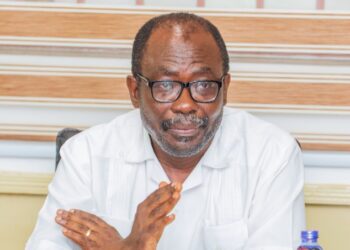
Kofi Asare, the Executive Director of Africa Education Watch (Eduwatch) has issued a strong warning to the government concerning severe teacher shortages in underserved communities and a drastic spike in dropout rates as students transition to Junior High School (JHS).
According to Mr. Kofi Asare Ghana’s progress toward universal education is severely threatened by a deepening crisis of equity and access as he called for two critical, immediate interventions: the early start of the 2026 teacher recruitment drive and the urgent expansion of the Ghana School Feeding Programme (GSFP) to the JHS level.
“The government has a key role to play. The government’s role is to ensure that there’s a school that has a teacher and teaching and learning resources that are able to attract and retain learners whose parents are interested in enrolling them. And there’s the biggest challenge”
Kofi Asare, Executive Director of Africa Education Watch
The core of the problem, according to the Eduwatch Executive Director, lies in the government’s failure to fulfill its fundamental role in rural and northern districts of the country especially.
Eduwatch’s findings paint a grim picture of basic education quality in deprived areas. Mr. Asare noted that the situation is far from meeting national targets, citing instances where some primary schools operate with only one teacher, and in more extreme cases, no teacher at all.
The severity of the deficit was highlighted in the organization’s recent survey of 20 northern districts, which revealed “severe teacher deficits.”
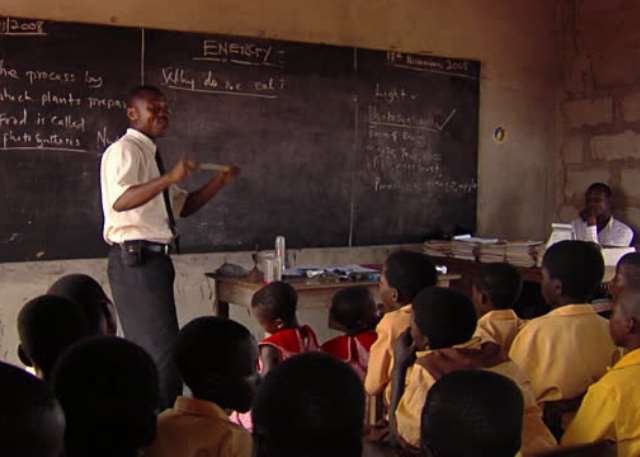
This already dire situation is poised to worsen significantly, as the government failed to conduct the usual large-scale teacher recruitment in September, coinciding with the start of the new academic year. This delay, Mr. Asare noted, has exacerbated the learning poverty crisis in hundreds of classrooms.


Appeal for Immediate Deployment
To mitigate the escalating teacher shortage, Kofi Asare has appealed for a rapid, targeted response from the government.
He urged the authorities to initiate the 2026 teacher recruitment process early – specifically within the first quarter of 2026 – to ensure newly trained teachers can be deployed immediately to fill critical vacancies.
Crucially, the deployment must prioritize the most underserved areas to address the regional inequality gap. He specifically named districts like “Builsa North, Bushegu, and Namdam,” as key areas that must benefit from this early deployment plan to arrest the decline in learning outcomes.
Mr. Asare insisted that this strategic intervention is required to avoid another year of severe under-staffing in rural schools, where, according to other studies, up to 68% of teaching vacancies remain unfilled.
The Poverty Trap
While the shortage of teachers compromises quality, poverty was also identified as the major driver of school dropouts, specifically at the JHS level.

Mr. Asare noted an encouraging trend of “significant retention levels” in primary school, which is a strong indication that interventions like the current School Feeding Programme are successfully keeping younger children in class. However, the positive trend reverses sharply at the transition point.
“As children move towards junior high school we see that the out-of-school children situation keeps worsening – more and more numbers enter the out-of- school bracket”
Kofi Asare, Executive Director of Africa Education Watch
The reason, he argued, is the stark reality of hunger. In poverty-stricken areas, “the lack of a free, hot meal,” in JHS forces vulnerable children to drop out.
He cited districts like Tatale-Sanguli, where there is a “high rate of dropout between primary schools and junior high school 1 (JHS1),” primarily due to poverty and the absence of school feeding.
In response to this retention crisis, Mr. Asare issued a direct and urgent appeal to both the Ministry of Gender, Children and Social Protection and the Ministry of Finance to approve and fund the extension of the Ghana School Feeding Programme to Junior High Schools.
“It’s important that the Ghana school feeding program be extended beyond primary school to junior high school,” he stressed. This expansion, he argued, is not an optional benefit, but a mandatory social protection measure necessary to consolidate the gains made at the primary level.
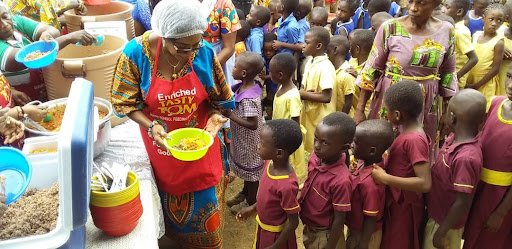
By removing the economic barrier of food insecurity at the crucial JHS stage, the government can effectively bridge the transition gap, ensuring that poverty does not become the final determinant of a child’s educational future.
READ ALSO: Agric Minister Launches $147.3 m Mega PROSPER Project to Lift 420,000 Ghanaians out of Rural Poverty