Institute of Economic Affairs (IEA) has warned that the current Atlantic Lithium deal risks relinquishing an estimated $172 billion worth of national wealth to foreign interests.
This staggering valuation, projected by the IEA, represents the total worth of the raw lithium resource if processed into the marketable product, lithium carbonate, and underscores the urgent need for a comprehensive overhaul of the contract terms before parliamentary ratification.
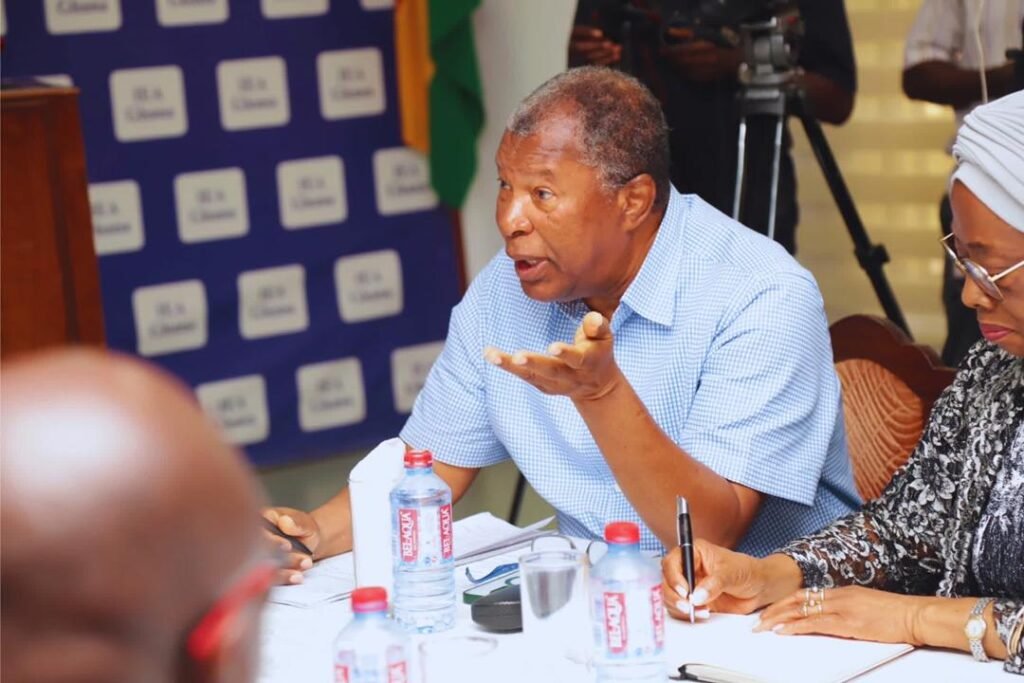
Addressing Parliament’s Select Committee on Lands and Natural Resources, Dr. Charles Mensa, Board Chairman of Institute of Economic Affairs (IEA) emphasised the institute’s stance, noting that the country must find a way of getting a local company to manage the lithium mineral.
“Our estimation of this lithium is 172 billion US dollars. That’s the total, but it is quantum that has been described by the lithium company, by the Australian company. They are saying they are finding a quantum of 1.6 billion tonnes… It’s about 172 billion dollars. This is the value of what we have. Should we give this to Mr. Atlantic and his friends? That’s the question we have to ask.”
Dr. Charles Mensa,
The think tank’s intervention frames the controversial agreement as yet another “continuation of colonial-type agreements” that have historically deprived the nation of the full benefits of its mineral endowments, urging policymakers to prioritize maximum state and local ownership in the burgeoning critical minerals sector.
Controversial Terms: Royalty Cuts and Value Chain Concerns
The central controversy surrounding the Atlantic Lithium agreement, specifically the revised mining lease with Barari DV Ghana Limited, is the perceived dilution of state benefits in the face of immense resource profitability.
Initially granted a 15-year lease for the Ewoyaa project, the original terms included a 10 percent royalty rate and a 13 percent free-carried interest for the state.
However, the subsequent revised deal, which the government recently withdrew from Parliament amid mounting public and civil society pressure, proposed slashing the royalty rate to 5 percent.
Civil society organizations, including the IEA and IMANI Africa, have argued that this reduction is unwarranted, citing feasibility studies that project an exceptional Internal Rate of Return (IRR) of 105 percent and a payback period of only 19 months, even with the original terms.
They stressed that the project remains highly profitable, making the concession to reduce royalties fiscally irresponsible for the state.
IEA’s Demand: State Ownership and Strategic Renegotiation
The Institute of Economic Affairs is not merely calling for a tweaking of the fiscal terms; it is advocating for a fundamental paradigm shift in Ghana’s extractive sector policy.
The IEA earlier demanded an immediate halt to the ratification process of the revised agreement, arguing that the deal not only falls short of securing fair value for the nation but also fails to comply with key international frameworks, such as the United Nations General Assembly Resolutions 1803 (1962) and 3281 (1974), which emphasize a nation’s sovereign right to exploit its resources for maximum benefit.
The IEA’s core recommendation for the political leadership and Parliament is the establishment of a state-owned enterprise, the Ghana Lithium Company, mandated to anchor full domestic participation across the entire lithium value chain from mining to refining and battery production.
This recommendation, which mirrors state-led initiatives in other resource-rich nations, would ensure that Ghana secures greater ownership and control, moving away from a reliance on meagre royalties and minority equity stakes that have characterized past agreements in the gold and oil sectors.
Roadmap for Political Leaders

The IEA’s detailed research and uncompromising stance provide a robust roadmap for political leaders currently navigating the politically sensitive renegotiation process.
The withdrawal of the revised agreement by the government indicates a recognition of the public’s demand for a better deal. To ensure the renegotiated agreement serves the long-term national interest, policymakers must:
The new deal must embed legally binding, time-bound obligations for local processing of the lithium concentrate into lithium carbonate or hydroxide within Ghana.
This is essential to move beyond the raw resource export model and capture the full value chain, as justified by the project’s exceptional profitability.
Leverage the IEA’s call to establish a state-owned entity with a significant, if not majority, stake in the project. This would allow the state to participate actively in the project’s management and profit sharing, rather than passively relying on royalties.
By adopting these measures, political leaders can transform the Atlantic Lithium agreement from a controversial missed opportunity into a flagship deal that truly harnesses Ghana’s green minerals for sustainable economic transformation, aligning the nation’s actions with the sovereign resource rights demanded by its citizens and articulated by institutions like the IEA.
READ ALSO: “No Amount of Money Can Bring Me Back” – Morris Babyface Walks Away from Secular Music Forever