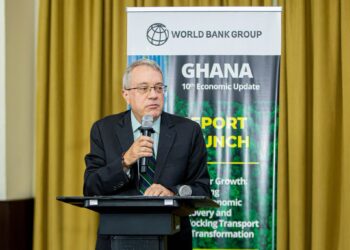
The campaign for inclusive growth as a national agenda has raised concerns at the Ghana Investment Promotion Centre (GIPC) about championing diaspora engagement in national development.
The call from GIPC comes at a time when the government has been consistent in building the right environment to attract investment and business growth. Sustaining Ghana’s economic resilience in 2026 requires bringing on board Ghanaians living outside Ghana to support indigenous economic growth through their remittances.
According to the Ghana Investment Promotion Centre, transfers from Ghanaians outside the country to relatives in Ghana exceed actual investment inflows into the country. Appropriate structures and reforms are needed from the government to boost national development.
“Diaspora remittances now exceed Ghana’s annual Foreign Direct Investment (FDI) inflows. With the right structures, these funds [remittances] could contribute more directly to economic transformation.”
Mr Simon Madjie, CEO of GIPC

National Framework to Support diaspora Investment
Specific policies, financial products, and institutional frameworks that channel funds from household consumption to productive investments are needed to translate diaspora remittances into economic transformation.
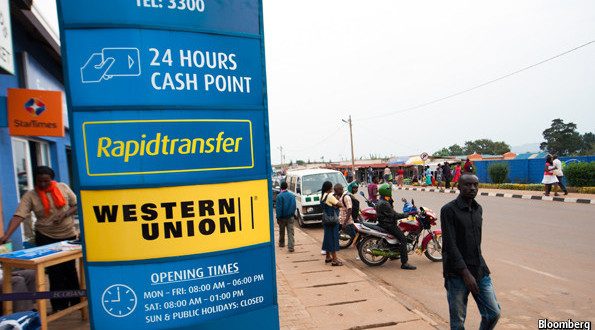
GIPC suggested that the government should lower transfer costs through competition among Money Transfer Operators (MTOs) and financial institutions to reduce fees, making formal channels more attractive than informal ones. Access to formal financial services – bank accounts and mobile money – must be promoted to enhance financial inclusion for both migrants abroad and recipients at home, especially in rural areas.

Innovative financial products can be developed to offer diaspora-specific instruments for medium- to long-term investment. Such investment products may include diaspora bonds, dedicated savings and investment, and corresponding grant programs to attract interest rates or tax incentives.
The government, GIPC insisted, should continue to improve macroeconomic stability and the political environment through good governance and sound financial policies, which are crucial for building trust and encouraging long-term investment from the diaspora.
Furthermore, the government can create a dedicated diaspora institution for engagement and coordination of diaspora contributions, integrate migration and diaspora engagement into national development strategies, implement educational initiatives for remittance recipients to promote informed decisions, and create diaspora engagement platforms.
The authorities, in terms of investment channels, can offer tax exemptions, subsidies, or co-financing for diaspora investments. In addition, the government can facilitate knowledge and skills transfer and support community-led initiatives.
Implementation of these structures can effectively transition remittances from purely private consumption to a sustainable source of national economic growth and transformation.
Diaspora Investment and Productivity
According to Mr Simon Madjie, the Chief Executive Officer of GIPC, Ghana needs more investment to boost business capital and growth to expand productivity and job-creation capacity within the economy. He, therefore, called on “Ghanaians in the diaspora to channel more of their remittances into productive investments that support national development.”

To ease the process, Mr Madjie disclosed, GIPC has strengthened the framework for diaspora investment through institutional support, policy and regulatory reforms, and improved access to information to make the investment process easier.
He also revealed the Centre’s dedicated Diaspora Desk, which provides tailored guidance, business advisory services, and access to strategic networks. He also referenced the African Continental Free Trade Area (AfCFTA) Desk, which supports diaspora investors navigating opportunities within the AfCFTA. He encouraged the creation of a dedicated protocol within the AfCFTA to facilitate stronger diaspora participation.
Available Internal and External Markets
According to the CEO of GIPC, Ghana is uniquely positioned to access a variety of markets, including the domestic market of about 34 million people, the ECOWAS market of over 400 million, and a continental market of 1.4 billion under the AfCFTA. He, therefore, encouraged diaspora entrepreneurs to establish businesses that cater to broader African markets.

The government has endorsed the removal of the minimum capital requirement for foreign investors, aligning investment conditions for Ghanaian and Global African investors, he announced. This was aimed at assuring the diaspora of Ghana’s strong legal protections, including non-discrimination and safeguards against expropriation.
While gaining access to these markets, Ghana is also key on data and risk mitigation. He then drew attention to the GIPC’s ongoing Investment Opportunity Mapping project, which will provide district-level data on viable opportunities through a digital platform that investors can assess remotely.
Key priority sectors highlighted by Ghana for diaspora investment include real estate, manufacturing, creative industries, tourism and hospitality, textiles and apparel, ICT, healthcare, green industrialization, climate-smart agriculture, and digital transformation.
GIPC, therefore, encourages diaspora investors to explore opportunities beyond Greater Accra, particularly in agribusiness and manufacturing.
Mr Madjie echoed that the “diaspora remains a central partner in Ghana’s development agenda,” concluding that “the country remains open for business.”
READ ALSO: IMF Wraps the Year with Policy Guidance for Ghana in 2026