

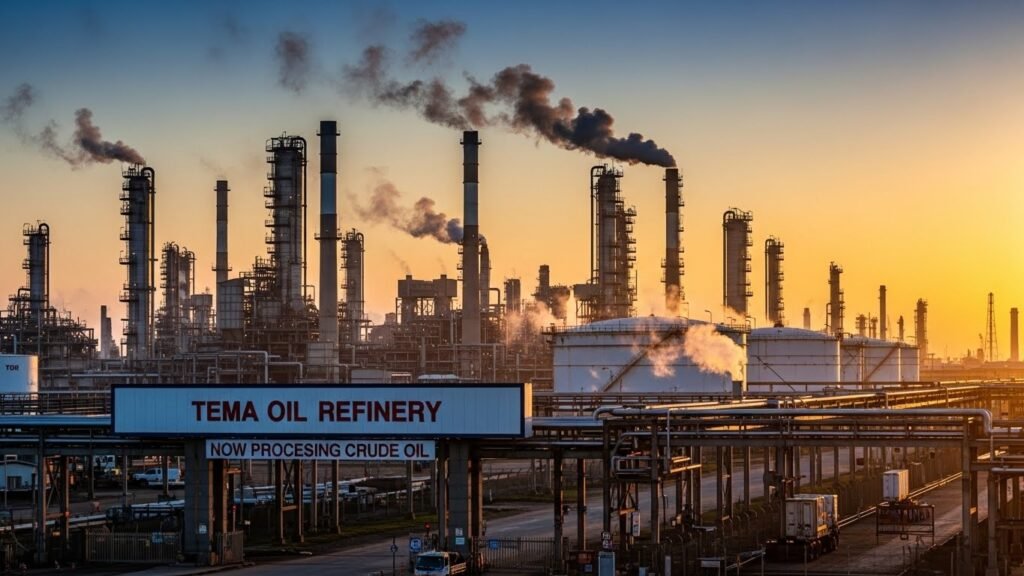
The successful resumption of crude oil refining operations at the Tema Oil Refinery (TOR) is expected to deliver wide-ranging economic benefits, including easing pressure on the Ghanaian Cedi and reshaping fuel pricing dynamics.
This optimism was expressed by the Chief Executive Officer of the National Petroleum Authority (NPA), Godwin Edudzi Tameklo, following the refinery’s return to operations after several years of inactivity.
According to Mr Tameklo, refining crude oil locally offers Ghana a strategic opportunity to reduce its dependence on imported refined petroleum products, which has long placed strain on foreign exchange reserves and contributed to currency pressures.
He said, “One of the benefits, I strongly believe, is that once they get into that, it will impact on pricing dynamics greatly because then you will be doing less import,” underscoring the broader macroeconomic implications of domestic refining.
Mr Tameklo explained that one of the most immediate gains from TOR’s revival is the reduction in foreign exchange required to import finished petroleum products. Ghana currently spends substantial amounts of forex on fuel imports, a factor that directly affects the stability of the Cedi.
“Now the bigger advantage is that even if you are doing it here, the kind of forex you need to bring imported products, that pressure on the Ghana Cedi will also greatly reduce.”
Godwin Edudzi Tameklo, Chief Executive Officer of NPA
He added that local refining strengthens the overall economic outlook by limiting exposure to external shocks and volatile global supply chains.
According to the NPA CEO, refining crude oil domestically has a ripple effect across the economy, improving balance-of-payments dynamics and enhancing investor confidence.
“So the economics of it are greatly impactful. Once we are able to do a few of these things locally, it projects the economy better, the pressure on the Cedi will reduce.”
Godwin Edudzi Tameklo, Chief Executive Officer of NPA
Impact on Fuel Pricing Dynamics
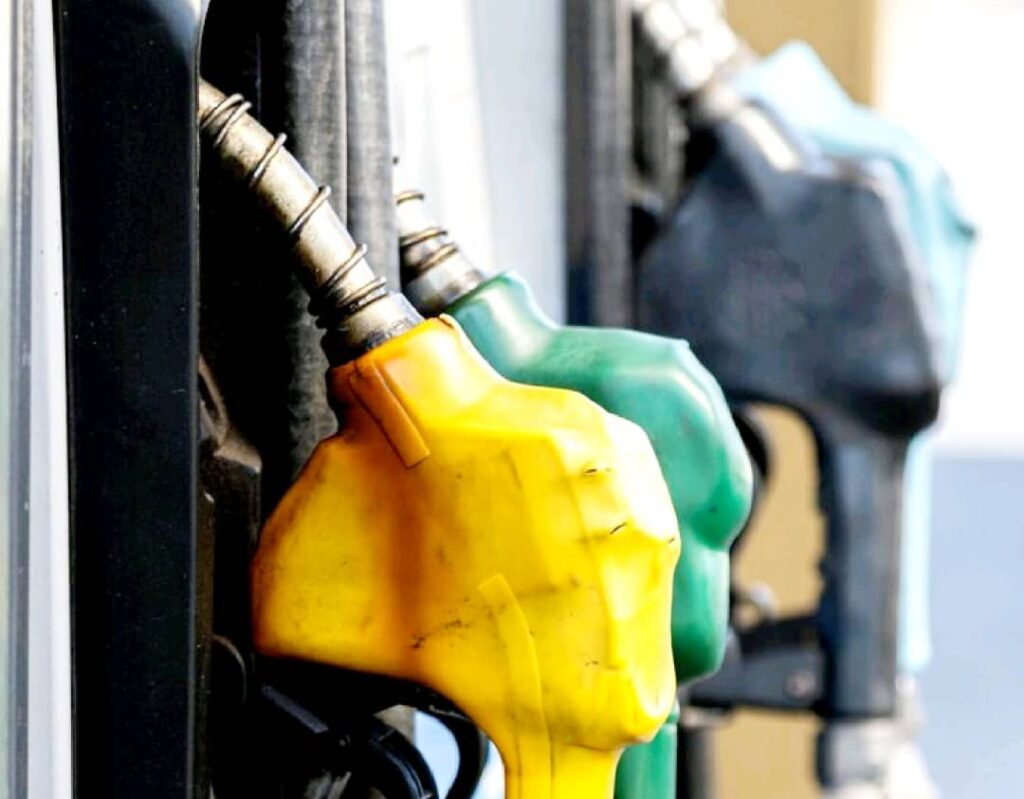
Beyond currency stability, Mr Tameklo believes TOR’s return will significantly influence fuel pricing in the domestic market. With more refined products supplied locally, Ghana’s fuel pricing regime could become more resilient and less sensitive to global market fluctuations.
Industry analysts note that while fuel prices will still be linked to international crude prices, increased local refining capacity can help smooth supply disruptions and moderate cost build-ups associated with freight, insurance and other import-related charges.
Mr Tameklo’s comments suggest that the benefits of TOR’s operations will not be limited to the energy sector alone but will extend to households and businesses through improved price stability over time.
The optimism expressed by the NPA CEO follows TOR Ltd.’s official announcement of the successful resumption of crude oil refining operations. The restart marks a historic milestone in the revitalisation of Ghana’s downstream petroleum sector and the reactivation of a key national asset.
TOR’s return comes after years of operational inactivity that saw Ghana rely almost entirely on imported refined products. The refinery’s management has described the restart as a critical step towards restoring energy security and strengthening the domestic petroleum value chain.
Renewed Confidence in Downstream Sector

The restart of TOR has renewed confidence among policymakers and regulators about the future of Ghana’s downstream petroleum sector.
With local refining capacity gradually expanding, stakeholders believe the country is better positioned to manage supply risks, stabilise prices and reduce pressure on the local currency.
The refinery’s revival follows the successful completion of major Turnaround Maintenance (TAM) works on its Crude Distillation Unit (CDU). The maintenance exercise was carried out over a three-month period, from 1st August to 30th October 2025.
According to TOR, the TAM works were executed in strict compliance with international engineering, safety and operational standards. The maintenance focused on restoring the integrity and reliability of key systems to ensure safe and efficient operations.
Industry observers say the timely completion of the TAM works reflects improved planning and execution, setting a positive tone for TOR’s phased return to full-scale operations.
For Mr Tameklo, the broader significance of TOR’s return lies in its potential to reshape Ghana’s energy economics. As local refining gathers momentum, he believes the combined impact on pricing, forex demand and economic stability will be increasingly felt across the country.
READ ALSO: Ecobank Unveils Founders’ Monument as It Celebrates Four Decades of Pan-African Excellence