
Oil has once again taken centre stage in global politics, not as a relic of the past but as an enduring force shaping power, alliances, and economic priorities.
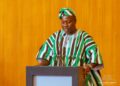
That is the central argument advanced by Mr. Joshua Batsa Narh, Executive Chairman of the Energy Chamber Ghana and Director at Wingfield Group, in an article titled “Oil Never Left the Room: Trumps, Energy Power, and the New Political Order,” shared with Vaultz News. According to Mr. Narh, oil has never been merely a traded commodity.
“From the moment Edwin Drake drilled the first commercial well in Pennsylvania in 1859, petroleum has been the lifeblood of economic growth, military strategy, and geopolitical influence.
“Oil never left the room – and under President Donald Trump’s energy policies, it has reasserted itself as a central axis around which a new political order is being shaped.”
Mr. Joshua Batsa Narh, Executive Chairman of the Energy Chamber Ghana and Director at Wingfield Group
Mr. Narh situates today’s debates within a longer historical arc, drawing on the work of renowned energy historian Daniel Yergin.
Referencing The Prize and The Quest, he recalls Yergin’s argument that “the history of oil is the history of power itself.” From the formation of OPEC to the Cold War’s energy rivalries and the shale revolution in the United States, hydrocarbons have repeatedly underpinned major geopolitical shifts.
He also highlights Daniel Ammann’s biography The King of Oil, which chronicles the rise of commodities trader Marc Rich. That story, Mr. Narh argues, demonstrates how access, networks, and political agility can shape oil markets as much as physical production.
Together, these examples reinforce a simple conclusion: oil’s political relevance long predates Donald Trump and remains deeply embedded in global affairs.
Trump’s Energy Strategy and the Return of Oil Politics
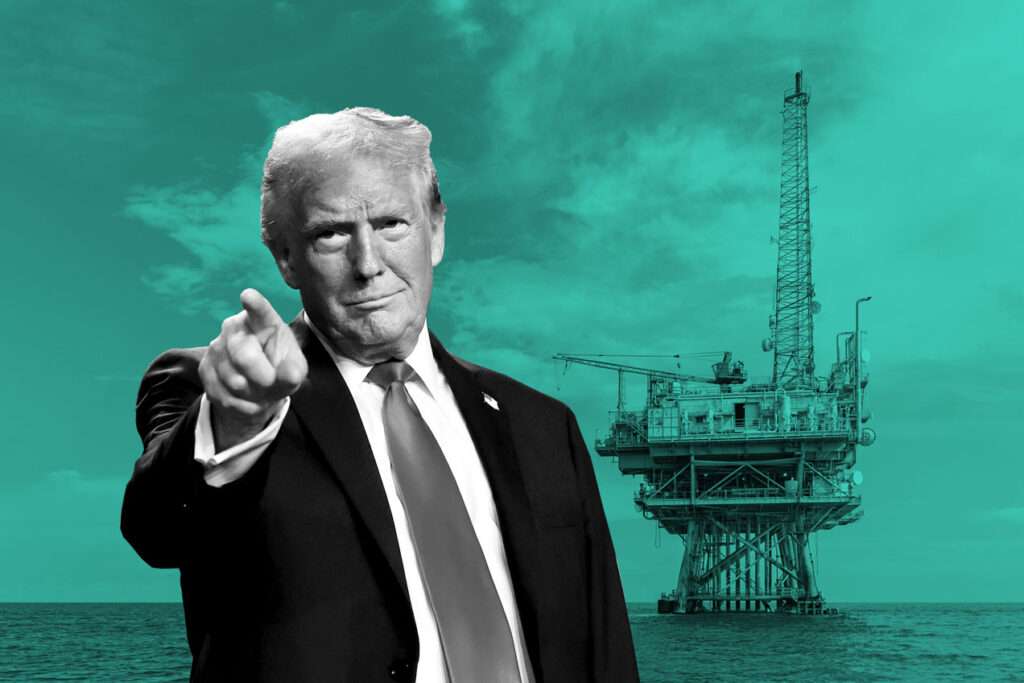
What distinguishes the current moment, Mr. Narh contends, is how explicitly oil has been repositioned as a tool of statecraft under Trump’s leadership. During Trump’s previous presidency and following his return to power, oil and gas have been placed at the heart of U.S. economic and foreign policy.
The United States, already the world’s largest oil producer, has continued to expand output, accounting for nearly one-fifth of global supply.
In early 2025, Trump reinforced this trajectory by establishing the National Energy Dominance Council through executive order, with a mandate to cut regulatory barriers, expand offshore drilling, and accelerate liquefied natural gas exports.
Beyond domestic policy, Trump’s energy ambitions have taken on a distinctly geopolitical tone. Narh points to early 2026 discussions in which U.S. oil executives were convened to explore large-scale investments in Venezuela’s depleted oil sector, including the possibility of security guarantees.
Such moves, he argues, signal “a new geopolitical play where access to oil fields is a tool of statecraft.”
Paradox of Abundance Without Control

Despite unprecedented production levels, Mr. Narh identifies a fundamental contradiction in U.S. energy power. While the United States produces roughly 20 per cent of the world’s oil, it lacks the coordinated price-setting influence wielded by OPEC and OPEC+.
This paradox has not deterred the Trump administration from treating oil as a lever of global influence, whether by encouraging production increases, supporting strategic foreign investments, or using energy policy as diplomatic pressure.
As Mr. Narh observes, history suggests that while control over energy flows enables power projection, it does not guarantee control over markets or prices.
Within the oil industry, reactions to Trump’s energy agenda have been mixed. Narh notes that many executives embrace deregulation and expanded drilling as growth opportunities.
At the same time, others warn that shareholder expectations, capital discipline and price volatility can outweigh political signals.
Recent surveys cited in the article suggest that nearly 80 percent of shale executives have delayed investment decisions due to policy uncertainty and market conditions. This underscores a deeper reality: oil companies respond to market fundamentals as much as to political directives.
“OIl is geopolitics in action,” Narh observes, echoing a common refrain among energy leaders, while cautioning that political ambition often collides with commercial constraints.
Oil in a Conflicted Energy Landscape
Mr. Narh places Trump’s oil-centric strategy within a broader, often contradictory global energy context. While oil remains central to national strategies and international bargaining, renewable energy is expanding rapidly. In 2024, renewables accounted for 93 percent of new electricity capacity worldwide.
This divergence creates tension. Trump’s emphasis on cheap energy for domestic consumers sits uneasily alongside industry preferences for price stability and disciplined production. Meanwhile, global commitments to decarbonisation continue to gather momentum.
In this environment, Mr. Narh argues, the phrase “oil never left the room” captures a strategic reality. Policies that foreground oil and gas do more than influence markets; they reshape alliances, economic priorities and even national identities.
In his concluding reflections, Mr. Narh stresses that oil remains a foundation of power, wealth and influence as long as modern economies depend on dense, tradable energy.
Drawing again on Yergin’s insight that “energy security is national security,” he argues that politics and energy policy remain inseparable.
As the global order evolves, Narh concludes, oil continues to sit “at the table” of power. In boardrooms, policy chambers and diplomatic negotiations, petroleum still shapes decisions, alliances and outcomes. In today’s political era, energy is not just policy, it is power in action.
READ ALSO: From Planning to Action: Ashanti Region Set for Accelerated Development in Early 2026