Bright Simons, a prominent policy analyst and Vice President of IMANI Centre for Policy and Education, has sounded a cautionary note regarding Ghana’s intensified push for domestic gold refining, describing the sector as one defined by “brutal efficiency.“
This characterization highlights the slim margins and high operational stakes of an industry where patriotic sentiment often clashes with the cold reality of global bullion markets.
“Yet, as Ghana doubles down on a government-backed partnership with the Gold Coast Refinery (GCR), some basic scrutiny is warranted. As I hinted in Semafor a few days ago, what is often marketed as “adding value to our resources” can, in fact, become a complex new channel for money to leak out of government chest without commensurate benefits. If care is not taken.”
Bright Simons
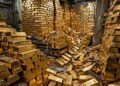
The current strategy involves the state aggregator, Ghana Gold Board, committing to supply the Gold Coast Refinery (GCR) with 50 tonnes of gold annually in exchange for a 15% state equity stake.
While intended to capture midstream value, Simons warns that such government-backed partnerships can inadvertently create “complex new channels for money to leak out” if they lack the extreme scale and cost compression required to compete with established global hubs in Switzerland and Dubai.
“Success in the tolling model depends on extreme scale, metallurgical precision, and the relentless compression of costs,” Bright Simons emphasized.
The Fiscal Sink: Shifting Private Losses to the Sovereign

The push for local refining carries significant fiscal risks, often manifesting as hidden subsidies that shift losses from private balance sheets to the public purse.
This pattern is reminiscent of the Tema Oil Refinery (TOR) model, where a state-backed entity attempts to circumvent capital inadequacies through tolling, yet frequently ends up as a “fiscal sink.”
In the gold sector, a one-tonne weekly “float” or lock-up of metal represents nearly $160 million in idle capital. At Ghana’s current high interest rates, the cost of holding this metal in the system could far outweigh any localized “value addition” benefits.
Without rigorous due diligence, the state risks bearing the brunt of empty furnaces and high fixed costs if throughput fails to meet the 50-tonne-a-year guarantee.
Shadows of the Past and Transparency Gaps

Transparency remains a major hurdle for Ghana’s extractive industrial policy, specifically concerning the beneficial ownership of these refineries.
Bright Simons pointed out that the previous administration’s “Royal Ghana Gold Refinery” initiative was “smothered in controversy” before it could even begin, with the real owners of its majority shareholding remaining a mystery to the public.
This lack of clarity raises the stakes for the GoldBod-GCR deal. For a local refinery to be viable and not merely a “complex new channel for leakage,” it must move beyond political intent and embrace the “relentless compression of costs” seen in global benchmarks.
Currently, large-scale tolling fees can be as low as 10 to 30 US cents per ounce, a level of efficiency that local facilities may struggle to achieve without significant structural reforms.
Adopting a Sustainable, Risk-Free Path

To safeguard the economy, Ghana must pivot toward a sustainable and risk-free approach by prioritizing international accreditation, such as London Bullion Market Association (LBMA) certification.
This is essential for attracting gold from large-scale mining companies that currently bypass local refineries for certified facilities abroad.
A sustainable model would focus on generating revenue through secondary factors recovery of silver and platinum-group metals, fabrication premiums, and interest on the metal float rather than relying on uncompetitive tolling fees.
By ensuring that industrial policy does not merely transfer private liabilities to the state, Ghana can avoid the “analysis-fatigue” of value addition and build a midstream sector that truly contributes to the national treasury.
READ ALSO: Staff Celebrate Sarpong’s One-Year Milestone