
Major Oil Marketing Companies (OMCs) across Ghana have started adjusting fuel prices at the pumps from today, February 16, 2026, following industry projections of increases ranging between 2 per cent and more than 4 per cent per litre.
The latest adjustments coincide with the implementation of new minimum price levels announced by the National Petroleum Authority (NPA) for the second pricing window of February.
Checks conducted by Vaultz News on February 16 confirm that leading players in the downstream sector have begun reflecting the revised pricing structure at service stations nationwide.
Star Oil Revises Pump Prices
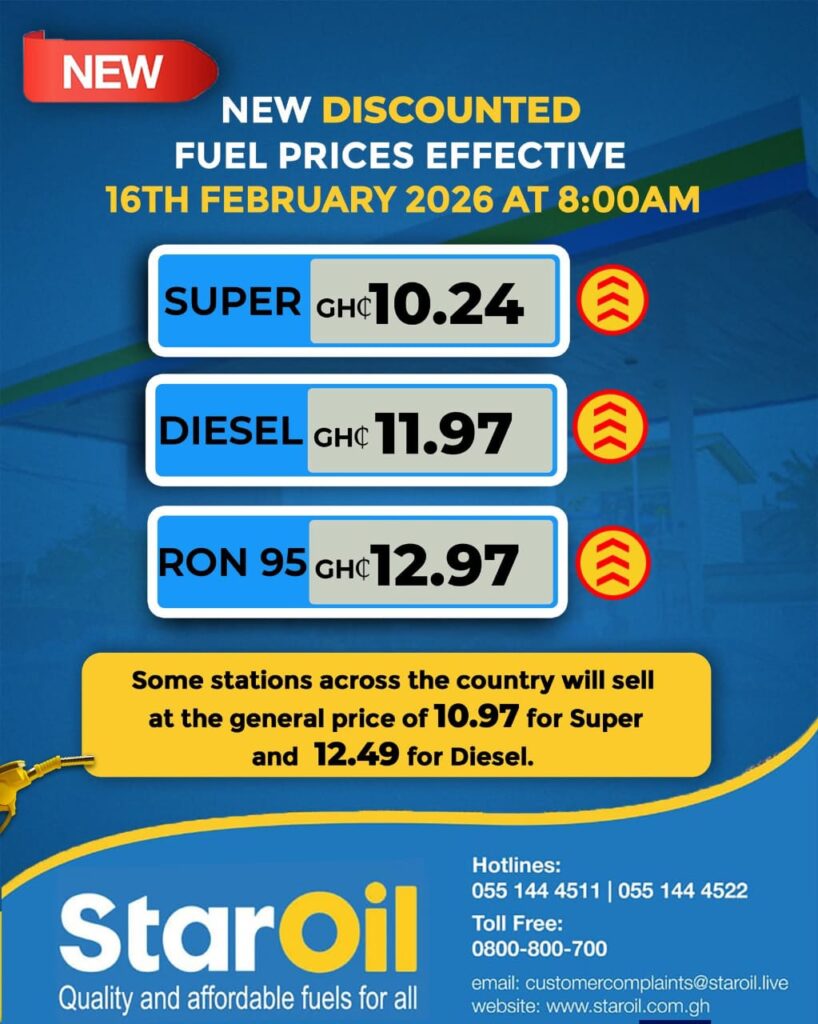
Market leader Star Oil has adjusted its discounted petrol price to GH¢10.24 per litre, up from GH¢9.99. Diesel prices have also increased to GH¢11.97 per litre from the previous GH¢11.56.
The company indicated that the new prices took effect on February 16. Regular pump prices at some stations across the country are currently selling at GH¢10.97 for petrol and GH¢12.49 for diesel.
Explaining the adjustments, Star Oil stated, “This adjustment is due to changes in world market prices, as well as the impact of foreign exchange movements. As always, we remain committed to offering you the best prices for our quality fuels.”
The company’s statement highlights the twin pressures of rising international oil prices and foreign exchange fluctuations, which continue to shape domestic fuel pricing.
GOIL PLC Also Adjusts Prices
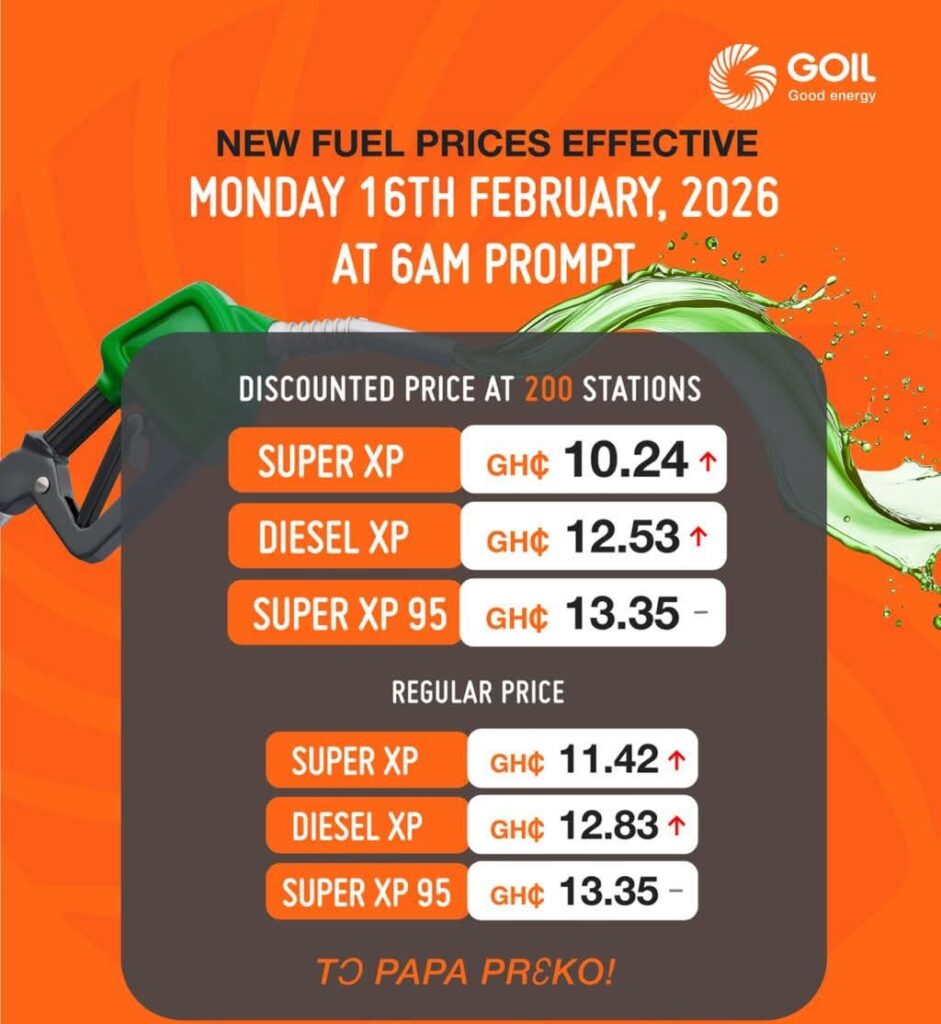
GOIL PLC has similarly revised its prices, increasing its discounted petrol price to GH¢10.24 per litre from GH¢9.99. Diesel at GOIL’s discounted outlets is now selling at GH¢12.53 per litre. These discounted rates apply at approximately 200 service stations nationwide.
However, regular prices at GOIL stations are higher, with petrol retailing at GH¢11.42 per litre and diesel at GH¢12.83 per litre.
Other major OMCs have also begun reviewing their pump prices in response to prevailing market conditions and regulatory directives.
As of the time of writing, the prices from Star Oil and GOIL were the confirmed adjustments, with additional updates expected as more companies complete their reviews.
NPA Implements New Price Floors

The latest wave of price changes follows the NPA’s decision to raise minimum ex-pump price levels for petroleum products for the February 16–28 pricing window.
Under the new directive, no OMC is permitted to sell petrol below GH¢10.24 per litre during the two-week period. This represents an increase from the previous price floor of GH¢9.99 in the first pricing window of February.
Diesel’s minimum price has also been raised from GH¢10.95 to GH¢11.34 per litre, while the price floor for liquefied petroleum gas (LPG) now stands at GH¢9.43 per kilogram.
The NPA maintains that the price floor mechanism is designed to promote stability and sustainability within the downstream petroleum industry.
Industry Debate Intensifies
The implementation of the price floor has, however, sparked significant debate within the industry.
The controversy recently led Star Oil to exit the Chamber of Oil Marketing Companies (COMAC), following disagreements over the policy direction.
After an emergency board meeting, a majority of COMAC members voted to allow the NPA to proceed with the price floor programme.
The Chamber has argued that the measure is necessary to prevent the downstream petroleum industry from “collapsing,” particularly amid intense price competition that has squeezed margins.
Star Oil, on the other hand, has maintained that the price floor restricts its ability to set competitive prices based on prevailing market conditions. The company believes the policy undermines the principles of deregulation by limiting pricing flexibility.
Consumers Watch for Further Changes
With the new pricing window now in effect, consumers are closely monitoring pump prices across the country. While some stations have already implemented the revised rates, others are expected to follow suit in the coming days.
Industry observers note that the final impact on motorists will depend not only on regulatory floors but also on global crude oil trends and exchange rate movements.
As more OMCs conclude their pricing reviews, further adjustments are anticipated. For now, the February 16 price changes mark another chapter in the evolving dynamics of Ghana’s downstream petroleum sector, where regulation, competition and market forces continue to intersect.
READ ALSO: North Korea Opens Housing District for Fallen Soldiers