
The Ghana Centre for Democratic Development (CDD-Ghana) has identified significant transition challenges and structural gaps during the first year of the administration of President John Dramani Mahama, despite broader efforts at governance stabilisation.
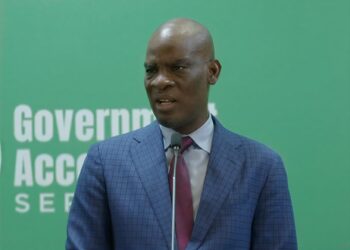
These concerns were raised during the think tank’s one-year assessment presentation led by Dr. Kojo Pumpuni Asante, Director of Policy Engagement and Partnerships.
He argued that the transition should not be understood solely as a change of presidents but as a comprehensive state transition involving public institutions, agencies, and local governance structures. In his assessment, insufficient attention to this broader dimension contributed to instability and disorder in several sectors.
One of the most visible challenges cited was the outbreak of violence linked to groups affiliated with the governing party during the transition period. Dr. Asante referenced incidents in which party-aligned groups stormed public installations, creating insecurity and operational disruption.
“The Presidential Transition Act really failed to deal with the transition at the middle and lower levels. I think since it passed, I think we all see the presidential teams, it’s all cordial, everybody’s smiling, but in the middle and on the ground, you know, there’s just chaos, and people are fighting over everything.”
Dr. Kojo Pumpuni Asante, Director of Policy Engagement and Partnerships, CDD-Ghana
According to him, this gap has allowed uncertainty and conflict to flourish within state institutions. He explained that in the absence of clear rules and enforcement mechanisms, actors on the ground frequently resort to informal and sometimes unlawful means to assert authority.
This, he said, exposes a structural weakness in Ghana’s transition framework that remains unresolved. Dr. Asante also raised concerns about accountability for criminal acts committed during the transition.

He noted that despite widespread public awareness of incidents involving violence and property invasion, few cases have resulted in prosecutions or sanctions. In his view, the lack of visible accountability sends a troubling signal that unlawful conduct during political transitions may go unpunished.
Revocation of Last Minute Public Sector Appointments
Another persistent transition issue identified in the assessment relates to the revocation of last minute public sector appointments made after January 7. Dr. Asante described this as an ongoing feature of Ghanaian transitions that continues to generate controversy and institutional disruption.
While acknowledging the political logic behind reviewing late appointments, he cautioned that mass reversals can destabilise institutions and create uncertainty among public servants.
He further pointed to directives instructing Metropolitan, Municipal, and District Chief Executives to hand over administrative authority to District Coordinating Directors.
According to Dr. Asante, while intended to ensure continuity, such directives sometimes produce power vacuums at the local level. In practice, he said, unclear lines of authority can delay decision-making and weaken service delivery during critical periods.
The assessment also highlighted the widespread removal of chief executive officers and governing boards across state entities following the transition. Dr. Asante noted that in many cases, these actions effectively halted the operations of affected institutions, at least temporarily.

He argued that while leadership changes are expected under a new administration, the scale and speed of removals can disrupt institutional memory and operational efficiency.
Policy Coordination Lapses
Beyond transition-related challenges, CDD-Ghana identified issues of policy coordination within the early phase of the administration. Dr. Asante referenced a formal directive issued by the Cabinet Secretary reminding ministers not to make public policy pronouncements without cabinet approval.
He explained that the directive followed instances where ministers announced positions that had not been collectively agreed, creating confusion and mixed signals.
Among the examples cited were early policy directives from the Education Minister and the introduction of a private member’s bill related to the Office of the Special Prosecutor, which was later withdrawn.
According to Dr. Asante, these incidents underscored the need for stronger internal coordination to ensure coherence and discipline in government communication. The assessment also drew attention to concerns surrounding the use of pretrial detention and bail powers by security agencies.
Dr. Asante noted that issues related to arrest procedures, detention periods, and bail conditions had generated public unease. He said these practices were perceived by some segments of the public as an abuse of power, raising questions about rights protection and proportionality in law enforcement.

Overall, CDD-Ghana’s review presented a nuanced picture of the Mahama administration’s first year. While acknowledging efforts to stabilise key sectors and restore policy direction, the think tank emphasised that unresolved transition challenges and coordination gaps continue to pose risks to governance quality.
Dr. Asante stressed that addressing these issues requires institutional reforms rather than ad hoc responses. He concluded that Ghana’s democratic resilience depends not only on peaceful elections and smooth presidential handovers but also on orderly state transitions that extend through all levels of governance.
For CDD-Ghana, strengthening accountability, clarifying transition rules, and enforcing discipline within government remain essential tasks if future transitions are to avoid similar disruptions.
READ ALSO: Yoon Rejects Rebellion Verdict