Newmont Corporation has signaled a period of strategic stabilization, projecting an attributable gold production of approximately 5.3 million ounces for the 2026 fiscal year.
This outlook, headlined by a significant 3.9 million ounces expected from its managed operations, underscores the Denver-based miner’s transition toward a more streamlined and higher-margin portfolio following recent global asset divestments.
By centering its 2026 targets on a “disciplined approach to development capital,” the company aims to optimize its world-class assets while maintaining a resilient balance sheet amidst a volatile global economic landscape.
“Attributable production for 2026 is expected to be approximately 5.3 million gold ounces, including over 3.9 million gold ounces from Newmont’s managed operations. Gold by-product AISC is expected to be $1,680 per ounce, benefitting from profitable production of other metals. Sustaining capital spend of approximately $1.95 billion will advance critical tailings facility work at Cadia and Boddington.”
Newmont 2025 Report

The 2026 guidance further details a robust financial framework; with a gold by-product All-In Sustaining Cost (AISC) forecasted at $1,680 per ounce.
This competitive cost structure is expected to be “benefitting from profitable production of other metals” such as copper and silver, which act as vital stabilizers against inflationary pressures in the mining sector.
To ensure the long-term integrity of its global footprint, Newmont has earmarked $1.95 billion for sustaining capital, prioritizing critical safety and infrastructure work at the Cadia and Boddington tailings facilities.
Simultaneously, a $1.4 billion development capital injection will drive “key near-term development projects,” including the feasibility studies at Red Chris and the high-priority Tanami Expansion 2, positioning the producer for sustained cash flow generation.
Economic Catalysts and Fiscal Contributions in Ghana

The realization of Newmont’s 2026 production targets is poised to serve as a major economic tailwind for its host nations, particularly in Ghana, where the company remains a bedrock of the extractive industry.
With the Ahafo North project expected to reach full operational capacity by 2026, the local economy will benefit from increased mineral royalties and corporate taxes, which traditionally constitute a significant portion of Ghana’s domestic revenue.
In 2025 alone, Newmont’s contributions to the Ghanaian treasury surpassed billions of Cedis, and the projected 2026 output bolstered by “strategic sequencing of mining operations” is set to further solidify Ghana’s position as Africa’s premier gold producer.
Infrastructure Integrity and Global Portfolio Longevity
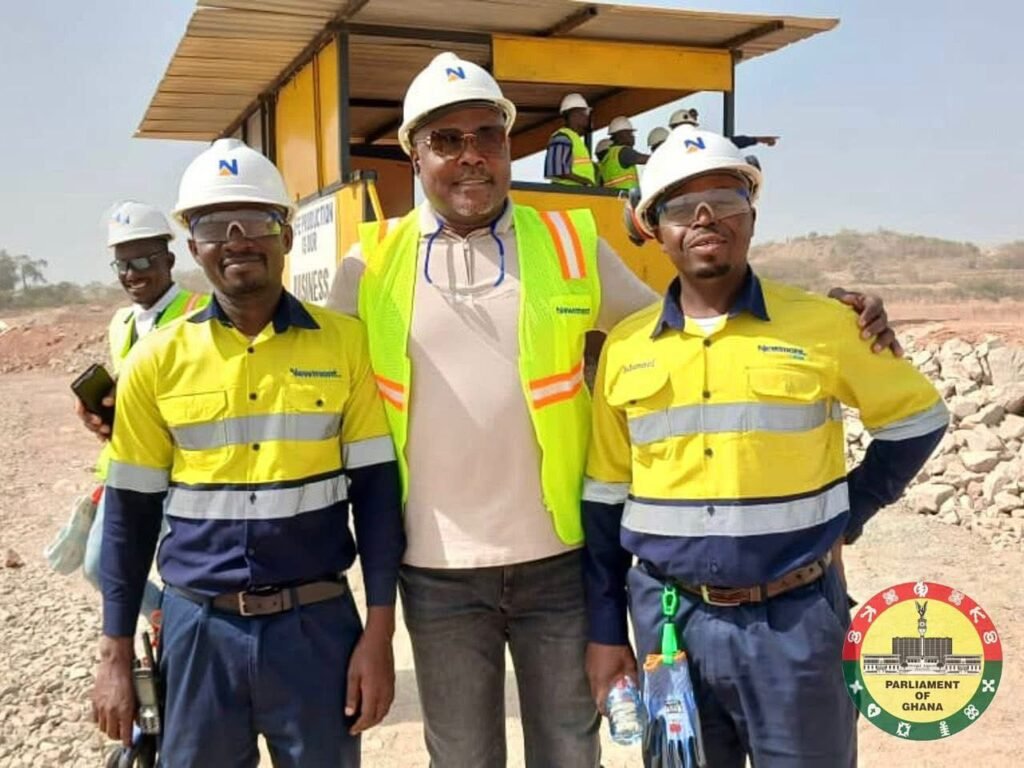
Beyond direct fiscal payments, the $1.95 billion allocation for sustaining capital reflects a deepened commitment to environmental and operational safety.
By advancing critical tailings facility work at Australia’s Boddington and Cadia mines, Newmont corporation is not only “enhancing the integrity and longevity” of its portfolio but also setting a benchmark for responsible waste management.
These investments ensure that the infrastructure supporting multi-decade mine lives remains resilient, thereby securing thousands of direct and indirect jobs across its global jurisdictions through the late 2040s.
Strategic Reinvestment in High-Return Development

Newmont’s $1.4 billion development budget for 2026 focuses on “progressing key near-term development projects” that offer the highest potential for free cash flow.
Projects like the Cadia Panel Caves and the Tanami Expansion 2 are designed to unlock deeper, high-grade ore bodies, effectively lowering the long-term cost curve.
For host communities, this translates into extended mine lives and sustained social investment programs, ranging from local procurement initiatives to educational scholarships, ensuring that the “unrivaled portfolio” delivers shared value well beyond the pit’s edge.
READ ALSO: New BoG MoU Expands Central Banking Frontiers in West Africa