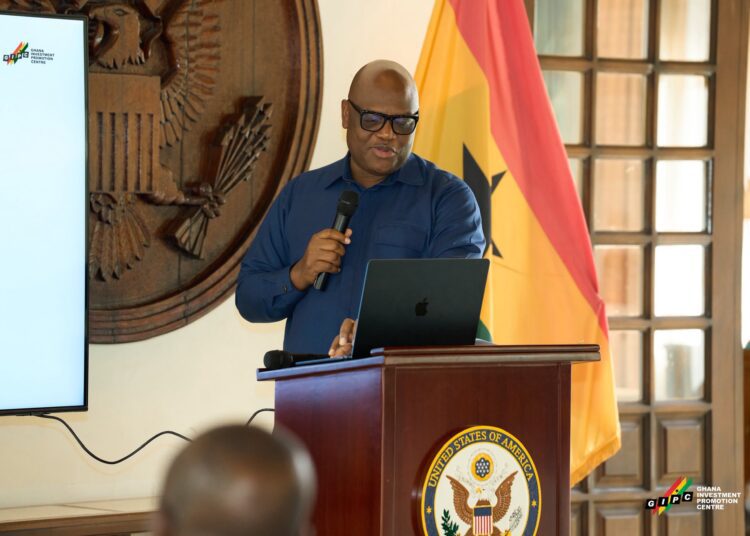
The Ghana Investment Promotion Centre (GIPC) has signaled a bold new era for the nation’s economic landscape, unveiling a suite of legislative and policy reforms designed to transform Ghana into a $140 billion economy.
Speaking at a high-level US-Ghana Commercial Dialogue in Accra, organized by the American Chamber of Commerce (AmCham) Ghana, GIPC CEO Mr. Simon Madjie detailed how the government is moving to de-risk the investment environment to attract long-term, high-value global capital.
“Ghana is strengthening investor protections, streamlining entry procedures, and modernising its incentive framework to better support long-term, mutually beneficial partnerships under the proposed Ghana Investment Promotion Authority (GIPA) Bill”
Mr. Simon Madjie, GIPC CEO
For Mr. Madjie this legislative shift – to transition the Centre into the Ghana Investment Promotion Authority – aims to modernize Ghana’s incentive framework and provide “gold-standard” investor protections that align with international best practices.
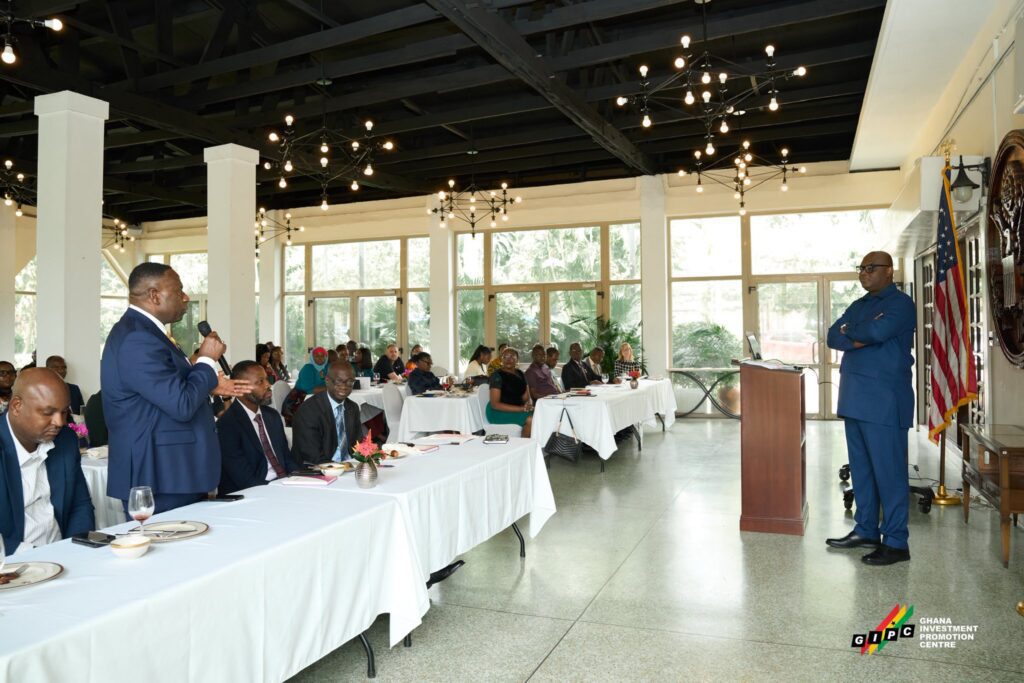
For American investors and global financiers, “policy clarity,” has often been the deciding factor between a committed investment and a missed opportunity. Mr. Madjie emphasized that the upcoming reforms are not merely cosmetic; they represent a fundamental restructuring of how Ghana handles foreign entry.
By streamlining entry procedures and modernizing tax incentives, the GIPA Bill intends to eliminate bureaucratic bottlenecks that have historically slowed the pace of project implementation.
He noted that the GIPC’s medium-term ambition is backed by a robust pipeline of “bankable projects,” in high-growth sectors, including agro-industry, energy, infrastructure, and business process outsourcing. This sectoral focus is designed to move Ghana beyond primary commodity exports toward a diversified, industrialized economy.
De-Risking the Northern Frontier
One of the most striking revelations of the dialogue was the use of targeted, location-based incentives to drive regional equity. To “crowd in,” private capital to less-developed regions, the GIPC is offering concessional tax regimes, with “locational rates,” slashed to as low as 5 per cent in selected areas of northern Ghana.
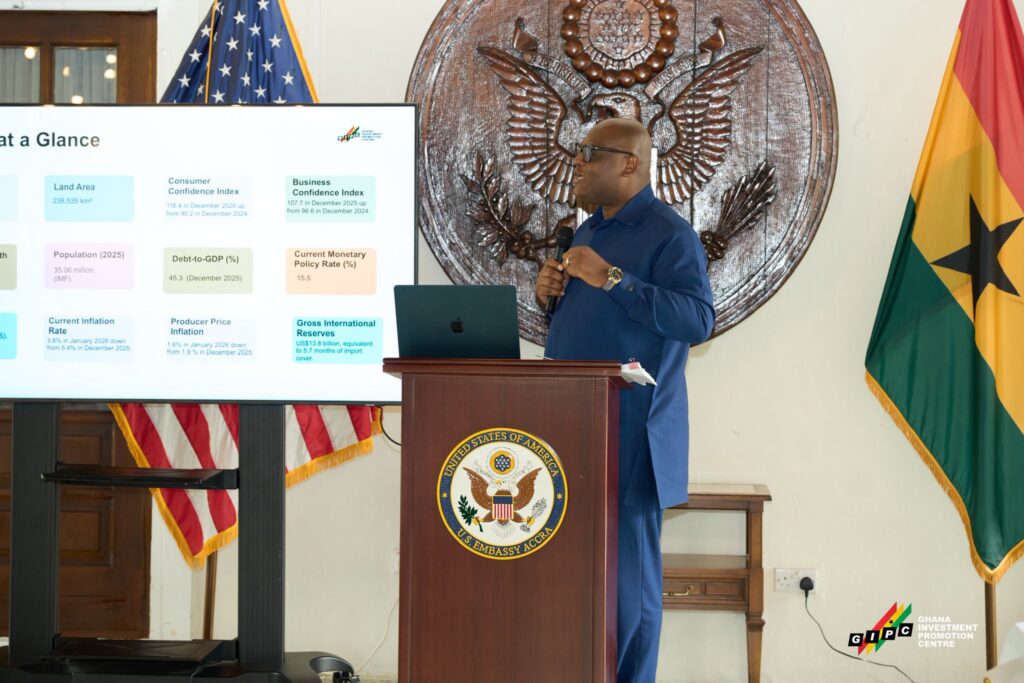
According to the Centre, these incentives serve a dual purpose: they lower the entry cost for capital-intensive projects in manufacturing and agriculture while creating a decentralized industrial base that spreads employment opportunities across the national territory.
While the government celebrates recent macroeconomic stabilization, the private sector remains focused on the “ease of doing business,” at the operational level.
Madam Doris Kafui Afanyedey, CEO of AmCham Ghana, urged that the positive macro indicators must now translate into visible changes for individual firms, particularly regarding sustained foreign direct investment (FDI), employment, and technology transfer.
“Emphasising ease of doing business as a decisive factor for investors, she pointed to ongoing digitisation and streamlined approvals as positive steps that must be accelerated to make reforms visible at the firm level”
GIPC
Madam Afanyedey noted that while digitization and faster approvals are moving in the right direction, the pace of these reforms must accelerate to keep Ghana competitive against other emerging hubs in the sub-region.
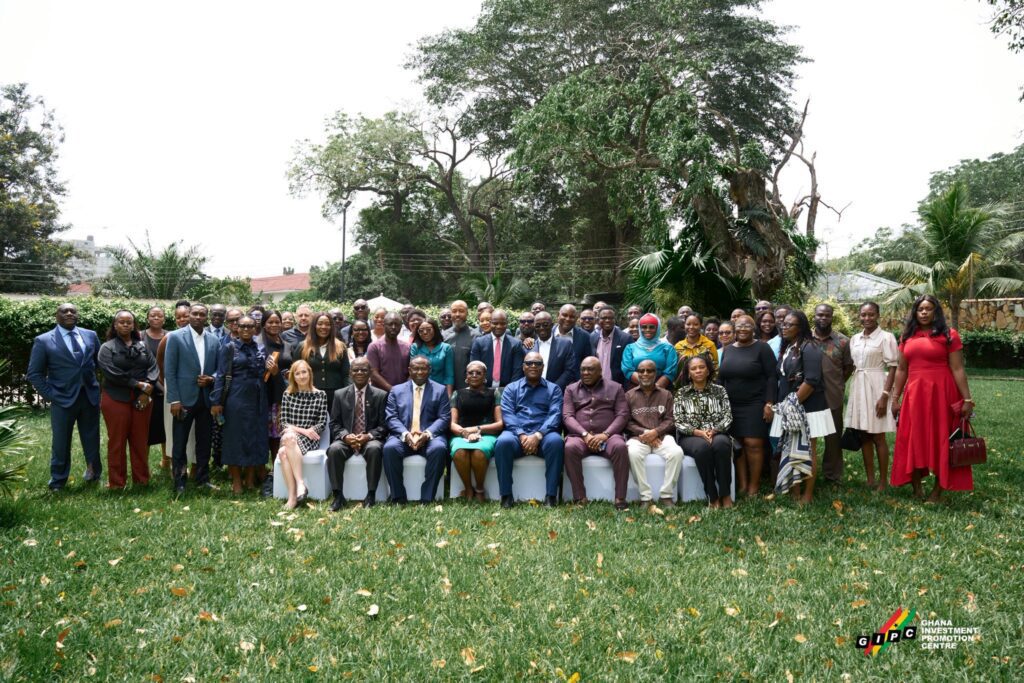
The dialogue concluded with a shared commitment between the GIPC and AmCham to ensure that the $140 billion target becomes a reality through sustained US-Ghana commercial cooperation.
READ ALSO: Expert Urges Gov’t to Consider PPP Agreement in Damang Mine