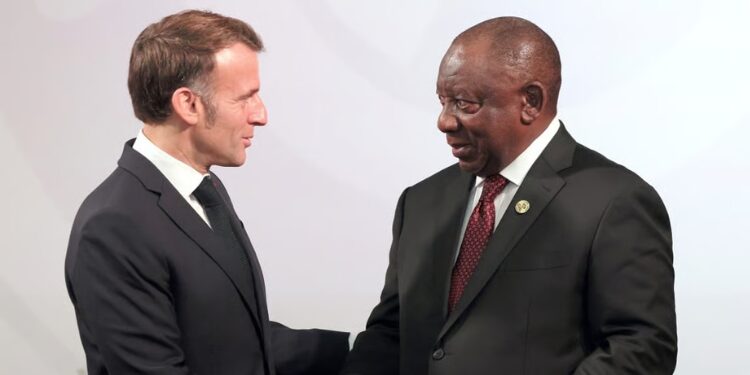
France has, under pressure from the United States, revoked an invitation to President Cyril Ramaphosa to attend the G7 summit in Evian-les-Bains from June 15 to 17.
According to presidential spokesperson Vincent Magwenya, Washington made it clear it could boycott the summit if South Africa were represented. In light of that position, he confirmed that “South Africa will not be participating in this G7 meeting.”
This marks the latest escalation in increasingly strained relations between South Africa and the United States, driven by a combination of geopolitical, legal, and trade disputes. A key point of contention has been South Africa’s decision to bring a genocide case against Israel, one of Washington’s closest allies, at the International Court of Justice.
Tensions have been further aggravated by repeated remarks from U.S. President Donald Trump, who has accused the South African government of allowing the persecution of white Afrikaners claims widely dismissed by South Africa as unfounded.
According to the US President, “South Africa has demonstrated to the world that they are not a country worthy of membership anywhere”
The U.S. administration has also criticized South Africa’s racial transformation policies, which are designed to address inequalities stemming from colonialism and apartheid, but which Washington argues discriminate against white citizens.
Trade relations have also suffered. The Trump administration previously imposed tariffs of up to 30 per cent on a wide range of South African exports, the steepest levies applied to any sub-Saharan African country.
Diplomatic friction became evident when President Trump opted to skip the G20 summit held in Johannesburg last year. Since then, South Africa has reportedly found itself excluded from aspects of G20 engagement during the period of U.S. leadership.
Ironically, it was during that same G20 summit that French President Emmanuel Macron personally invited Ramaphosa to attend the G7 gathering in Evian. The Group of Seven typically includes guest nations such as Brazil, India, and South Korea to broaden its engagement, and South Africa has previously participated under similar arrangements.
“South Africa will always endeavour to resolve disputes through constructive dialogue, regardless of the posture that is adopted by the other party. This will have no impact on the strength and close nature of our bilateral relationship with France”.
Vincent Magwenya
G7 Summit to Tackle Economic Risks as China Stays Away
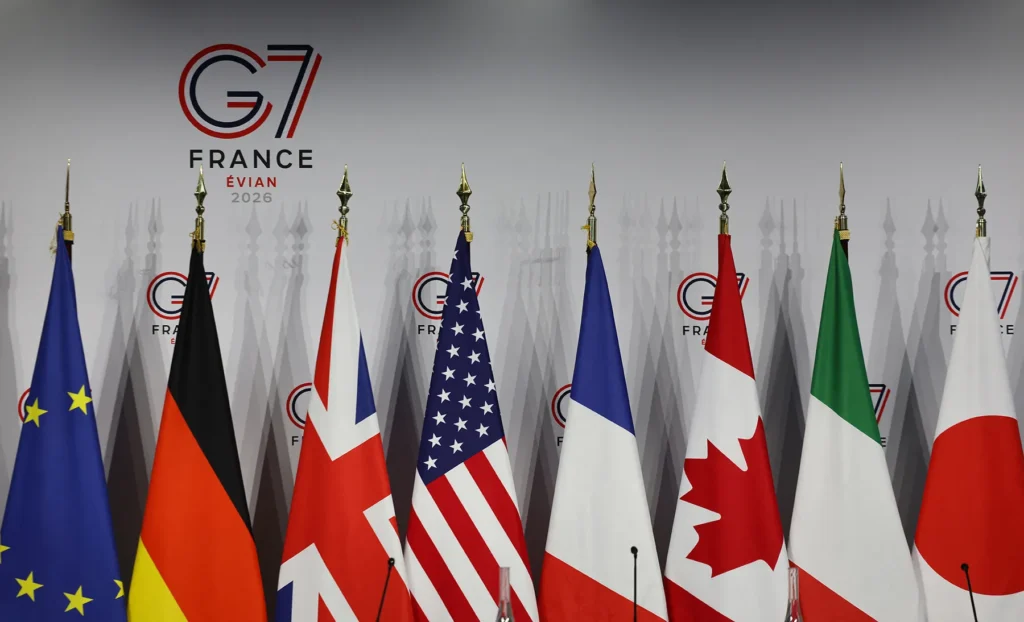
This year’s summit will include a number of invited partner countries such as India, Brazil, South Korea, and Kenya, reflecting an effort to widen participation beyond the traditional G7 bloc.
According to reports, China, however, will not be attending, despite earlier indications that Paris had explored the possibility of extending an invitation.
French officials indicated that the summit is designed to build broader international alignment around addressing global economic imbalances that could threaten financial stability.
Among the key concerns is the risk of a major economic disruption if structural issues across leading economies remain unresolved.
At the centre of discussions will be calls for policy adjustments among major global players. China is expected to face pressure to stimulate domestic demand and reduce reliance on exports, while the United States may be urged to rein in its fiscal deficits. European economies, for their part, are being encouraged to boost production and reduce high savings levels to help rebalance global demand.
However, these long-term economic objectives may be overshadowed by more immediate geopolitical and energy concerns.
The summit will take place against the backdrop of rising global uncertainty linked to tensions involving the United States, Israel, and Iran, which have contributed to volatility in energy markets.
French officials acknowledge that the evolving situation could dominate discussions. “We cannot predict how the Iran crisis will develop by June, but regardless of its trajectory, its economic and energy implications will require serious attention,” an adviser to President Macron said.
China’s absence from the summit highlights ongoing friction between Beijing and the G7. Chinese authorities have consistently questioned the legitimacy of the grouping, describing it as a “club of rich countries.”
Despite this, France is expected to maintain diplomatic engagement with China through alternative channels, emphasizing the importance of avoiding further economic fragmentation.
Adding to the uncertainty is whether U.S. President Donald Trump, whose tariff threats have rattled allies and rivals alike, not to mention the world’s markets, will attend. “I won’t make any predictions, but if Trump doesn’t come, it also makes sense, it’s a new international reality and we need to organize ourselves accordingly,” the official added.
READ ALSO : UK Tightens Sentencing Rules for National Security Offenders