
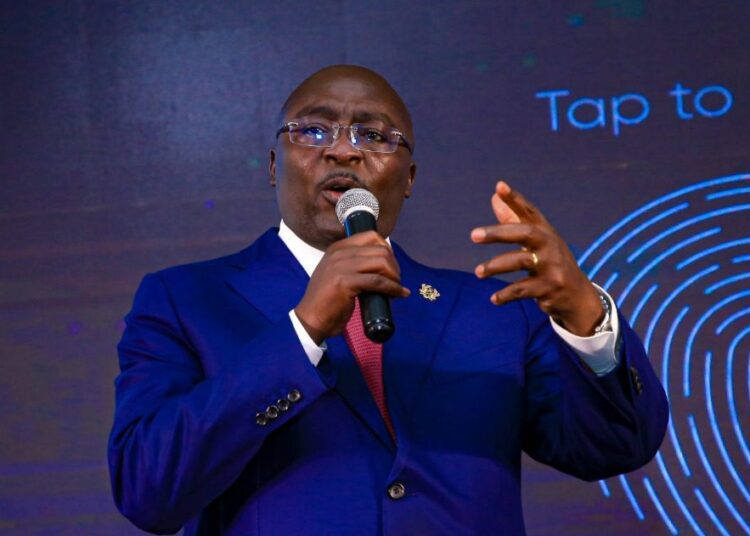
Former Vice President of Ghana, Mahamudu Bawumia, has called on African leaders, policymakers, and innovators to seize the opportunities presented by artificial intelligence and digital technologies to drive prosperity in the 21st century.
Delivering a keynote address at the LSE Africa Summit 2026 at the London School of Economics and Political Science, he emphasized that the continent stands at a decisive moment in its development trajectory.
Addressing a diverse audience of scholars, policymakers, and civil society leaders, he described the current era as a defining period shaped by rapid technological change.
He noted that artificial intelligence, big data, cloud computing, and the Internet of Things are no longer abstract concepts but central forces reshaping economies and societies. “Digitalization is no longer at the periphery. It is front and center; it is a necessity for survival and prosperity in the 21st century,” he stated.
Lessons from Missed Industrial Revolutions
Dr. Bawumia reflected on Africa’s historical experience, noting that the continent did not fully benefit from previous industrial revolutions that transformed other regions.
From the mechanization of agriculture in the first industrial revolution to the rise of electricity driven mass production and later the computer age, Africa remained largely on the margins of global industrial progress.
He explained that the fourth industrial revolution, driven by interconnected digital systems, offers a unique opportunity for the continent to change course. Unlike previous transitions, this era is defined by the convergence of technologies, where the internet acts as a foundation for innovation and intelligent systems.
According to him, Africa’s past challenges were not due to a lack of talent but rather insufficient investment in research and development, weak institutional support, and limited policy coordination. He stressed that these lessons must inform current strategies.
“Africa does not lack talent. What we lack is deliberateness, leadership and investment to create the ecosystems where innovations and innovators thrive”.
Former Vice President Dr Mahamudu Bawumia
Artificial Intelligence as a Strategic Opportunity
Central to his address was the argument that artificial intelligence should be viewed not merely as a technological tool but as a strategic capability that can shape Africa’s future. He cautioned against a passive approach where African countries simply import solutions developed elsewhere.
“If we treat AI as a set of imported tools, we will remain price takers in the knowledge economy. But if we treat AI as a national and continental capability, we can become coauthors of the rules, the markets, and the benefits”.
Former Vice President Dr Mahamudu Bawumia
Dr. Bawumia framed artificial intelligence as a broader issue of sovereignty, inclusion, and economic opportunity. He argued that the continent’s ability to harness these technologies will determine its position in the evolving global economy.
Building the Foundations for Digital Growth
The former Vice President stressed that technological progress depends on strong foundational systems, including reliable electricity, digital infrastructure, and data governance frameworks. He noted that artificial intelligence cannot thrive in isolation but requires an enabling environment that supports large scale adoption.
He pointed to disparities in internet connectivity across the continent as a major challenge. While progress has been made, access remains uneven, limiting the ability of many countries to fully participate in the digital economy.
Citing available data, he noted that internet usage in Africa stands at about 43 percent, with significant variations between countries. Ghana, for instance, has achieved relatively high connectivity levels compared to some of its peers, while other nations continue to lag behind.
However, he emphasized that connectivity alone is not enough. The quality of access, including affordability, speed, and reliability, is equally important in determining whether digital tools can drive meaningful transformation.
“The critical question is not only who is online, but who is online meaningfully,” he said, highlighting the need for policies that ensure inclusive access.
A Call for Bold and Coordinated Action
Dr. Bawumia urged African governments to adopt a proactive and coordinated approach to digital transformation. He emphasized the importance of recognizing when global shifts present new opportunities and responding with decisive action.
For him, the key lesson from history is the need to act early and build strong institutional frameworks before focusing on advanced applications. This includes investing in education, skills development, and regulatory systems that can support innovation.
He also called for greater collaboration across African countries, arguing that shared capabilities and cross border integration can enhance the continent’s competitiveness.
“Artificial intelligence can unite borders if Africa builds capability and then connects that capability across borders,” he noted, suggesting that regional cooperation could unlock new economic possibilities.
Balancing Opportunity and Risk
While highlighting the potential of artificial intelligence, Dr. Bawumia also acknowledged the risks associated with uneven development. He warned that without deliberate policy interventions, digital technologies could widen existing inequalities between countries and within societies.
He stressed that governments must ensure that the benefits of technological progress are broadly shared, rather than concentrated in a few sectors or regions. This requires inclusive policies that prioritize access, affordability, and skills development.
The address concluded with a strong message about Africa’s role in the global digital landscape. Dr. Bawumia argued that the continent has an opportunity to redefine its position by investing in the systems and capabilities needed to compete in the knowledge economy.
Rather than reacting to global trends, he urged African leaders to shape them through strategic planning and long term investment.
As the global economy continues to evolve, his message underscored a central theme that Africa’s future prosperity will depend on how effectively it embraces innovation and builds the foundations for sustainable growth.
READ ALSO: ZEN IPO Oversubscribed As Investors Pile In Ahead of Listing