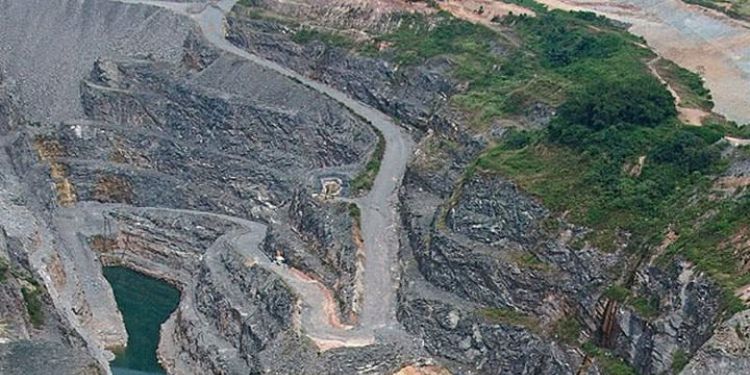
Engineers & Planners Limited (E&P) has received a strategic boost in its bid to acquire the Damang Mine as the Ghana Mine Workers Union (GMWU) officially declares its support for the indigenous takeover of the Western Region asset.
The endorsement marks a pivotal moment in the transition of the mine from the South African giant, Gold Fields, to local hands, signaling a shift toward economic sovereignty in a sector historically dominated by multinational corporations.
The union’s “blessing” comes as the April 18, 2026, handover deadline approaches, a date that will see the Ghanaian government assume control of the asset before potentially offloading it to a preferred local partner among the three main contenders.
E&P, a wholly Ghanaian-owned firm led by industrialist Ibrahim Mahama, has emerged as the frontrunner for the acquisition, bolstered by its long-standing history as the primary mining contractor at the site and a recently announced $1.2 billion investment plan for the Tarkwa and Damang enclaves.
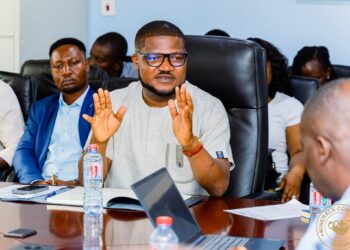
“Local participation is good, and in the Damang Mine situation, if there’s going to be local participation, we welcome it. However, our core is to ensure that they do things right by putting the proper corporate governance structures in place. If it is a limited liability company, then it must operate as one.”
Abdul-Moomin Gbana, General Secretary of the Ghana Mine Workers Union.
Strengthening Institutional Discipline Over Individual Control
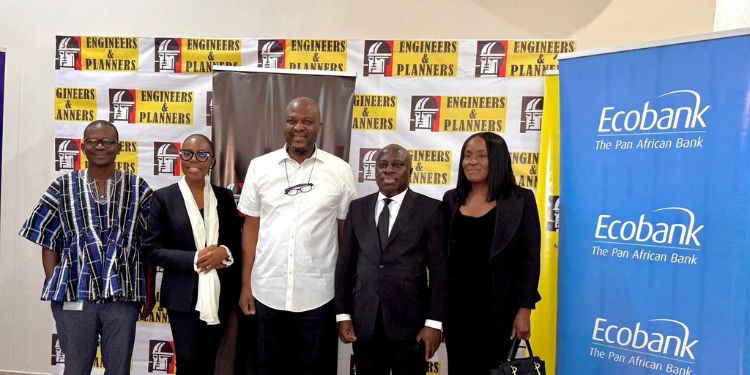
While the GMWU is enthusiastic about indigenous ownership, it has issued a stern warning against the “one-man show” syndrome that often plagues local enterprises.
General Secretary Gbana emphasized that for the Damang takeover to be a sustainable success, it must move away from informal, centralized decision-making.
He argued that the transition must be underpinned by “clearly defined corporate structures, functional and independent boards, and transparent financial systems” to avoid the pitfalls of the past.
The Union’s caution serves as a roadmap for E&P to elevate its internal management to global standards.
By insisting on “institutional discipline over individual control,” the GMWU is advocating for a model where accountability and transparency are non-negotiable.
This push for structural integrity is intended to ensure that the mine remains a “resilient, well-governed enterprise” capable of delivering long-term value to its workforce and the state.
Economic Sovereignty and the $1.2 Billion Investment Frontier

From an economic perspective, the endorsement of E&P’s bid is seen as a vote of confidence in the capacity of local capital to manage high-value extractive assets.
Industry analysts suggest that E&P’s proven operational competence highlighted by its recent deployment of 30 heavy-duty Caterpillar 785D trucks to its operational base positions it to bridge the gap left by departing multinationals despite minority caucus opposition.
A successful takeover is projected to retain a larger share of mining profits within the Ghanaian economy, reducing the “capital flight” often associated with foreign-owned firms.
Furthermore, E&P’s planned $1.2 billion injection into its mining operations is expected to revitalize the Damang Mine’s life expectancy.
Recent feasibility studies suggest the site could remain productive for another nine years, provided there is a “rapid deployment of rehabilitation capital.”
If E&P successfully implements its strategy, the country stands to benefit from sustained tax revenues, royalties, and the preservation of over 1,000 direct jobs that were previously at risk during the lease impasse.
A New Precedent for the Extractive Sector

The Damang transition is being characterized as a “test case” for Ghana’s broader resource nationalism strategy. By favoring local firms that demonstrate both technical expertise and financial muscle, the government is redefining the rules of engagement.
However, as the Union rightly points out, the “real measure of success” will not just be the change in ownership, but the transformation of management culture.
The GMWU maintains that local businesses in the extractive sector “haven’t done too well” historically when it comes to governance.
Consequently, this landmark endorsement is conditional; it is a call for E&P to lead a new era of “broad-based benefits” where worker welfare and national economic gains are prioritized through professionalized leadership.
As the countdown to April 18 continues, all eyes remain on E&P to see if it will transition from a high-performing contractor to a world-class mine owner.
READ ALSO: Dep. Roads Minister: We Have Given 400 Contracts via Competitive Bidding