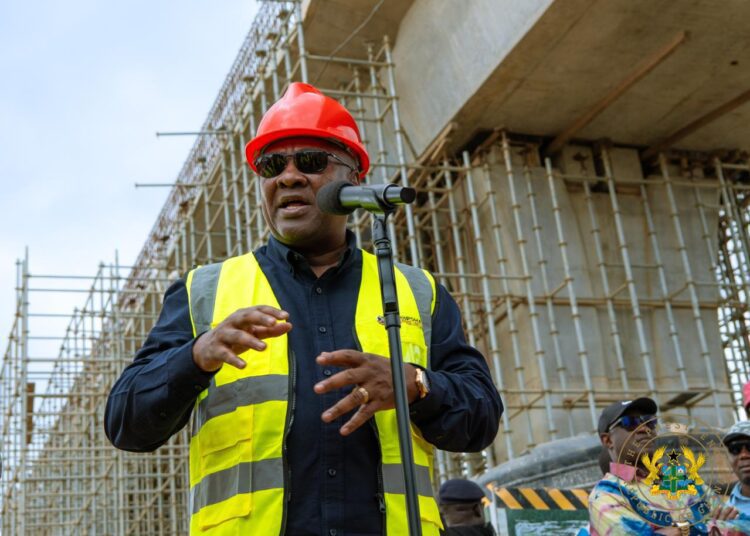
President John Dramani Mahama has described the government’s “Big Push” programme as the most ambitious investment ever undertaken in Ghana’s road sector, positioning it as a central pillar for economic transformation.
Speaking at the Kwahu Business Forum under the theme “The Future of Business: The Role of the Financial Sector,” the President said the initiative is already reshaping the country’s infrastructure landscape.
According to him, the programme is injecting unprecedented levels of investment into road construction, with over 2,000 kilometres of roads being developed simultaneously across the country. He emphasised that the scale and pace of execution mark a historic departure from previous infrastructure efforts.
“This is the biggest investment in the road sector in the history of Ghana,” he stated, noting that the programme is designed not only to improve connectivity but also to stimulate broader economic activity.

Construction as a Catalyst for Economic Activity
The President explained that the construction sector plays a strategic role in driving economic growth, particularly during periods of slow economic performance. He noted that government investment in infrastructure is often used as a deliberate tool to stimulate demand across multiple sectors.
“When economies are sluggish, governments intentionally invest in construction because the construction sector stimulates the economy”.
President John Dramani Mahama
He outlined how road construction projects create ripple effects across industries, from cement production to fuel supply and equipment maintenance. The demand generated by these projects benefits manufacturers, distributors, and service providers, creating a chain reaction of economic activity.
President Mahama highlighted that cement producers, steel suppliers, fuel stations, and equipment dealers all experience increased business as construction expands. He added that mechanics, engineers, and logistics operators also gain employment opportunities through the sector’s growth.
Job Creation and Youth Opportunities
A key feature of the Big Push programme, the President noted, is its capacity to generate employment, particularly for young professionals. He expressed satisfaction at the growing number of young engineers working on project sites across the country.
“I’ve been very pleased to see young engineers who have come out of our various institutions working as site engineers,” he said, adding that many of them are women, which reflects progress in gender inclusion within the engineering field.
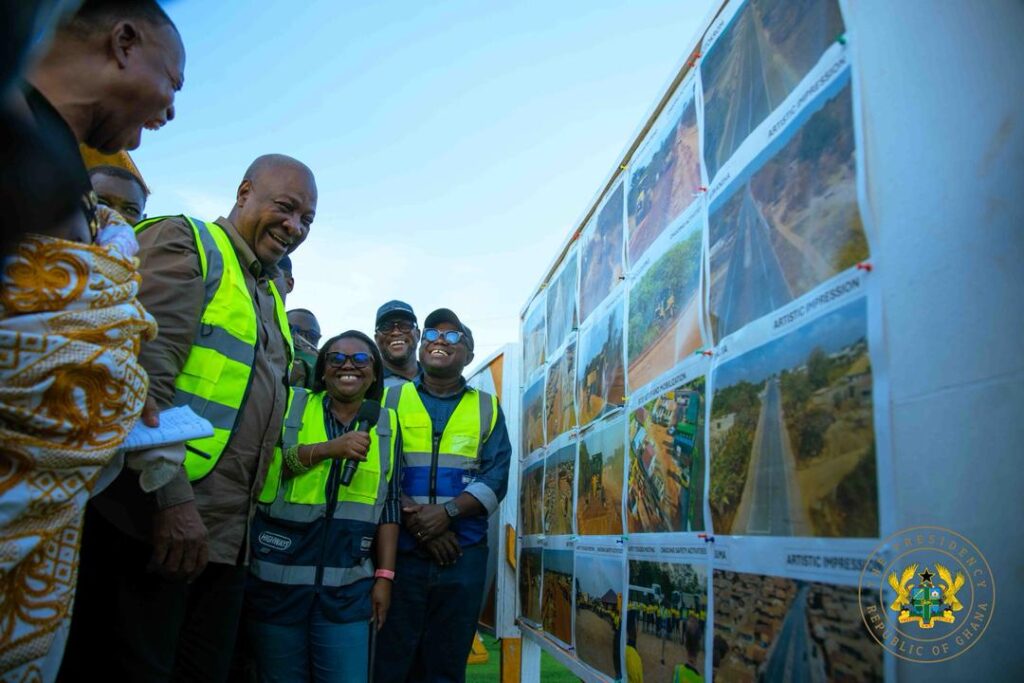
Beyond skilled professionals, the programme is also creating opportunities for artisans such as carpenters and steel benders, as well as informal sector workers. Food vendors operating around construction sites, he noted, are also benefiting from increased economic activity.
This broad-based impact, according to the President, demonstrates how infrastructure investment can support livelihoods across different segments of society.
Funding and Execution Strategy
The Big Push programme is a flagship initiative valued at 10 billion US dollars, equivalent to about 120 billion Ghana cedis. It is primarily financed through domestic resources, including petroleum revenues and mineral royalties, reflecting a shift toward self-reliance in infrastructure development.
For the 2025 fiscal year, 13.9 billion Ghana cedis was allocated to the programme, with a significantly higher allocation of 30 billion Ghana cedis captured in the 2026 budget. This sustained financial commitment underscores the government’s determination to deliver on its infrastructure agenda.
To ensure efficiency, projects have been divided into smaller segments with a targeted completion timeline of 24 months. A dedicated secretariat at the Presidency monitors progress in real time, ensuring accountability and timely delivery.
The President also highlighted measures introduced to prevent project delays, including a 15 percent mobilisation fee for contractors and guaranteed payment within two weeks of certified work completion.
Key Projects Across the Country
As of early 2026, work has commenced on 50 major projects spanning multiple sectors. In the highways category, major developments include the Accra-Kumasi six-lane expressway and the dualisation of key corridors such as Winneba-Mankessim and Cape Coast-Takoradi.
Bridge infrastructure is also receiving attention, with new crossings planned over the Oti and Afram rivers, alongside rehabilitation of existing structures in Buipe, Yapei, and Daboya.
Urban transport systems are being modernised through proposed light rail projects in Accra and Kumasi, while railway lines in the Western and Eastern corridors are undergoing revitalisation.
The programme also integrates agricultural and water infrastructure, including the development of multi purpose dams in Pwalugu, Nasia, and Nabogu, as well as expanded water systems in Ho, Tamale, and Yendi.
Regional Impact and National Connectivity
The Big Push initiative is designed to deliver balanced development across regions. In Greater Accra, projects such as the Adenta Dodowa road, Tema motorway expansion, and the Accra Loop aim to ease congestion and improve mobility.
In the Ashanti Region, the Kumasi Outer Ring Road and the second phase of the Kejetia Market are expected to boost urban development and commerce. Meanwhile, northern corridors such as the Wa-Tumu-Bolgatanga and Techiman-Wenchi-Bole Wa-Hamile roads are being upgraded to enhance connectivity and support regional trade.
The President stressed that improved road networks will reduce transportation costs, facilitate trade, and strengthen Ghana’s position as a regional economic hub.
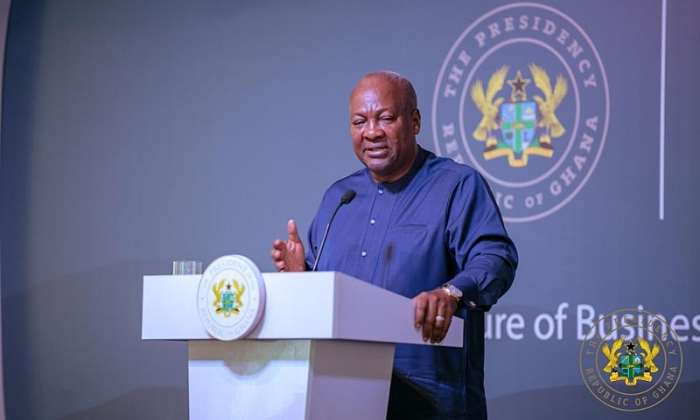
President Mahama concluded that the Big Push programme is more than an infrastructure initiative, describing it as a strategic intervention to drive long term economic transformation.
By linking construction activity to job creation, industrial demand, and regional development, the programme aims to create a more resilient and inclusive economy.
He reiterated that sustained investment in infrastructure remains critical to unlocking Ghana’s growth potential and improving the quality of life for citizens.
READ ALSO: ECG Revenue Jumps to $1.9bn Under New Management