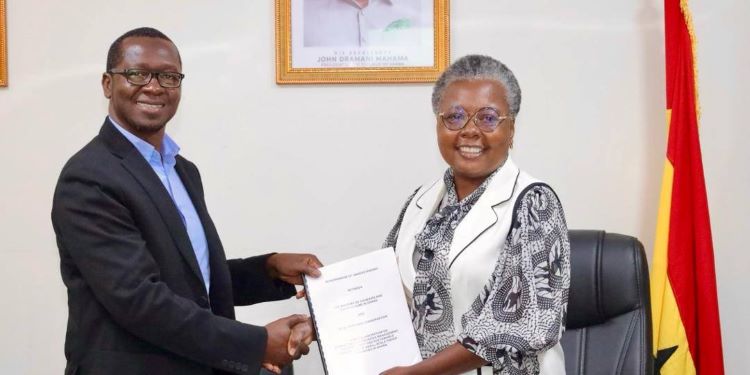
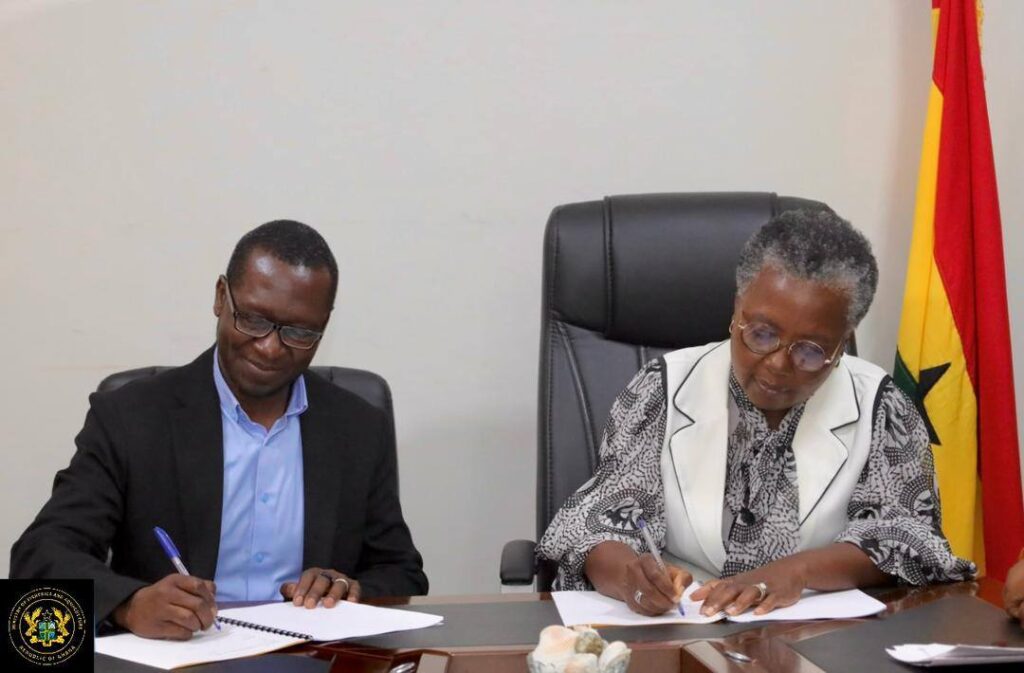
The Ministry of Fisheries and Aquaculture Development (MoFAD) has recently formalized a strategic alliance with Blue Ventures Conservation through a Memorandum of Understanding (MoU), marking a departure from traditional, punitive maritime policing toward a more collaborative, community-led management model.
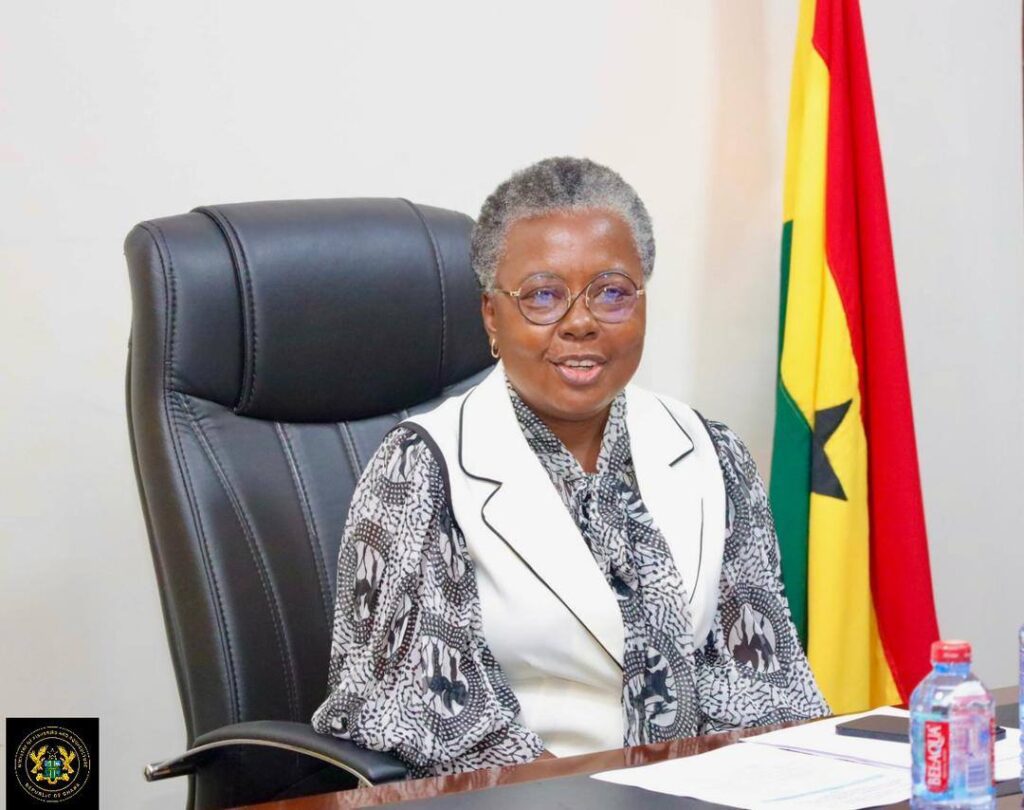
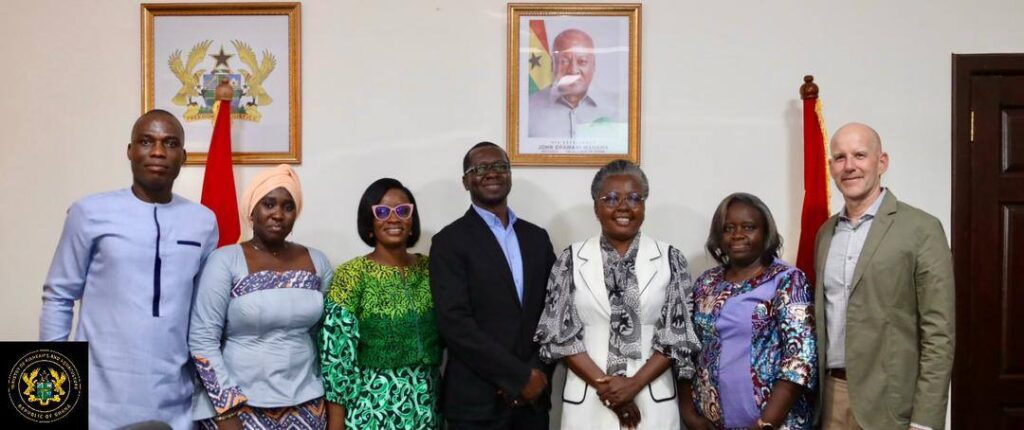
Sector Minister Hon. Emelia Arthur, representing the state, and Ebrima Saidy, the Chief Executive Officer of Blue Ventures Conservation, finalized the agreement against a backdrop of increasing pressure on the nation’s pelagic stocks and the rising threat of unauthorized industrial activity.
According to MoFAD, this partnership is a bridge between the government’s industrialization hopes and the environmental necessity of preserving Ghana’s artisanal fishing heritage for the next generation.
“The agreement is expected to support ongoing government efforts to promote responsible fishing practices and protect marine resources across the country.
“In her remarks, Hon. Emelia Arthur expressed gratitude to the Blue Ventures Conservation team for their continued support. She reaffirmed the Ministry’s commitment to strengthening the fisheries sector through strategic partnerships and sustainable practices”
Ministry of Fisheries and Aquaculture Development
The timing of the agreement is as much about global positioning as it is about local conservation. During the ceremony, Ebrima Saidy extended a formal invitation to Minister Arthur to participate as a keynote speaker at the 11th Our Ocean Conference, which is scheduled to take place in Kenya in June 2026.
The invitation underscored Ghana’s growing reputation as a regional leader in the “Blue Economy,” a sector increasingly being viewed as the next frontier for sustainable African development. Aligning with Blue Ventures further indicates Ghana’s readiness to harmonize its national interests with international standards of marine governance and ecosystem protection.
Compliance Over Enforcement
The most significant ideological takeaway from the new MoU is the transition toward a “compliance-first” doctrine, since the fight against Illegal, Unreported, and Unregulated (IUU) fishing has been characterized by expensive and often ineffective enforcement missions on the high seas for years.
Hon. Emelia Arthur used the signing ceremony to challenge this status quo, arguing that lasting results can only be achieved when the fishing communities themselves view maritime laws as beneficial rather than purely restrictive. The new approach seeks to foster a culture of voluntary adherence by involving local fishers in the co-management of their own waters, effectively turning every canoe owner into a stakeholder in national conservation.
MoFAD noted that by prioritizing compliance, it intends to reduce the administrative and financial burden of high-seas policing while increasing the accuracy of data reported from the ground. The MoU outlines a structured pathway for capacity building and training, ensuring that local stakeholders have the tools and the knowledge to monitor their environments effectively.
This shift recognizes that the vastness of Ghana’s territorial waters makes total enforcement impossible through hardware alone; instead, the state is investing in the “human infrastructure of the coastal regions.” The strategy aims to create a self-regulating ecosystem where the incentives for sustainable fishing far outweigh the temporary gains of illegal practices.
The partnership between the Ministry and Blue Ventures Conservation is built upon an eight-pillar framework that covers the full spectrum of maritime governance. This framework includes policy and legal support, scientific research, and community livelihood empowerment.
Unlike previous agreements that focused solely on environmental protection, this MoU explicitly links the health of the marine ecosystem to the economic prosperity of the people who depend on it, integrating scientific research with community engagement.
The partnership ensures that policy decisions are backed by high-fidelity data and verified by those living on the front lines of the climate crisis. A critical component of this framework is the focus on Monitoring, Evaluation, and Learning (MEL).
According to the Ministry, in an era of rapid environmental change, static policies are no longer sufficient. The new agreement mandates a continuous feedback loop where data from scientific research is used to refine fisheries law enforcement and institutional support in real-time.
This ensures that the Ministry can remain agile, adjusting its strategies as fish migration patterns change or as new technological threats emerge in the maritime space. The collaboration also placed a heavy emphasis on business registration and financial inclusion for artisanal fishers, ensuring they have the legal standing to access credit and invest in sustainable equipment.
Empowering Through Co-Management
Central to the success of the Blue Ventures partnership is the concept of co-management. The new MoU seeks to dismantle the hierarchy of fisheries management in West Africa, being a top-down affair – with central governments dictating terms to coastal villages – by institutionalizing community engagement.
Through this collaborative model, local innovation hubs and traditional leadership structures will be given a formal seat at the table in the decision-making process, ensuring that the laws governing the seas are rooted in the practical realities of those who use them every day, rather than being drafted in isolation by urban bureaucracies.
Community livelihood empowerment is not merely a byproduct of this agreement; it is a primary objective. The Ministry recognized that when fishing stocks decline, coastal communities face extreme economic vulnerability, and diversifying the economic base of these regions through capacity building and training in alternative industries reduces the fishing pressure on the ocean.
This holistic approach views the fisherman not just as a harvester, but as a potential entrepreneur and environmental guardian. As these communities become more resilient, their reliance on unsustainable or illegal fishing methods naturally diminishes, establishing a virtuous cycle of recovery for Ghana’s marine resources.
Beyond the environmental impact, the collaboration with Blue Ventures Conservation serves to strengthen Ghana’s international investment position, as accurate data on fish stocks and transparent maritime governance are critical metrics for global investors interested in the sustainable aquaculture and tourism sectors.
The formalization of this MoU provides the transparency and regulatory rigor that international partners require to commit long-term capital to the Ghanaian Blue Economy. This aligns with broader national efforts to move toward a data-driven approach in all sectors of the economy.
MoFAD highlighted how the scientific research component of the partnership will also provide the state with a clearer picture of its natural assets – understanding the exact value and health of the nation’s marine resources for better economic planning and more effective negotiation on the global stage.
As the Ministry prepares for the 11th Our Ocean Conference in Kenya, the data generated through this MoU will serve as the evidence base for Ghana’s claim as a hub of maritime innovation.
The goal is to position the country as a model for how developing nations can balance the urgent need for economic growth with the moral and environmental obligation to safeguard their natural heritage.