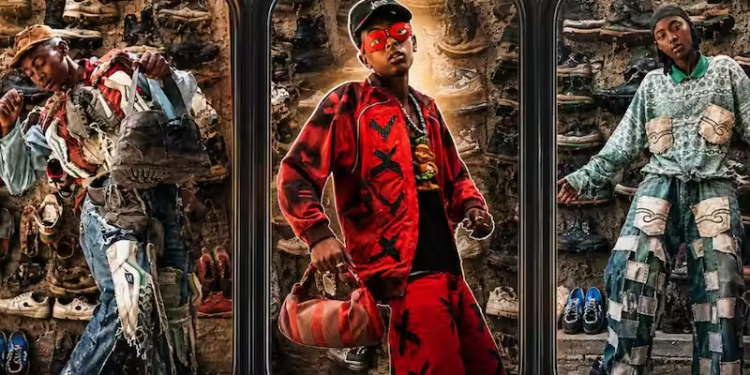
In the bustling streets of Addis Ababa, a 15-year-old self-taught designer is turning heads worldwide, not with luxury fabrics or high-end studios, but with discarded plastics, cardboard, old shoes, and household waste.
Kalu Putik, better known online as @kaluputics, has emerged as one of the most inspiring viral sensations of 2026, proving that raw talent and resourcefulness can outshine big budgets in the global fashion arena.
With just a handful of posts around 20-22 videos, the young Ethiopian creator has amassed millions of followers across Instagram and TikTok in a matter of weeks.
Reports indicate rapid growth, with some accounts noting surges to over 2-3 million followers on Instagram alone shortly after his April 2026 breakthrough.
His transition reels, featuring dramatic reveals from everyday attire to avant-garde ensembles, have racked up hundreds of millions of views, with individual posts soaring past 200 million.
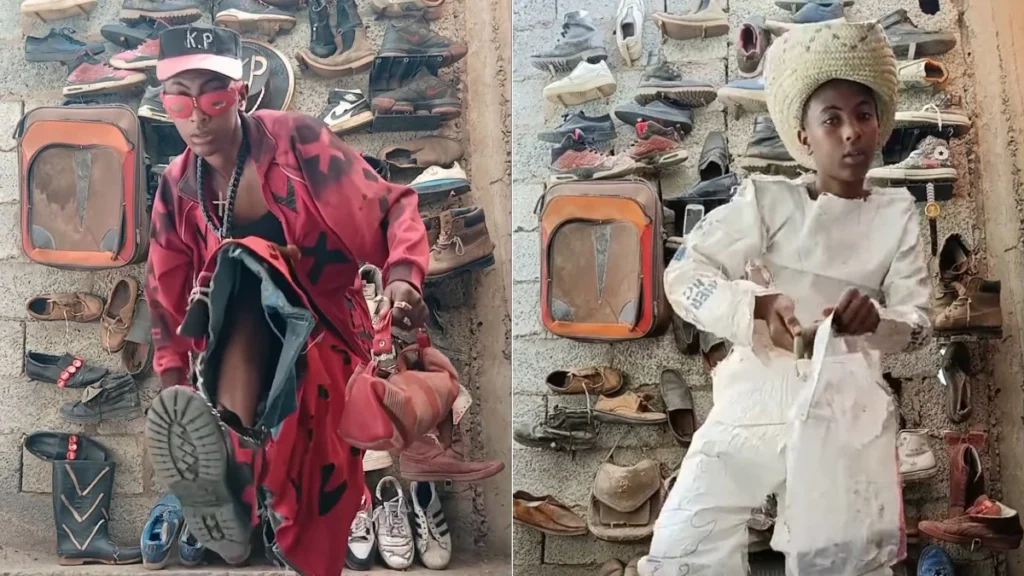
Putik operates from a simple home setup in Addis Ababa. He stands on a wooden board against a backdrop of hanging materials and flips into bold, runway-worthy looks constructed from recycled scraps.
Old sneakers are sliced and reassembled, plastic sheets become structured garments, cardboard forms dramatic silhouettes, and torn fabrics add texture.
The result are striking, high-fashion statements that blend streetwear edge with experimental couture all achieved without formal training or financial backing.
Kalu’s journey highlights Ethiopia’s untapped creative potential. Growing up amid resource constraints, he developed an eye for transforming waste into wearable art.
His content resonates deeply in an era of growing environmental awareness, positioning upcycling not just as necessity but as innovative sustainability.
Fashion observers note his work equalizes access to high fashion, showing that vision trumps privilege.
The internet has embraced him enthusiastically. Grammy-winning artist SZA publicly praised his designs, amplifying his reach.

Major fashion brands are reportedly monitoring his account, while everyday users hail him as a “fashion genius” and “unbothered king.”
In one memorable moment, Instagram’s official account commented on a post inviting him for a feature, urging him to check his DMs.
Putik appeared to ignore the message entirely , a move that only boosted his mystique, with the comment itself garnering millions of likes.
His silence adds to the allure. Despite the frenzy, Kalu lets his creations speak.
Videos show confident walks and sharp styling, exuding a professional polish rare for self-taught talent from limited-resource environments.
Supporters from across Africa and the diaspora see him as a beacon for young creatives, proving social media can spotlight talent from any corner of the continent.
Implications for African Fashion
Kalu Putik’s rise arrives at a pivotal time for African fashion. The industry increasingly emphasizes sustainability, cultural authenticity, and innovation amid global calls to reduce textile waste.
His “trash style” or upcycled approach mirrors growing movements in Ghana, Nigeria, and beyond, where designers repurpose second-hand imports (often called “mitumba” or “kabas”) into high-value pieces.
Experts view his story as more than viral entertainment. It signals the democratization of fashion through digital platforms.
A teenager with a smartphone can now command attention once reserved for established houses in Paris, Milan, or New York.
Digital analysts describe him as emblematic of Ethiopia’s emerging creative economy, where ingenuity meets opportunity.
For Ghana and other African nations facing plastic and textile waste challenges, Kalu’s model offers inspiration.
Local upcycling initiatives could draw from his techniques, turning environmental liabilities into economic and cultural assets.
His success also underscores the power of intra-African storytelling content from one nation inspiring youth across the continent.
Road Ahead
Despite the acclaim, challenges remain. Operating without formal support, scaling his talent sustainably will require mentorship, resources, and protection from exploitation.
Questions linger about his education and long-term well-being, as overnight fame can bring pressure.
Yet, his unbothered focus suggests a grounded approach rooted in pure creativity.
Fashion insiders hope brands and institutions will provide opportunities collaborations, training, or platforms without diluting his authentic voice.
Calls grow louder for investment in Africa’s young creatives, from workshops in Addis Ababa to pan-African fashion incubators.
Kalu Putik embodies 2026’s mantra: no excuses not to be fly. In a world obsessed with perfection and polish, his story reminds us that true style emerges from limitation and imagination.
As millions continue to watch his every reveal, one thing is clear the future of fashion may just be handmade from scraps, born in Ethiopia, and destined for the world stage.
READ ALSO: Gov’t Signs $60Bn Deal with Energy Partners to Boost Upstream Petroleum Production