
• About
  • Advertise
  • Privacy Policy
  • Contact
Friday, May 15, 2026
  • Login
The Vaultz News
  • Top Stories
  • News
    • General News
    • Education
    • Health
    • Opinions
  • Economics
    • Economy
    • Finance
      • Banking
      • Insurance
      • Pension
    • Securities/Markets
  • Business
    • Agribusiness
    • Vaultz Business
    • Extractives/Energy
    • Real Estate
  • World
    • Africa
    • America
    • Europe
    • UK
    • USA
    • Asia
    • Around the Globe
  • Innovation
    • Technology
    • Wheels
  • Entertainment
  • 20MOBPL2DNew
  • Jobs & Scholarships
    • Job Vacancies
    • Scholarships
No Result
View All Result
The Vaultz News
  • Top Stories
  • News
    • General News
    • Education
    • Health
    • Opinions
  • Economics
    • Economy
    • Finance
      • Banking
      • Insurance
      • Pension
    • Securities/Markets
  • Business
    • Agribusiness
    • Vaultz Business
    • Extractives/Energy
    • Real Estate
  • World
    • Africa
    • America
    • Europe
    • UK
    • USA
    • Asia
    • Around the Globe
  • Innovation
    • Technology
    • Wheels
  • Entertainment
  • 20MOBPL2DNew
  • Jobs & Scholarships
    • Job Vacancies
    • Scholarships
No Result
View All Result
The Vaultz News
No Result
View All Result
in General News

Ghana Targets 70% Nationwide 5G Expansion by 2027

Evans Junior Owuby Evans Junior Owu
May 15, 2026
Reading Time: 6 mins read
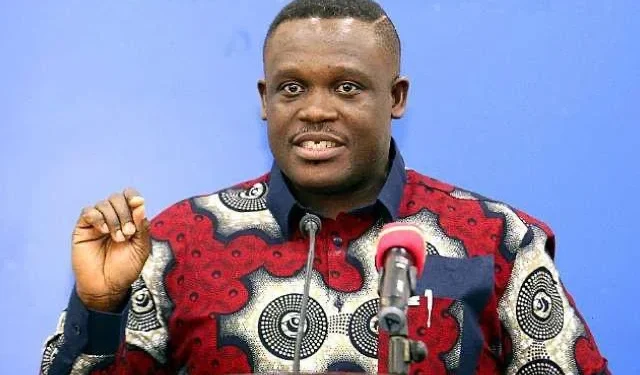
Ghana’s Minister for Communications, Digital Technology and Innovation, Hon. Samuel Nartey George

Ghana’s Minister for Communications, Digital Technology and Innovation, Hon. Samuel Nartey George

The Government of Ghana has set an ambitious target to achieve 70 per cent nationwide fifth-generation mobile network population coverage by March 2027 as part of a broader strategy to position the country as a leader in digital innovation across Africa.

The target forms a central part of government’s long term digital transformation agenda, which is anchored on five strategic pillars including legal reforms, artificial intelligence, digital infrastructure, skills development, and spectrum management.

The initiative is expected to significantly expand access to high-speed connectivity, drive innovation, and strengthen digital inclusion across both urban and rural communities.

The announcement was made by Hon. Samuel Nartey George, Minister of Communications, Digital Technology and Innovations, during a high-level stakeholder workshop on spectrum management held in Accra.

ADVERTISEMENT

The event brought together regulators, telecommunications operators, infrastructure providers, global industry representatives, and policymakers to discuss practical strategies for enhancing spectrum management and accelerating Ghana’s transition toward next-generation digital technologies.
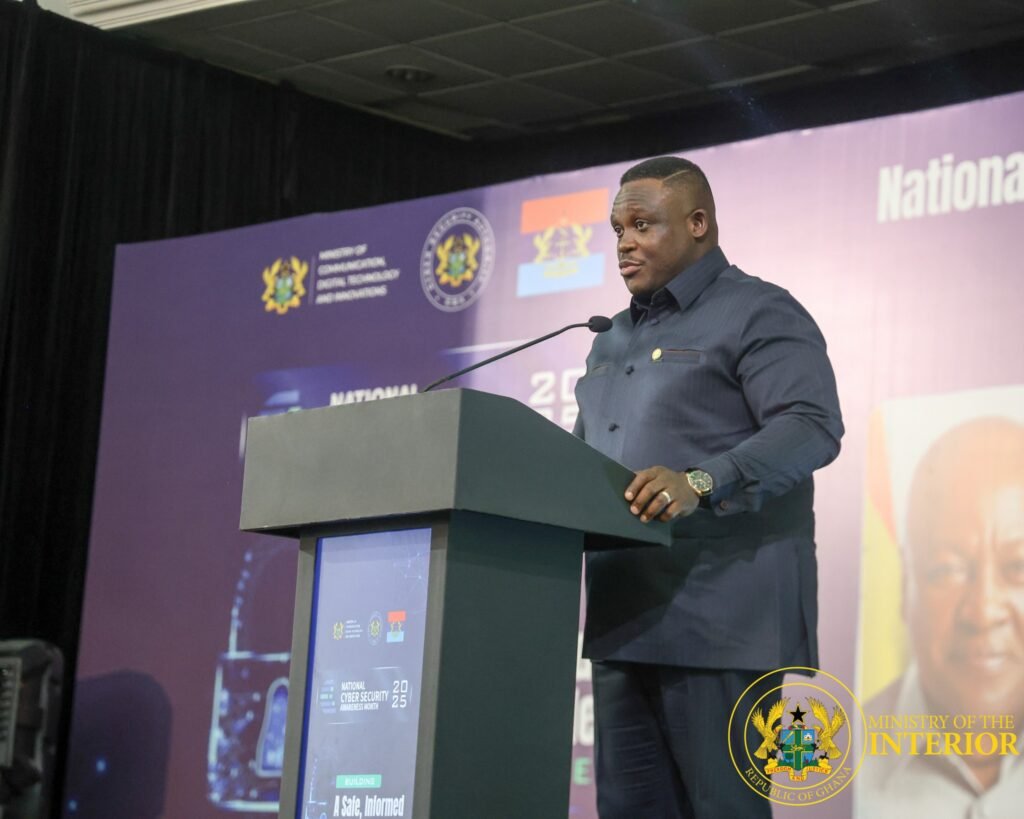
Ghana’s Minister for Communications, Digital Technology and Innovation, Hon. Samuel Nartey George

“70 Per Cent Coverage for Ghana at 70”

Speaking at the workshop, Hon. Sam George described the government’s vision as both symbolic and strategic, noting that the target aligns with Ghana’s 70th Independence Anniversary in March 2027.

He explained that the initiative, branded “70 per cent coverage for Ghana at 70,” demonstrates the government’s determination to build a digitally connected economy capable of competing on the global stage.

He acknowledged that the target was ambitious, but stressed that it remained achievable if all stakeholders worked together with clear purpose and commitment.

According to him, success would depend heavily on coordinated collaboration between government institutions, regulators, mobile network operators, and infrastructure providers.

Hon. Sam George said increased private sector investment, efficient spectrum allocation, and clear regulatory frameworks would be essential in ensuring the timely deployment of the next generation technology across the country.

He added that government remained committed to creating an environment that supports innovation while ensuring that digital opportunities are accessible to all citizens.

Rural Connectivity Becomes Licensing Priority

A key aspect of the government’s strategy involves ensuring that the benefits of 5G deployment extend beyond major cities and commercial centres.

Hon. Sam George disclosed that future spectrum allocations would come with strict rollout obligations designed to guarantee that underserved and remote communities are not left behind in the digital transition.
ADVERTISEMENT
Samuel Nartey George 14
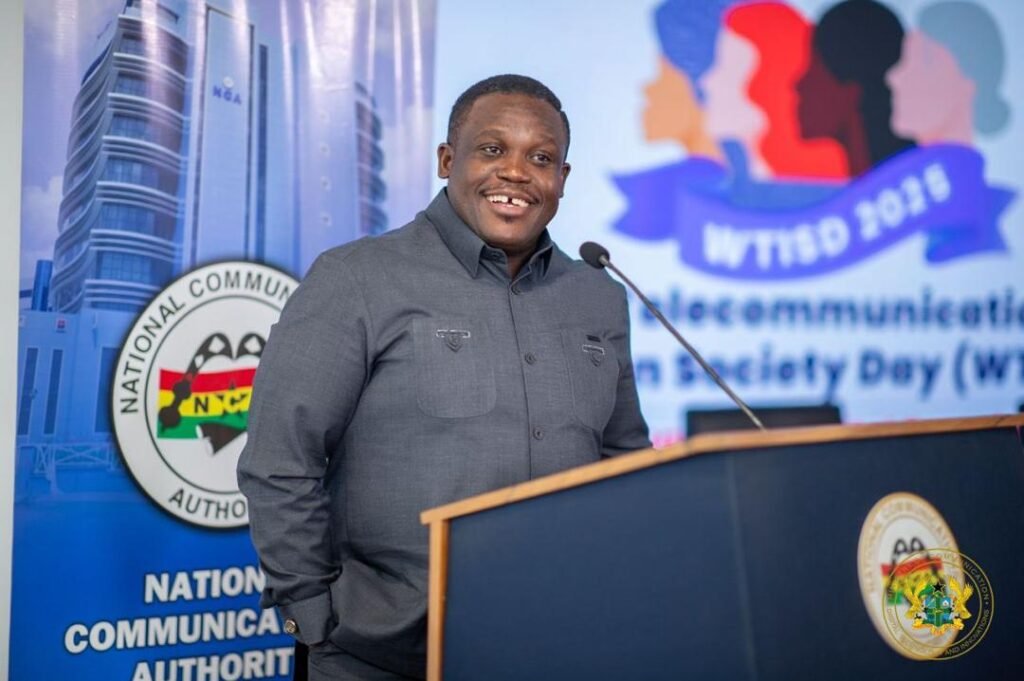
Ghana’s Minister for Communications, Digital Technology and Innovation, Hon. Samuel Nartey George

According to the Minister, operators seeking access to spectrum resources would be required to commit to expanding services into rural and underserved parts of the country as part of their licensing conditions. “We cannot give spectrum without firm commitments to rural connectivity,” he stressed.

The Minister also raised concerns about disparities in telecommunications service costs between urban and rural communities. He noted that the existing pricing gap remains a policy concern that government intends to review as part of broader reforms aimed at promoting digital equity.

He explained that access to affordable and reliable connectivity must not be determined by geography, adding that every Ghanaian should have equal opportunity to benefit from digital services regardless of location.

Infrastructure Investment Seen as Critical

Hon. Sam George further highlighted the importance of building resilient infrastructure to support the successful rollout and sustainability of 5G services nationwide.

He pointed to the need for substantial investments in network resilience, backup power systems, and redundancy measures to ensure uninterrupted service delivery.

According to him, as demand for data continues to grow and digital services become increasingly central to economic activity, the telecommunications sector must be prepared to support heavier traffic volumes and more sophisticated consumer demands.
5G Technology
5G Technology

He therefore urged industry stakeholders to align their investment strategies with government’s broader digital vision by prioritising network expansion, innovation, and consumer focused service delivery.

Hon. Sam George said connectivity should not be viewed simply as a communications tool, but as a critical platform for economic growth, entrepreneurship, education, healthcare delivery, and national development.

Regulator Emphasises Quality of Service

Also speaking at the workshop, Edmund Yirenkyi Fianko, Acting Director General of the National Communications Authority, underscored the importance of ensuring that quality remains central to Ghana’s 5G deployment strategy.

Rev. Ing. Fianko cautioned that nationwide deployment without reliable service quality could not be considered a true success, regardless of the level of network expansion achieved.

He noted that increasing consumer demand for data and rising expectations for faster and more reliable connectivity have already placed significant pressure on existing telecommunications infrastructure, creating persistent service challenges in some parts of the country.

According to him, the next phase of digital transformation must go beyond simply expanding coverage and must focus equally on quality of service and quality of user experience. “To sustain a digital economy, quality of service and quality of experience must remain at the top of our agenda,” he said.

National Communications Authority

He stressed that equitable access to high quality digital services across both urban and rural communities would be essential if Ghana hopes to build a sustainable and inclusive digital economy.

Ghana’s Digital Future Takes Shape

The workshop highlighted growing consensus among policymakers, regulators, and industry leaders that effective spectrum management will play a defining role in shaping Ghana’s digital future.

With the 2027 deadline approaching, the success of the government’s ambitious 5G target will depend on sustained investment, strong regulatory enforcement, and meaningful collaboration across the telecommunications ecosystem.

As Ghana moves toward its 70th Independence Anniversary, the government appears determined to make digital transformation one of the defining milestones of that historic celebration, with 5G connectivity positioned as a key driver of innovation, inclusion, and long term economic growth.

READ ALSO: Chamber of Mines Warns Against State Ownership Failures Amidst IEA Policy Dispute

Sign Up to Our Newsletter

Fresh updates, Straight to your inbox

Tags: 5G coverage targetAccra telecom workshopbroadband expansiondigital infrastructuredigital transformation GhanaGhana 5G rolloutGhana digital economyNational Communications AuthorityRural connectivitySamuel Nartey Georgespectrum managementtelecommunications Ghana
Share2Tweet1ShareSendSend
Please login to join discussion
Previous Post

Xi, Trump Claim Progress In Stabilizing U.S-China Relations

Next Post

Ghana Must Fund New Marine Protected Area – UCC Lecturer Demands

Related Posts

Chief Executive of the NHIA, Dr. Victor Asare Bampoe
General News

NHIA Pays Over GHC157 Million in Claims

May 15, 2026
Governance Expert, Dr Frederick Oduro
General News

Governance Expert Says Constitution Must Protect Rights of Citizens

May 15, 2026
Justin Kodua Frimpong, General Secretary of the NPP
General News

Words Like Mine Speak The Truth — Kodua Frimpong

May 15, 2026
National Chairman of the National Democratic Congress (NDC), Johnson Asiedu Nketiah
General News

Support Mahama to Succeed, Asiedu Nketiah Urges Party Supporters

May 14, 2026

Sign Up to Our Newsletter

Fresh updates, Straight to your inbox

Recent News

Fidelity Demands Africa Own Its Digital Future At a time when Africa’s digital economy is accelerating at an unprecedented pace, Fidelity Bank Ghana has delivered one of the strongest messages yet on the continent’s technological future. The bank made a bold and urgent case for Africa to stop depending on foreign controlled digital systems and begin building its own infrastructure capable of retaining value, strengthening currencies, and driving long term economic sovereignty. As one of the key sponsors of the 3i Africa summit, Fidelity Bank did not just show up to participate. It arrived with a message that resonated deeply across conference halls and policy discussions. Fidelity Bank emerged as one of the loudest voices championing a future where African nations control the very digital rails that power their economies. Digital Infrastructure Is The New Economic Power One of the defining moments of the summit came during a high level panel discussion on digital public infrastructure, where Adeline Aryee delivered a statement that immediately captured the attention of participants. She declared that if Africa builds its own digital rails, it naturally retains the value created by those systems. Her message was clear and uncompromising. In previous decades, national infrastructure was measured by roads, bridges, ports, and airports. Today, the true engines of economic power are payment platforms, identity systems, financial technology ecosystems, and digital marketplaces. According to Aryee, digital public infrastructure is no longer a luxury. It is now a strategic national asset. Her remarks struck at the heart of one of Africa’s most pressing economic concerns. Despite growing digital adoption, many transactions across the continent still pass through foreign payment systems, resulting in value leakage and continued pressure on local currencies. Ghana’s Success Story Becomes A Continental Blueprint Aryee highlighted Ghana’s progress in financial inclusion, mobile payments, and digital banking, describing the country as an emerging model for other African economies. Over the years, Ghana has invested heavily in domestic payment systems such as GhIPSS and its flagship platform, Gh-link. These systems have significantly expanded access to financial services while promoting digital transactions across urban and rural communities. Yet Aryee argued that inclusion alone is no longer enough. The next chapter for Africa, she insisted, must focus on ownership. She questioned why local transactions continue to depend on foreign rails when domestic infrastructure already exists. According to her, such dependence creates unnecessary external exposure and limits the continent’s ability to fully capture the economic benefits of its growing digital market. Her comments triggered intense debate among summit participants, many of whom acknowledged the urgent need for policy reforms and infrastructure investments. Market Driven Innovation Takes Center Stage Beyond infrastructure, Fidelity Bank also made a strong case for innovation that begins with real market needs. During the Ecosystem Roundtable on platforms, talent, and digital markets, Prince Osei Hyeaman-Addai shared insights from the bank’s years of digital financial innovation. He stressed that successful digital products are not built in boardrooms or based on assumptions. Instead, they are created by listening carefully to the market and understanding customer pain points. According to him, the market itself reveals the problems that need solving, the type of platform required, and the path toward scalable growth. His comments reflected a growing shift in African fintech circles, where customer centered design is becoming essential for product adoption and long term relevance. Trust And Credibility Remain The Real Currency Prince also emphasized that technology alone does not guarantee success. In his view, trust, credibility, and strong operational structures remain the real foundations of successful innovation. He noted that while investor interest in African fintech continues to rise, startups must prove they can deliver sustainable solutions, maintain transparency, and build products that respond to local realities. This perspective reflects Fidelity Bank’s own journey in digital transformation. Over the years, the bank has built strategic collaborations with leading fintech players, including IT Consortium, helping pioneer wallet to bank integrations and mobile financial solutions in Ghana. These partnerships have helped position Fidelity as one of Ghana’s most innovation driven financial institutions. A Defining Moment For Africa’s Digital Future Fidelity Bank’s participation at the 3i Africa Summit 2026 was more than a corporate appearance. It was a strategic declaration. At a time when Africa is racing to build competitive digital economies, the bank’s message was impossible to ignore. Africa cannot simply consume technology created elsewhere. It must own the infrastructure, shape the platforms, and capture the value generated by its digital future. As conversations from the summit continue to ripple across financial and policy circles, one thing is becoming increasingly clear. Africa’s next economic revolution may not be built on oil, gold, or minerals. It may be built on digital rails designed, owned, and powered by Africans. READ ALSO: IMF Ghana Review Ends in Dramatic Cliffhanger Fidelity Demands Africa Own Its Digital Future At a time when Africa’s digital economy is accelerating at an unprecedented pace, Fidelity Bank Ghana has delivered one of the strongest messages yet on the continent’s technological future. The bank made a bold and urgent case for Africa to stop depending on foreign controlled digital systems and begin building its own infrastructure capable of retaining value, strengthening currencies, and driving long term economic sovereignty. As one of the key sponsors of the 3i Africa summit, Fidelity Bank did not just show up to participate. It arrived with a message that resonated deeply across conference halls and policy discussions. Fidelity Bank emerged as one of the loudest voices championing a future where African nations control the very digital rails that power their economies. Digital Infrastructure Is The New Economic Power One of the defining moments of the summit came during a high level panel discussion on digital public infrastructure, where Adeline Aryee delivered a statement that immediately captured the attention of participants. She declared that if Africa builds its own digital rails, it naturally retains the value created by those systems. Her message was clear and uncompromising. In previous decades, national infrastructure was measured by roads, bridges, ports, and airports. Today, the true engines of economic power are payment platforms, identity systems, financial technology ecosystems, and digital marketplaces. According to Aryee, digital public infrastructure is no longer a luxury. It is now a strategic national asset. Her remarks struck at the heart of one of Africa’s most pressing economic concerns. Despite growing digital adoption, many transactions across the continent still pass through foreign payment systems, resulting in value leakage and continued pressure on local currencies. Ghana’s Success Story Becomes A Continental Blueprint Aryee highlighted Ghana’s progress in financial inclusion, mobile payments, and digital banking, describing the country as an emerging model for other African economies. Over the years, Ghana has invested heavily in domestic payment systems such as GhIPSS and its flagship platform, Gh-link. These systems have significantly expanded access to financial services while promoting digital transactions across urban and rural communities. Yet Aryee argued that inclusion alone is no longer enough. The next chapter for Africa, she insisted, must focus on ownership. She questioned why local transactions continue to depend on foreign rails when domestic infrastructure already exists. According to her, such dependence creates unnecessary external exposure and limits the continent’s ability to fully capture the economic benefits of its growing digital market. Her comments triggered intense debate among summit participants, many of whom acknowledged the urgent need for policy reforms and infrastructure investments. Market Driven Innovation Takes Center Stage Beyond infrastructure, Fidelity Bank also made a strong case for innovation that begins with real market needs. During the Ecosystem Roundtable on platforms, talent, and digital markets, Prince Osei Hyeaman-Addai shared insights from the bank’s years of digital financial innovation. He stressed that successful digital products are not built in boardrooms or based on assumptions. Instead, they are created by listening carefully to the market and understanding customer pain points. According to him, the market itself reveals the problems that need solving, the type of platform required, and the path toward scalable growth. His comments reflected a growing shift in African fintech circles, where customer centered design is becoming essential for product adoption and long term relevance. Trust And Credibility Remain The Real Currency Prince also emphasized that technology alone does not guarantee success. In his view, trust, credibility, and strong operational structures remain the real foundations of successful innovation. He noted that while investor interest in African fintech continues to rise, startups must prove they can deliver sustainable solutions, maintain transparency, and build products that respond to local realities. This perspective reflects Fidelity Bank’s own journey in digital transformation. Over the years, the bank has built strategic collaborations with leading fintech players, including IT Consortium, helping pioneer wallet to bank integrations and mobile financial solutions in Ghana. These partnerships have helped position Fidelity as one of Ghana’s most innovation driven financial institutions. A Defining Moment For Africa’s Digital Future Fidelity Bank’s participation at the 3i Africa Summit 2026 was more than a corporate appearance. It was a strategic declaration. At a time when Africa is racing to build competitive digital economies, the bank’s message was impossible to ignore. Africa cannot simply consume technology created elsewhere. It must own the infrastructure, shape the platforms, and capture the value generated by its digital future. As conversations from the summit continue to ripple across financial and policy circles, one thing is becoming increasingly clear. Africa’s next economic revolution may not be built on oil, gold, or minerals. It may be built on digital rails designed, owned, and powered by Africans. READ ALSO: IMF Ghana Review Ends in Dramatic Cliffhanger Fidelity Demands Africa Own Its Digital Future

Fidelity Demands Africa Own Its Digital Future

May 15, 2026
Bruno Fernandes has won Manchester United's Player of the Year award twice in succession

Fernandes Crowned Manchester United Player of the Year Again After Remarkable Season

May 15, 2026
Chief Executive of the NHIA, Dr. Victor Asare Bampoe

NHIA Pays Over GHC157 Million in Claims

May 15, 2026
Khaled bin Mohamed chairs ADNOC executive committee meeting

UAE Announces Accelerated Pipeline Construction To Bypass Strait Of Hormuz

May 15, 2026
David Beckham is one of the co-owners of MLS club Inter Miami

Rich List Reveals New Power Shift, Beckham Becomes First British Sports Billionaire

May 15, 2026
Next Post
Hon. Emelia Arthur, Minister for Fisheries and Aquaculture Development

Ghana Must Fund New Marine Protected Area - UCC Lecturer Demands

The Vaultz News

Copyright © 2025 The Vaultz News. All rights reserved.

Navigate Site

  • About
  • Advertise
  • Privacy Policy
  • Contact

Follow Us

Welcome Back!

Login to your account below

Forgotten Password?

Retrieve your password

Please enter your username or email address to reset your password.

Log In
No Result
View All Result
  • Top Stories
  • News
    • General News
    • Education
    • Health
    • Opinions
  • Economics
    • Economy
    • Finance
      • Banking
      • Insurance
      • Pension
    • Securities/Markets
  • Business
    • Agribusiness
    • Vaultz Business
    • Extractives/Energy
    • Real Estate
  • World
    • Africa
    • America
    • Europe
    • UK
    • USA
    • Asia
    • Around the Globe
  • Innovation
    • Technology
    • Wheels
  • Entertainment
  • 20MOBPL2D
  • Jobs & Scholarships
    • Job Vacancies
    • Scholarships

Copyright © 2025 The Vaultz News. All rights reserved.

This website uses cookies. By continuing to use this website you are giving consent to cookies being used. Visit our Privacy and Cookie Policy.

Discover the Details behind the story

Get an in-depth analysis of the news from our top editors

Enter your email address