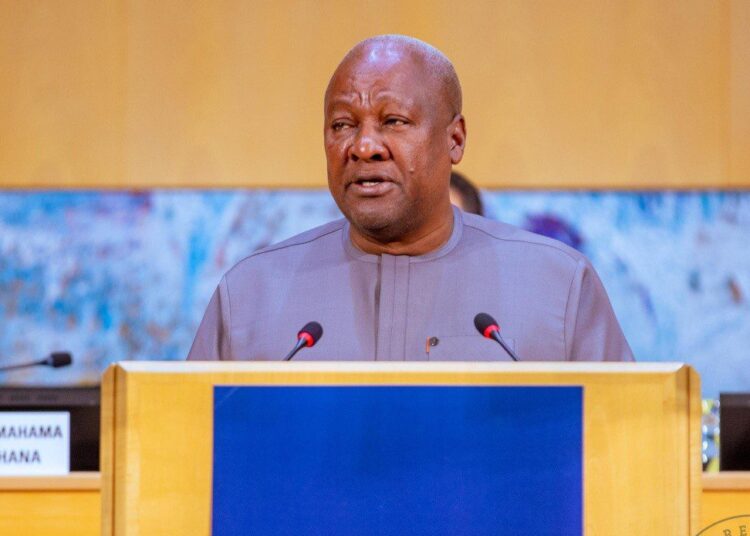
President John Dramani Mahama has announced a major financial intervention in Ghana’s healthcare sector, revealing that his government has unlocked an additional ₵3 billion for healthcare investment after removing the cap on the country’s national health insurance fund.
The announcement was made during his address at the 79th World Health Assembly in Geneva, where the Ghanaian leader used the global platform to present what he described as practical evidence of Africa’s growing commitment to health sovereignty and sustainable domestic healthcare financing.
Speaking before global health ministers, heads of delegation, development partners, and senior officials of the World Health Organization, President Mahama said African leaders can no longer depend solely on external assistance to guarantee healthcare access for their citizens.
Instead, he argued, countries must take deliberate and sometimes difficult policy decisions that place citizens at the center of national healthcare systems.
“As an advocate for African health sovereignty, I am obliged to demonstrate this practically at home, and so in Ghana, we have moved beyond rhetoric to implement calculated aggressive policies that place the citizen at the center of the clinical encounter.”
President John Dramani Mahama
₵3 Billion Released For Healthcare Investment
The centerpiece of the President’s address was the announcement that his administration had successfully removed the cap on Ghana’s health insurance fund, a decision that immediately released additional resources into the public healthcare system.
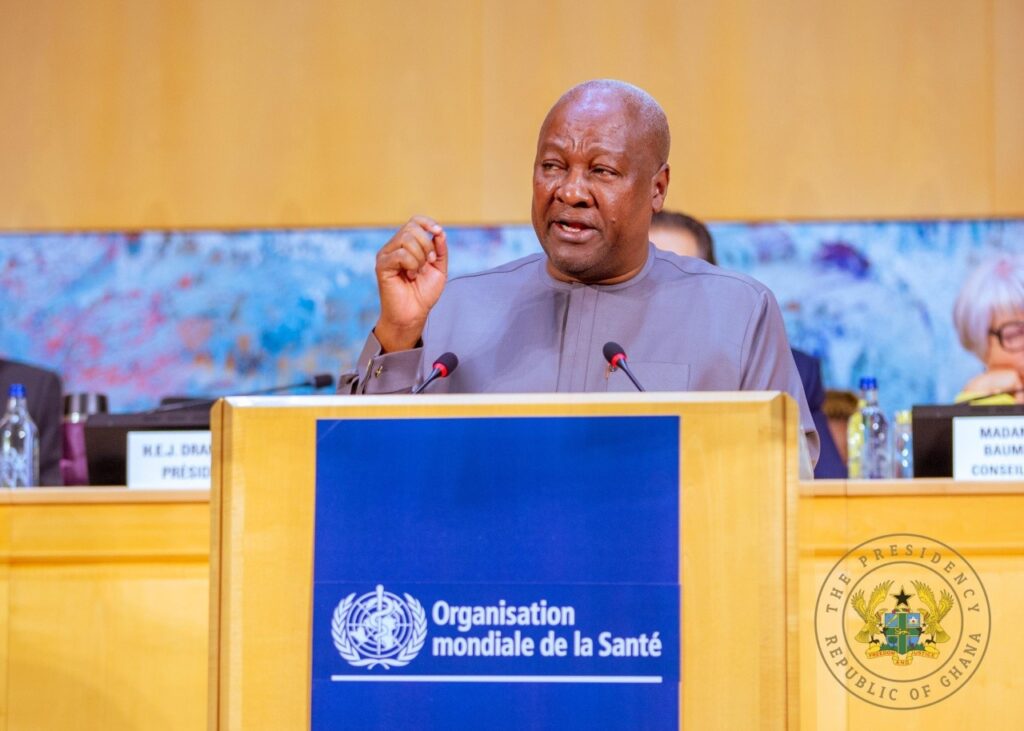
“We have revitalized our national health insurance scheme. By removing the cap on the health insurance fund, we immediately freed up an additional 3 billion Ghana cedis, equivalent to 300 million dollars, for healthcare investment.”
President John Dramani Mahama
The announcement drew significant attention from delegates, especially as many countries across the Global South continue to struggle with declining donor support and growing pressure on public health budgets.
For Ghana, the policy marks one of the most significant health financing reforms in recent years, creating fresh fiscal space for investments in infrastructure, medical supplies, service delivery, and patient care.
The President positioned the intervention not simply as a budgetary adjustment, but as part of a broader national strategy aimed at building a healthcare system that is self financing, resilient, and less vulnerable to global aid disruptions.
Ghana Builds On NHIS Gains
President Mahama used the assembly to highlight Ghana’s progress under the National Health Insurance Scheme, describing it as one of Africa’s most successful public health insurance systems.
According to him, national insurance coverage reached an estimated sixty-six percent by the end of 2025. While acknowledging the progress, the President admitted that significant gaps remain.
“This still leaves about thirty-four percent of our population without coverage,” he noted. President Mahama indicated that the insurance system has historically focused more heavily on curative care, with limited attention given to prevention and community-based interventions.

He said his government is now addressing that imbalance through broader reforms aimed at expanding access while strengthening preventive healthcare delivery.
Free Primary Healthcare Expansion
As part of those reforms, President Mahama announced that Ghana has begun implementing a nationwide free primary healthcare programme targeted particularly at rural and underserved communities.
“By removing financial barriers to the most basic and essential services at the rural level, we have ensured that our citizens in the remotest regions of our country also enjoy access to quality healthcare on par with their urban counterparts.”
President John Dramani Mahama
The President explained that the policy places stronger emphasis on preventive healthcare, early diagnosis, and routine community level interventions, a shift he said is essential if African countries are to reduce long term healthcare costs and improve population outcomes.
He also expressed gratitude to the World Health Organization for recognizing Ghana’s progress. “We are grateful that the WHO, led by Dr Tedros, was among the first to congratulate us on achieving this significant milestone,” he added.
Digital Reform Targets Efficiency And Fraud
Beyond financing and coverage expansion, President Mahama disclosed that his administration has introduced digital reforms to improve efficiency within the health insurance system.

“We have also streamlined National Health Insurance Scheme operations by eliminating bottlenecks, utilizing digital tools, including artificial intelligence, to detect fraudulent claims”.
President John Dramani Mahama
He stressed that timely reimbursement to hospitals and service providers remains a central part of the reforms. Most importantly, the President indicated that his government is prioritizing prompt refunds to service providers because a health insurance scheme is only as “strong as the trust between the state and the hospitals that provide the care.”
According to him, ensuring providers are paid on time ultimately guarantees that patients receive treatment with dignity and without unnecessary delays.
Mahama Cares Targets Chronic Disease
President Mahama also used his Geneva address to unveil another major domestic intervention, the Ghana Medical Trust Fund, popularly known as Mahama Cares.
The fund is designed to support patients living with non-communicable diseases such as cancer, cardiovascular complications, liver disease, and kidney failure.
“We have confronted the rising tide of non-communicable diseases by launching the Ghana Medical Trust Fund, also known as Mahama Cares. This fund is a lifeline for those suffering from conditions that were previously a death sentence for the poor.”
President John Dramani Mahama
Ghana Positions Itself For Health Sovereignty
President Mahama concluded by linking Ghana’s domestic reforms to the broader goals of the Accra Reset initiative, which seeks to reposition African countries from aid dependency toward healthcare sovereignty.
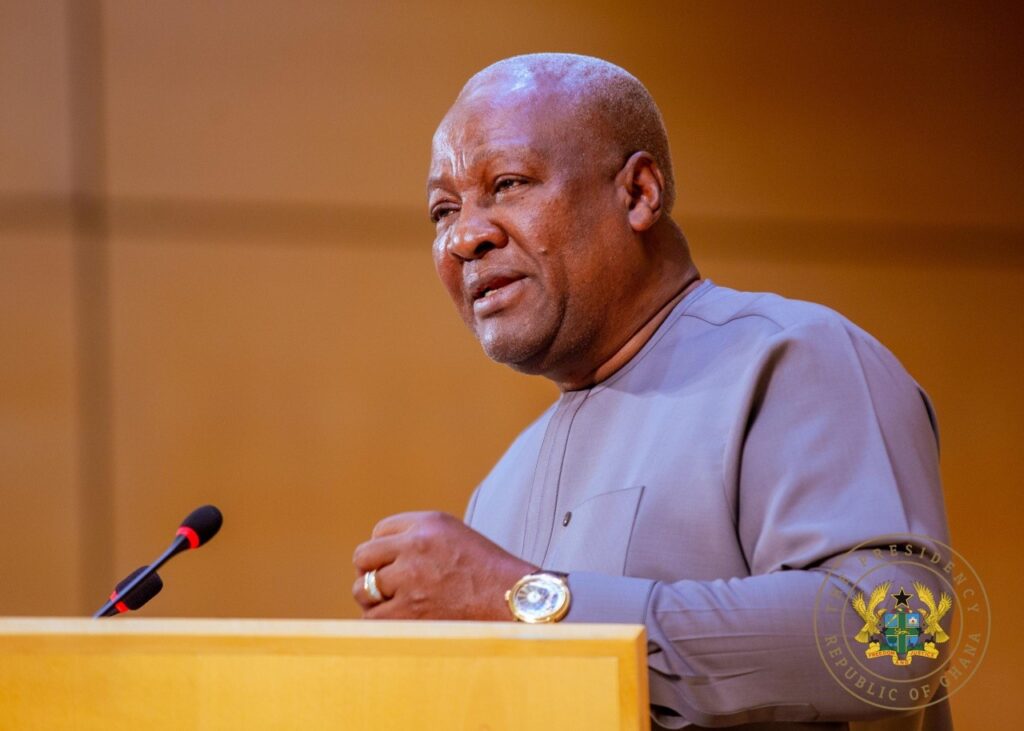
He told delegates that Ghana’s internal reforms are designed to prove that meaningful healthcare transformation begins with political courage, fiscal discipline, and deliberate investment. “These domestic achievements are the foundation of my leadership of the Accra Reset initiative”, he told the assembly.
With Ghana increasingly positioning itself as a leading voice in global health reform, Mahama’s announcement in Geneva signals not only a major financial commitment at home, but a growing ambition to shape the future of healthcare governance across Africa and beyond.
READ ALSO: MIIF Can Finance Local Ownership of Expiring Mineral Concessions – Prof. Oquaye