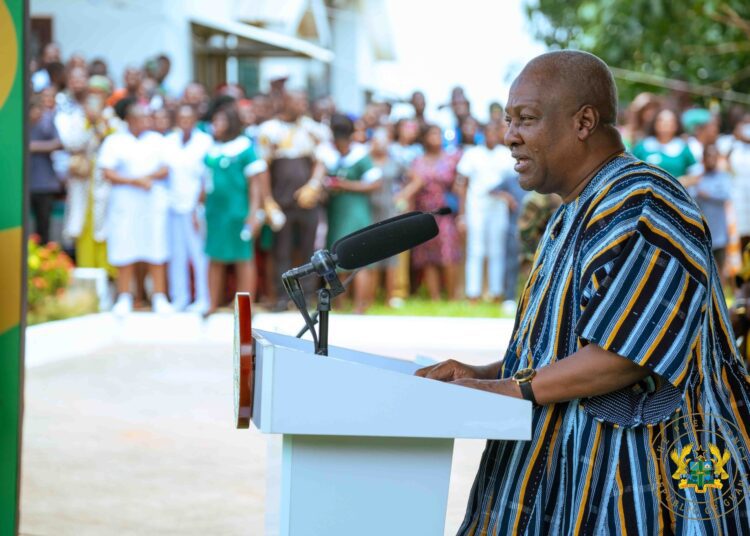
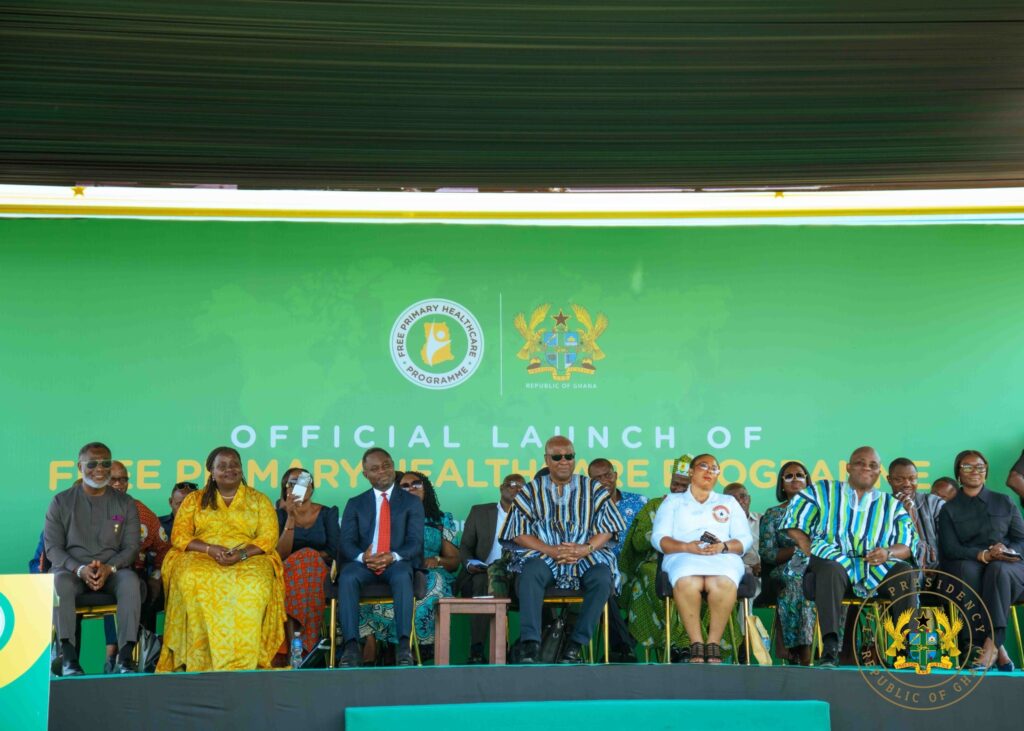
President John Dramani Mahama has officially launched Ghana’s Free Primary Healthcare Policy at Dodowa Government Hospital, marking a significant milestone in the country’s pursuit of universal health coverage.
Addressing stakeholders, health professionals, and community leaders, the President described the initiative as a transformative step aimed at ensuring that every Ghanaian can access quality and affordable healthcare without financial barriers.
He acknowledged that while the National Health Insurance Scheme has expanded access over the years, significant gaps remain, particularly in rural and underserved communities.
He stressed that achieving universal health coverage requires expanding access beyond curative care to include preventive services that reach people before illness becomes severe.
“Universal health coverage is the situation where every citizen has access to quality, affordable care,” he said, noting that many communities still lack adequate access to essential health services.
Complementing Existing Health Systems
A central message of the President’s address was that the Free Primary Healthcare Policy is designed to complement, rather than replace, the National Health Insurance Scheme. He explained that the current system largely responds to illness, with patients seeking care only when symptoms arise.

The new policy introduces a proactive model that focuses on early detection and prevention, ensuring that individuals receive care at the earliest possible stage. “The free primary health care complements the national health insurance. It is not coming to replace it. It is coming to complement it,” the President emphasized.
Under the new arrangement, primary healthcare services will be free at the point of access. Citizens will not be required to present an NHIS card for basic services at community level facilities. Instead, a valid identification such as a Ghana Card will be sufficient.
However, for more advanced treatments at higher-level facilities, the NHIS will continue to play a critical role in covering costs.
Prioritising Prevention and Early Diagnosis
The policy places strong emphasis on preventive healthcare, with a nationwide push for routine screenings. The President outlined plans to ensure that every Ghanaian undergoes at least one health screening annually.
These screenings will target common conditions such as hypertension, diabetes, and other chronic illnesses that often go undetected until complications arise.
“At least every Ghanaian must be screened once a year,” he said, adding that early detection can significantly reduce the burden of disease and improve health outcomes.
He explained that many conditions, particularly hypertension and diabetes, can be managed effectively through lifestyle changes if detected early. This preventive approach is expected to reduce the number of severe cases presenting at hospitals.
Tackling Non Communicable Diseases
The President highlighted the growing threat of non communicable diseases in Ghana, describing them as the leading contributors to the country’s disease burden. Conditions such as hypertension, stroke, diabetes, and certain cancers were identified as key concerns.
He attributed the rise in these conditions to lifestyle changes, including poor dietary habits and reduced physical activity. As part of the Free Primary Healthcare Policy, health education will be integrated into service delivery to address these risk factors.
Health workers will engage communities on issues such as nutrition, exercise, and general wellbeing, encouraging citizens to adopt healthier lifestyles. “A major part of the free primary health care will be education on how to maintain a decent lifestyle,” he noted.
Community Focused Service Delivery
The implementation of the policy will rely heavily on community-based healthcare delivery systems. Services will be provided through CHPS compounds, health centres, polyclinics, and newly introduced health kiosks in underserved areas.

The programme will also deploy trained health volunteers, including national service personnel and nurses awaiting posting, to support service delivery. These volunteers will conduct screenings, provide basic care, and refer patients when necessary.
Equipped with essential medical tools such as blood pressure monitors, glucose testing kits, and thermometers, these teams will bring healthcare directly to communities.
“They will go from place to place… and you can just come and take your test quickly,” the President explained. This approach is intended to reduce the burden on hospitals while ensuring that even remote communities have access to basic healthcare services.
Integrated Referral and Advanced Care Support
The Free Primary Healthcare Policy is designed as part of a broader, multi-layered healthcare system. Patients identified with more serious conditions at the community level will be referred to district hospitals for further assessment and treatment.
For advanced cases requiring specialized care, the Ghana Medical Trust Fund, also known as MahamaCares, will provide financial support. This includes treatments such as dialysis for kidney disease and other high-cost interventions.
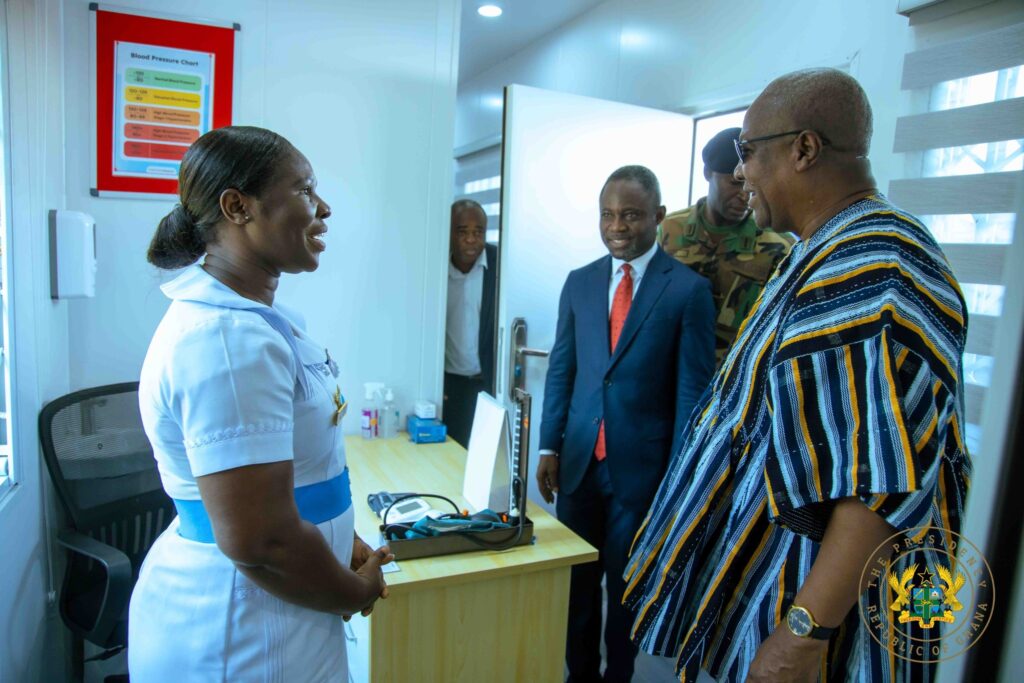
The President described this as a comprehensive system that ensures continuity of care from prevention to specialized treatment. “What we are building is a complete system from prevention to treatment to specialised care,” he said.
Phased Implementation Across Districts
The rollout of the policy will begin with 150 underserved districts across all regions. These districts have been selected based on their limited access to healthcare infrastructure.
The President noted that the phased approach will allow the government to refine the programme before expanding it nationwide. Full coverage is expected by 2028.
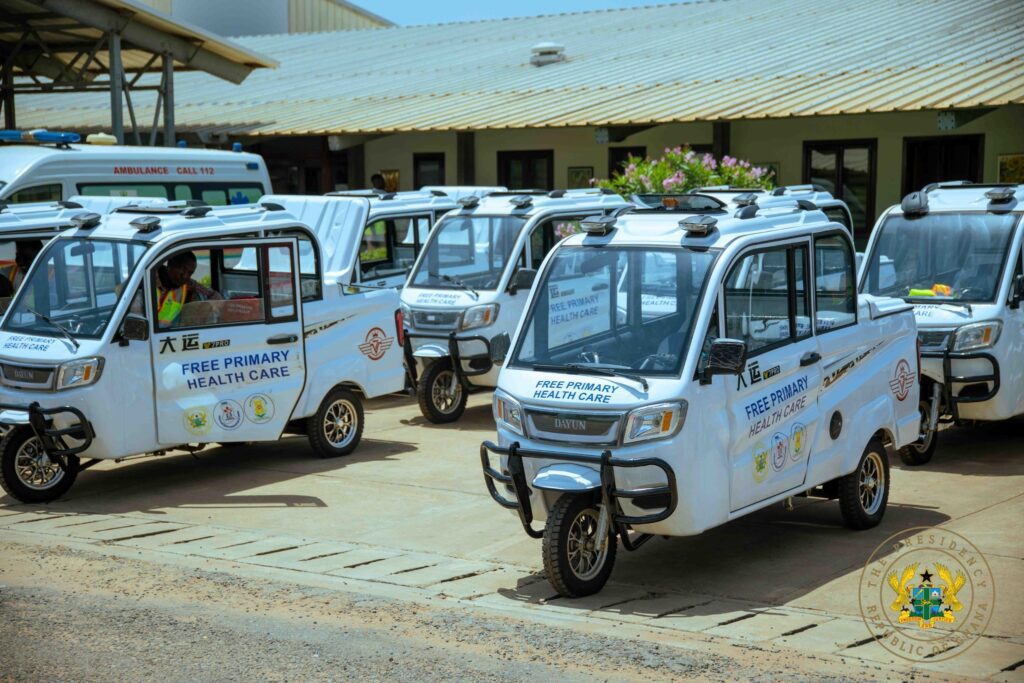
Mobile health clinics will also be deployed to complement fixed facilities, ensuring that healthcare reaches even the most remote communities. Plans are underway to revive the Onuado mobile health programme to support this effort.
The launch of the Free Primary Healthcare Policy signals a shift in Ghana’s healthcare strategy, with a stronger focus on equity, accessibility, and prevention. By removing financial barriers at the primary level, the policy aims to encourage early health seeking behavior and reduce avoidable deaths.
The President concluded by urging Ghanaians to take advantage of the services and participate actively in maintaining their health. “This policy is about changing outcomes. It is about ensuring that Ghanaians do not wait until they are seriously ill before seeking healthcare,” he said.
With its emphasis on prevention, community engagement, and integrated care, the initiative represents a bold step toward building a resilient and inclusive healthcare system.
READ ALSO: Energy Minister Announces 2,500 New Transformers to End Power Crisis