

Producer price inflation in Ghana recorded a slight increase in March 2026, pointing to a broadly stable cost environment for businesses despite emerging sector-specific pressures.
According to the Ghana Statistical Service, producer inflation edged up to 1.5 percent in March from 1.4 percent in February, representing a marginal increase of 0.1 percentage point.
This modest uptick reflects a slight increase in the cost of goods and services at the factory gate. While the change is relatively small, it signals that price pressures at the production level are beginning to show subtle shifts after a prolonged period of easing.
On a month-on-month basis, however, producer prices rose by 0.7 percent in March. This marks a slowdown compared to the 1.3 percent increase recorded in February, suggesting that while prices are rising, the pace of increase has moderated.
Mixed Sector Performance Shapes Inflation Trends
The marginal rise in producer inflation was largely driven by mixed performance across key sectors of the economy. Some sectors recorded improvements, while others continued to experience declines, highlighting uneven cost dynamics within Ghana’s production landscape.
The mining and quarrying sector, which remains the largest contributor to the Producer Price Index, saw inflation decline slightly to 3.9 percent in March from 4.1 percent in February. This suggests some easing in cost pressures within a sector that significantly influences overall producer prices.
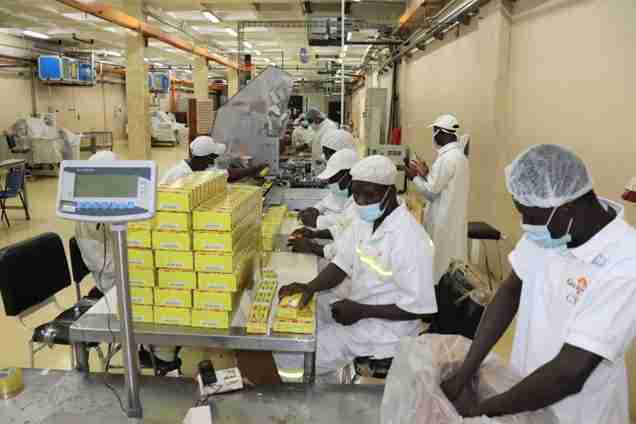
Manufacturing, which accounts for about 35 percent of the index, remained in negative territory but showed signs of recovery. Inflation in the sector improved from minus 2.9 percent in February to minus 2.2 percent in March. This indicates that while prices are still falling, the rate of decline is slowing, potentially pointing to gradual stabilization in industrial activity.
In contrast, utilities continued to experience elevated price levels. Inflation for electricity and gas stood at 13.6 percent, while water supply and waste management recorded 9.9 percent. These figures highlight persistent cost pressures in essential services, which could have ripple effects across other sectors due to their role as key production inputs.
Meanwhile, the transport and storage sector recorded deeper price declines, with inflation falling to minus 9.8 percent. Accommodation and food services also remained in negative territory at minus 9.4 percent, reflecting subdued demand or competitive pricing dynamics within these industries.
Price Pressures Remain Subdued Year-on-Year
Despite the slight increase in March, producer inflation remains significantly lower compared to the same period last year. Data indicates that inflation is more than 20 percentage points lower than levels recorded in March 2025, underscoring a substantial easing of cost pressures along the production chain.
This sustained decline in producer inflation suggests that businesses are benefiting from relatively stable input costs, which could support improved planning and operational efficiency. Lower inflation at the producer level often translates into reduced pressure on consumer prices, contributing to broader macroeconomic stability.
The Producer Price Index itself rose to 280.3 in March, up from 278.4 in February. This increase reflects a gradual upward movement in overall price levels, even as inflation remains subdued.
Implications for Businesses
For businesses, the current low inflation environment presents both opportunities and challenges. On one hand, stable input costs provide a more predictable operating environment, allowing firms to plan investments and manage expenses with greater confidence.
Industries that rely heavily on raw materials and industrial inputs stand to benefit the most, as reduced volatility in producer prices supports cost control and profit margins. The gradual recovery in manufacturing also signals potential improvements in domestic production capacity.
However, the slight monthly increase in producer prices suggests that short-term cost pressures may be emerging. Businesses may need to adopt cautious pricing strategies to avoid passing on higher costs to consumers in a way that could dampen demand.
Sectors facing persistent cost increases, particularly utilities, may need to explore efficiency measures to manage rising expenses. This is especially important given the interconnected nature of production, where higher utility costs can affect multiple industries.
Policy Considerations and Economic Outlook
From a policy perspective, the data presents a mixed but generally positive outlook. The continued decline in transport-related prices offers some relief for competitiveness, particularly for businesses involved in logistics and distribution.
Policymakers are likely to maintain a focus on fuel price stability and improvements in logistics infrastructure to sustain these gains. At the same time, the elevated inflation in utilities highlights the need for targeted interventions to address cost pressures in essential services.
The overall stability in producer prices suggests that Ghana’s economy is on a steady path, with limited inflationary risks at the production level. However, the presence of isolated cost pressures indicates the importance of continued monitoring and responsive policy measures.
Gradual Recovery Amid Stability
The March 2026 data paints a picture of an الاقتصاد that is gradually stabilizing, with signs of recovery in key sectors such as manufacturing. While the marginal increase in producer inflation may signal the early stages of renewed price pressures, the broader trend remains one of subdued inflation.
As businesses navigate this environment, the focus will likely remain on maintaining efficiency, managing costs, and leveraging the stability in producer prices to drive growth. For policymakers, the challenge will be to sustain this balance while addressing sector-specific pressures that could disrupt the overall trajectory.
In all, the slight rise in producer inflation underscores a delicate equilibrium within Ghana’s economy, where stability coexists with emerging shifts in cost dynamics.
READ ALSO: GSE Bulls, Bears End In Stalemate