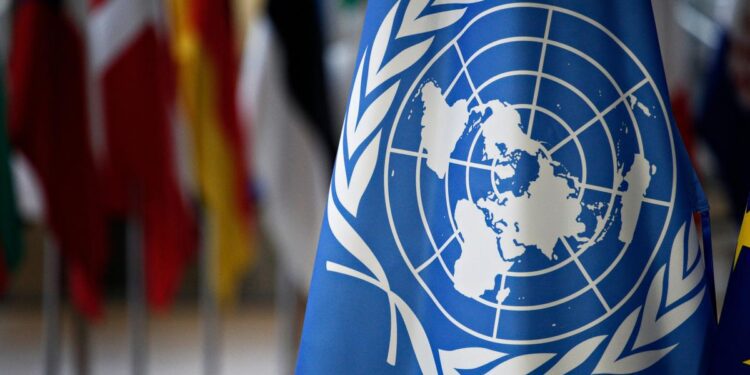
United Nations has raised alarm over a growing global crackdown on the rights of LGBTIQ+ people, warning that discriminatory laws and hostile political rhetoric are gaining ground in many countries.
According to UN High Commissioner for Human Rights, Volker Türk, more than one in three countries still criminalise consensual same-sex relationships, while several retain the death penalty for such conduct.
According to the UN Rights Chief, the situation has worsened over the past year, with some governments introducing harsher legislation and others considering new laws that would further restrict the rights and freedoms of sexual and gender minorities.
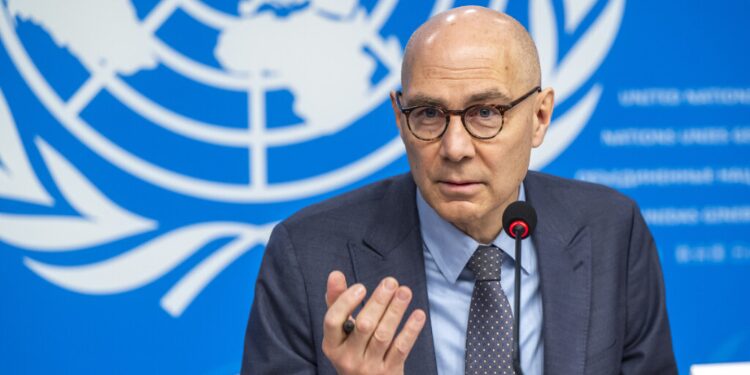
“The trend is worsening. Over the past year, Burkina Faso criminalised consensual same-sex relations. Senegal increased prison terms for same-sex sexual acts from five to 10 years. Similar laws are being considered in other countries, including Ghana.”
Volker Türk
Türk emphasised that several countries have also adopted laws that penalise the dissemination of information about LGBTIQ+ issues, limiting access to education and public discussion.



“We denounce these trends, and we commit to reversing them. History has shown that when societies normalise hate and discrimination against LGBTIQ+ people, it lays the groundwork for broader repression.”
Volker Türk
The United Nations High Commissioner noted that LGBTIQ+ people and activists have faced arrests and harassment in countries including Cameroon, Hungary, Indonesia, Morocco, Tunisia and Türkiye.
He stated that divisive rhetoric from some political leaders has intensified online abuse, particularly against transgender people.“Elections have become battlegrounds of hate,” the High Commissioner for Human Rights noted, referring to a study from NGO Outright International into the nearly 90 elections held worldwide in 2024, which found that approximately 85 per cent of countries surveyed contained anti-LGBTIQ+ messages.
Despite the concerning trend, Türk pointed out that important gains continue to be made in some parts of the world.
He highlighted recent progress in St. Lucia, which has decriminalised consensual same-sex relations, and Botswana, which has also struck down laws criminalising same-sex conduct. In Nepal, a transgender woman was elected to parliament for the first time in the country’s history.
The UN Rights Chief also welcomed a recent judgment by the Court of Justice of the European Union, which ruled on 21 April that Hungary’s 2021 ban on educational content related to sexual orientation and gender identity violated fundamental rights.
Türk called on governments to repeal discriminatory legislation, investigate abuses and ensure accountability for those responsible for violence and persecution, stating, “states need to end violence and discrimination against LGBTIQ+ people by repealing biased laws, investigating all violations, and holding perpetrators to account.”
He added, “Both States and technology companies need to take meaningful action against online hate and abuse.”
EU Unveils New Strategy to Strengthen LGBTIQ+ Equality by 2030

Meanwhile, the European Union has adopted a new five-year strategy aimed at strengthening protections for LGBTIQ+ people across the European Union, setting out a broad plan to combat discrimination, tackle hate speech and promote equal rights in all areas of life.
The LGBTIQ+ Equality Strategy for 2026-2030 builds on the foundation of the EU’s first equality strategy launched in 2020 and is intended to ensure that the rights and freedoms of lesbian, gay, bisexual, transgender, intersex and queer people are integrated across all major European policies.
The new roadmap comes at a time when, despite growing public acceptance in many parts of Europe, LGBTIQ+ individuals continue to face high levels of violence, exclusion and discrimination.
According to the European Commission, around one in four LGBTIQ+ people in the EU have experienced so-called “conversion” practices. Nearly half of trans men and trans women have also reported being subjected to physical or sexual violence, verbal abuse and humiliation linked to efforts to suppress or alter their identities.
To address these challenges, the strategy is structured around three interconnected pillars designed to strengthen protection, expand opportunity and promote broader social inclusion for LGBTIQ+ people across the European Union.
Under the first pillar, the Commission plans to establish a knowledge hub to collect information on illegal hate speech online and strengthen oversight of the EU’s Code of Conduct+, which guides how digital platforms respond to unlawful content. An EU-wide action plan against cyberbullying will also be introduced, with particular emphasis on protecting LGBTIQ+ youth.
The second pillar focuses on economic and social inclusion. The Commission argues that equal opportunities strengthen social cohesion and contribute to innovation and competitiveness. It estimates that discrimination based on sexual orientation costs the EU up to €89 million in lost GDP each year.
Also, the third pillar highlights the importance of civil society and public institutions. Up to €3.6 billion will be made available under the future AgoraEU programme to support equality, combat discrimination and promote democratic participation.
The Commission is also urging all EU member states to adopt national LGBTIQ+ equality strategies and has pledged to support them in implementing these reforms.
READ ALSO: Mahama Declares End of Africa’s Donor Dependency at World Health Assembly