
The Ghana Investment Promotion Centre (GIPC) has issued a formal call for the structural intensification of bilateral business collaborations between Ghana and Ethiopia to capitalize on emerging trade opportunities within the African Continental Free Trade Area (AfCFTA).
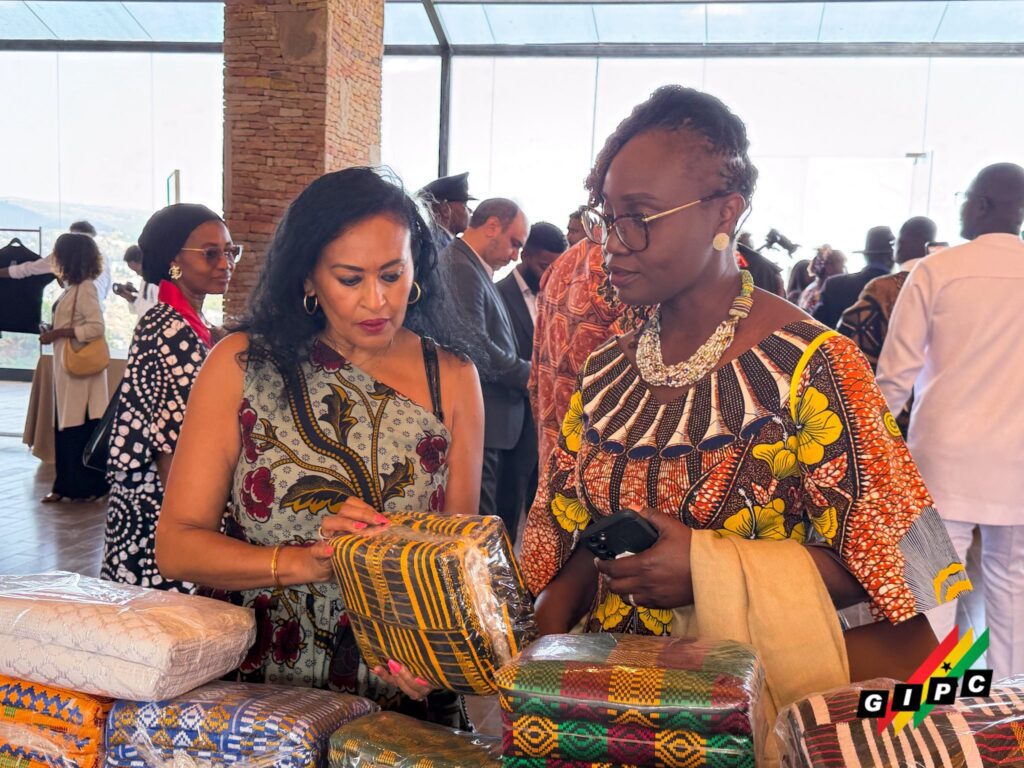
Represented by Ms. Afua Tekyi-Mills, Head of Marketing and Communications, at the recent Ghana Business and Cultural Expo in Addis Ababa, the GIPC positioned Ghana as the primary strategic gateway into the West African market and the wider regional AfCFTA architecture.
“The Ghana Investment Promotion Centre highlighted the need for deeper business collaboration between Ghana and Ethiopia, particularly in areas that can support trade and investment. Speaking at the Expo, Ms. Tekyi-Mills, noted that Ghana offers a strong entry point into the West African market”
Ghana Investment Promotion Centre
The directive focused on transitioning historical cultural goodwill into formalized, high-liquidity partnerships across prioritized industrial sectors, including agro-processing, logistics, textiles, manufacturing, and tourism, via reliable cross-continental supply chains that systematically de-risk intra-African trade and accelerate regional industrialization.
The diplomatic push enacted by the GIPC at the Addis Ababa expo marked a calculated effort to bridge the economic divide between two of Africa’s most prominent commercial centers. While Ghana functions as the institutional heart of continental integration by hosting the permanent AfCFTA Secretariat in Accra, Ethiopia stands as an East African economic engine and a primary aviation hub for the entire continent.

Through unifying these regional capacities, both nations can bypass historical structural bottlenecks that have traditionally restricted intra-African commerce to less than 15 percent of the continent’s total trade output. The strategic timing of this intervention coincides with a broader continental push to operationalize the tariff-free regimes established under the AfCFTA framework.
GIPC is actively leveraging Ghana’s stable democratic environment, robust judicial infrastructure, and centralized position within the Economic Community of West African States (ECOWAS) to market the republic as an optimal operational base for East African corporations looking to expand westward.
The delegation highlighted how Ethiopian enterprises can secure direct, tariff-free access to a consolidated West African consumer market exceeding 400 million individuals with the establishment of manufacturing and distribution hubs in Accra.
Market Entry Framework
To facilitate this cross-continental capital migration, GIPC has deployed an integrated administrative framework designed to drastically reduce the regulatory friction traditionally associated with Foreign Direct Investment (FDI).
Recognizing that entering an unfamiliar regional market can expose corporate entities to compliance risks and operational delays, the state agency has positioned itself as a comprehensive, single-window clearinghouse for all incoming Ethiopian investors. The GIPC noted that its mandate encompasses the provision of highly granular investor information, data-driven market entry guidance, and targeted sector opportunity mapping
Rather than leaving foreign firms to navigate separate municipal and ministerial bodies independently, the center streamlines the statutory registration process, coordinates with tax authorities, and assists in securing necessary environmental and operational permits. This ensures that incoming capital is deployed efficiently into productive assets without being trapped in administrative backlogs.
The bilateral roadmap outlined by the GIPC explicitly identified five prioritized industrial clusters engineered to maximize job creation and drive sustainable domestic growth within Ghana. Foremost among these is agro-processing, where the integration of Ethiopian agricultural expertise and Ghanaian raw materials can establish large-scale food manufacturing operations to substitute expensive global imports.
Similarly, the textiles sector offers massive opportunities for joint value chain integration, allowing both nations to capitalize on vertical manufacturing efficiencies from raw fiber production to finished apparel exports under preferential international trade agreements.
In the logistics and manufacturing corridors, the collaboration aims to harmonize Ethiopia’s dominant air cargo networks with Ghana’s advanced maritime ports of Tema and Takoradi. This multimodal transport linkage is critical for establishing efficient, pan-African supply lines capable of moving industrial inputs and finished goods rapidly across sub-regions.
Also, the tourism sector is slated for an upgrade from passive cultural sightseeing to structured, high-yield hospitality investments, focusing on corporate travel, conference infrastructure, and inter-regional leisure packages designed to keep hospitality revenues within the African ecosystem.
The core strategic trajectory of the GIPC deployment relies on a fundamental shift in how African nations conduct bilateral diplomacy. Historically, relations between West and East African states have been dominated by shared anti-colonial histories, pan-African rhetoric, and periodic cultural exchanges.
While these elements have built a solid foundation of mutual trust and diplomatic goodwill, they have rarely translated into substantial balance-of-payment improvements or structural industrial capacity.

The center’s objective is to anchor diplomatic solidarity in hard commercial realities: shared equity, synchronized manufacturing standards, mutual technology transfers, and co-developed industrial zones.
As these structured corporate alliances materialize, they will insulate both economies from external global shocks, formalize informal trading channels, and establish a repeatable model for how sovereign African states can systematically build mutual prosperity under the overarching legal architecture of the AfCFTA.
READ ALSO: Senior Advisor Critiques Conduct Standards In PAC Proceedings