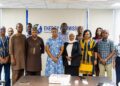
Policy think tank, the Integrated Social Development Centre (ISODEC), has launched a blistering attack on the government’s decision to pursue a new International Monetary Fund Policy Coordination Instrument (PCI), insisting Ghana’s recent economic stability was achieved through local initiatives rather than IMF intervention.
The criticism comes at a time when the government is preparing for a post bailout economic era and seeking to maintain fiscal discipline after the current IMF programme. However, ISODEC argues that the country is dangerously drifting toward external policy dependence instead of building confidence in its own economic strength.
Speaking on the matter, Dr. Adamu Abile maintained that the real drivers behind Ghana’s recent macroeconomic recovery were domestic resource mobilisation efforts, particularly stronger foreign exchange management and the accumulation of gold reserves. “It is not necessarily the IMF programme that brought us here,” he argued.
ISODEC Questions IMF’s Role in Economic Recovery
Dr. Abile’s comments challenge the widespread narrative that Ghana’s improving economic indicators are largely the result of the IMF’s $3 billion Extended Credit Facility programme.
According to him, the country’s stabilisation efforts were already gaining momentum through internal policy measures before the IMF programme began to show measurable impact.
He pointed specifically to initiatives aimed at strengthening Ghana’s gold reserves and tightening foreign exchange controls as the real interventions that restored some confidence in the economy and reduced market instability.
The economist argued that giving excessive credit to the IMF undermines Ghana’s own policy innovations and weakens public trust in local economic management institutions.
His remarks have reignited debate over whether Ghana’s repeated return to the Bretton Woods institution reflects deeper structural failures within the economy.

“We Are Trying To Outsource Our Policy Sovereignty”
ISODEC did not hold back in its criticism of the proposed PCI arrangement, describing it as a subtle but dangerous extension of IMF influence over Ghana’s economic direction.
Dr. Abile warned that the arrangement could gradually erode Ghana’s independence in policymaking and increase the country’s dependence on external institutions for economic credibility. “We are trying to outsource our policy sovereignty to Washington,” Dr. Abile warned.
The statement has triggered fresh public conversation over the balance between international financial cooperation and national economic autonomy.
Although the government insists the PCI is only a technical and monitoring arrangement, critics fear it could still give external institutions indirect control over key policy decisions.
The PCI is expected to guide fiscal discipline and macroeconomic management after Ghana exits its current IMF bailout programme. However, ISODEC believes the move sends the wrong signal about the country’s ability to independently manage its economy.

Borrowing Appetite Comes Under Fire
One of the strongest objections raised by ISODEC concerns the argument that the PCI will improve investor confidence and strengthen Ghana’s standing with credit rating agencies.
Dr. Abile dismissed this justification, arguing that it merely reflects an unhealthy obsession with borrowing from international markets.
“When you talk about giving us policy credibility so that we have market confidence to go back and borrow, ISODEC has a serious objection to that.”
Dr. Adamu Abile
According to the policy analyst, Ghana must move away from a development model heavily dependent on loans and external support.
Instead, he believes the country should focus on building sustainable internal revenue systems and strengthening local ownership of strategic economic sectors.
Call For Resource Nationalism
Beyond criticism of the IMF arrangement, ISODEC is also pushing for what it describes as a more resource nationalist development strategy.
Dr. Abile argued that Ghana must take stronger control of critical sectors such as mining and gold production to maximise national benefit and reduce external vulnerability.
He maintained that Ghana possesses enough natural and human resources to shape its own economic destiny without constant external supervision.
The economist also questioned why the country continues to portray itself as incapable of managing its economy without IMF oversight.
According to him, confidence in local institutions and policies is essential if Ghana is to achieve genuine economic transformation and long term independence.
Government Defends PCI Arrangement
Despite the growing criticism, government officials insist the proposed PCI arrangement should not be misunderstood as another bailout programme.
Authorities maintain that the framework is purely designed to preserve fiscal discipline, prevent economic slippages and assure investors that Ghana remains committed to sound macroeconomic management.
Government believes the arrangement will help maintain policy consistency while avoiding the mistakes that contributed to previous economic crises.
However, ISODEC’s strong opposition is likely to intensify national debate over Ghana’s future economic direction, especially as the country seeks a delicate balance between international cooperation and economic sovereignty.
As discussions continue, one critical question remains at the centre of the controversy: Can Ghana sustain economic stability on its own, or will dependence on external policy guidance continue to shape the nation’s future?
READ ALSO: GSE Defies Bear Pressure With Surprise Market Index Rise