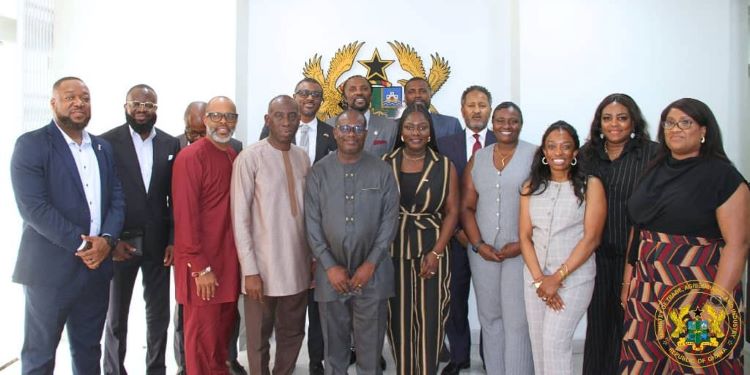
The Ministry of Trade, Agribusiness and Industry (MoTAI) has inaugurated a comprehensive investment engagement with the Grow, Unite, Build Africa (GUBA) Enterprise delegation, signaling an aggressive push to convert diaspora network capital into permanent local industrial assets.
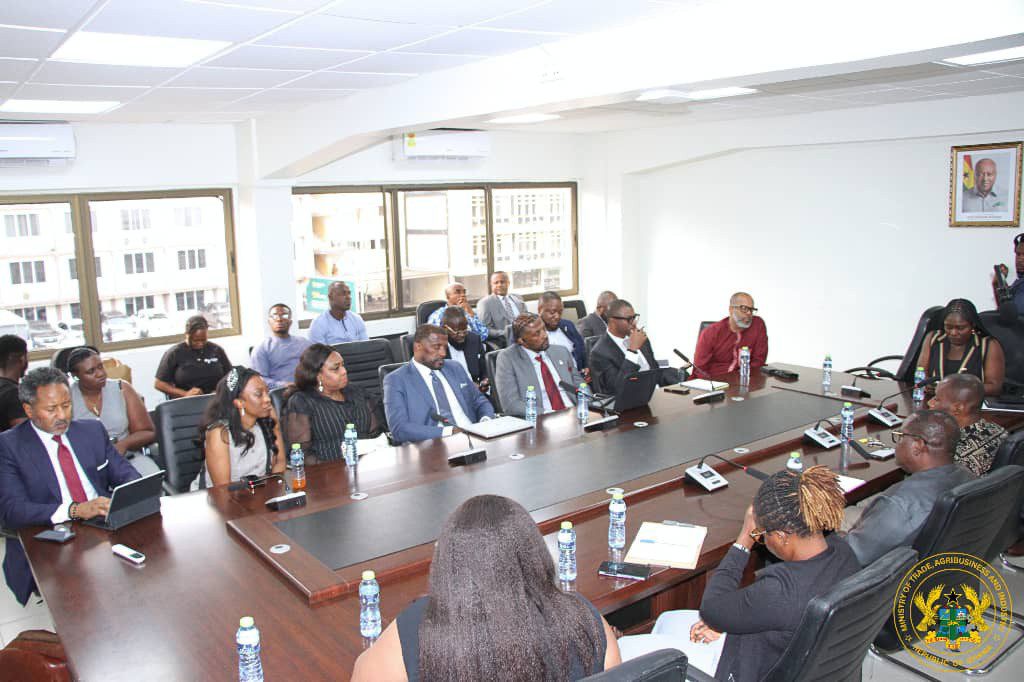
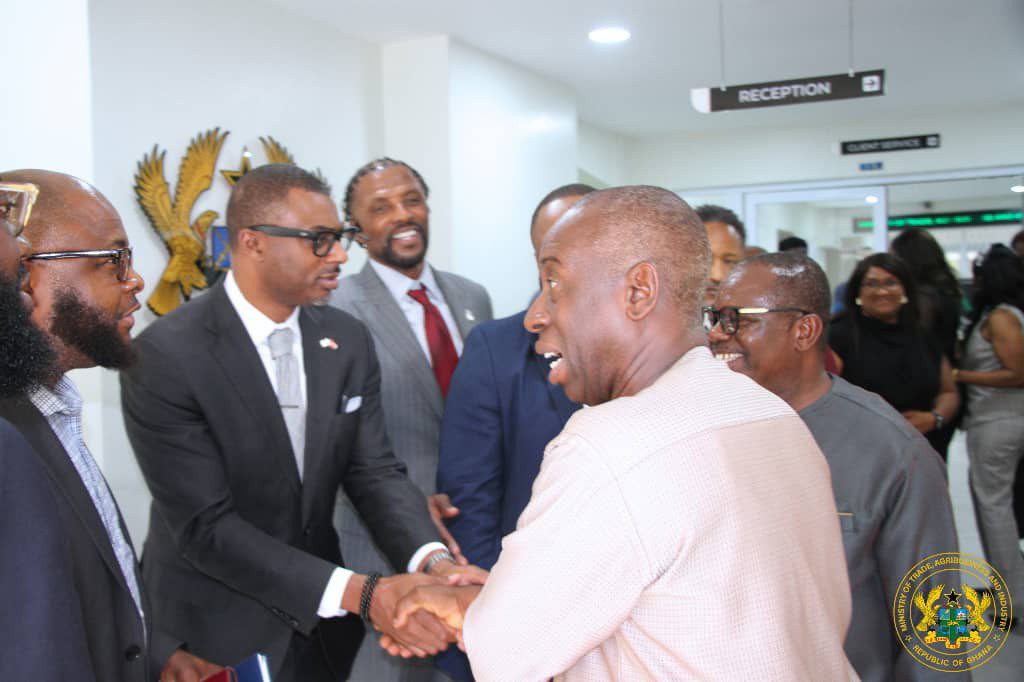
Acting on behalf of the substantive Minister, Hon. Elizabeth Ofosu-Adjare, the Chief Director of the Ministry, Mr. Noah Tumfo, received the high-level delegation to map out ready-to-allocate commercial investments across Ghana’s priority economic sectors.
This structured deployment moved past traditional, fragmented remittance models, aiming instead to integrate diaspora capital streams directly into high-impact, state-supported sectors including agribusiness, pharmaceuticals, automotive assembly, textiles, critical minerals, and digital financial technologies
“The Director in charge of Industries, Mr. Kofi Addo, took the delegation through the various growth stages of Ghana’s economy and highlighted the country’s regulatory frameworks, investment incentives, and government support mechanisms available for diaspora-linked investments”
Ministry of Trade, Agribusiness and Industry
MoTAI established this formal institutional bridge to de-risk market entry for international asset managers while scaling domestic production capacity.
The architecture of the engagement relied heavily on presenting a stabilized macroeconomic environment capable of sheltering long-term physical investments. The core of this corporate briefing focused on how the state has successfully deployed frameworks and targeted investment incentives to build a highly predictable business ecosystem.
Crucially, the Ministry presented recent positive economic indicators – most notably the significant drop in domestic inflation – not merely as statistical milestones, but as structural evidence of improving macroeconomic stability that directly protects foreign direct investment from operational cost volatility.
Leading the conversation with hard fiscal metrics, the Directorate of Industries systematically addressed the primary concern of diaspora investors: regulatory and economic certainty. The decline in inflation served as an institutional guarantee that raw material costs, labor overheads, and supply chain logistics would remain within investable projections.
Promising Stability
Furthermore, MoTAI positioned Ghana’s long-standing democratic track record and political stability as sovereign insurance for corporate assets, reassuring the GUBA delegation that their capital allocations would be protected by robust legal institutions and consistent, non-arbitrary state enforcement.
“Ghana remains one of the most attractive investment destinations in Africa due to its strong democratic credentials, political stability, and strategic geographical location, which positions the country as a gateway to the West African market”
Ministry of Trade, Agribusiness and Industry
Central to the ministry’s commercial pitch is the strategic utilization of multi-tiered international trade access regimes that amplify Ghana’s geographic advantage.
Mr. Addo emphasized Ghana’s institutional role as the host of the permanent Secretariat of the African Continental Free Trade Area (AfCFTA), a designation that fundamentally transforms factories built within Ghana into continental production hubs.
Under the AfCFTA framework, diaspora-linked investments secure duty-free and quota-free access to a unified market of more than 1.3 billion consumers, completely altering the scale at which localized manufacturing can operate.
This continental reach is further augmented by Ghana’s active participation in the African Growth and Opportunity Act (AGOA), which provides preferential export pathways into the United States markets, creating a powerful dual-gateway configuration for export-led industrialization.
To absorb the substantial investment volumes represented by the GUBA network, MoTAI detailed an expanded framework for structured public-private partnerships (PPPs). The ministry views PPPs as the primary operational vehicle capable of accelerating capital inflows while simultaneously insulating private investors from early-stage infrastructure deficits.
Through co-investing with the state in logistics networks, energy installations, and specialized economic zones, the diaspora delegation can leverage government support mechanisms to lower their initial capital expenditure and ensure immediate operational alignment with national development priorities.
The engagement concluded with a strong mutual commitment to move rapidly from administrative dialogue to project execution. Led by Lady Dentaa Amoateng, the GUBA delegation expressed formal appreciation for the technical clarity and structural transparency provided by the ministry’s leadership.

The delegation noted that the granular breakdown of investment incentives, coupled with visible macroeconomic stabilization indicators, successfully shifted the investment narrative from cultural sentimentality to hard commercial logic.
Moving forward, the Ministry of Trade, Agribusiness and Industry intends to maintain this aggressive investment promotion posture, converting the technical insights shared during this session into binding bilateral joint ventures.
By matching GUBA’s extensive international investor networks with MoTAI’s statutory regulatory protections, the partnership is positioned to systematically drive domestic job creation, expand the non-traditional export profile of the republic, and solidify Ghana’s position as the primary industrial engine of West Africa.
READ ALSO: BoG Cracks Down on Informal Financial Market Practices