United Kingdom has strongly condemned the reported attack on the Barakah nuclear power plant in the United Arab Emirates, warning that the incident could have triggered a serious nuclear accident and further destabilised an already fragile Middle East.
According to International Atomic Energy Agency (IAEA) Director General Rafael Mariano Grossi the world came dangerously close to a nuclear disaster after Iranian drones struck the Barakah nuclear power plant in the United Arab Emirates.
The attack triggered a localized fire and forced operators to rely briefly on emergency diesel generators before off-site power was restored. Radiation levels have remained normal, and no injuries were reported.
Speaking before the United Nations Security Council, Britain’s Deputy Permanent Representative to the UN, Ambassador James Kariuki, described the strike as a reckless act and called for Iran to immediately stop all attacks.
“Resolution 2817 (2026) is clear. Iran must cease all attacks, including in the Strait of Hormuz.”
James Kariuki
UK also urged all parties to safeguard civilians and critical infrastructure and to uphold international law, including the UN Charter and international humanitarian law.
Kariuki cautioned that continued attacks are undermining global stability, disrupting trade and increasing hardship for vulnerable populations already facing high food and energy costs.
Moreover, International Atomic Energy Agency (IAEA) echoed similar concerns, stressing that the Barakah facility contains large quantities of nuclear material and that a successful strike could have led to widespread radioactive contamination.
“This is an operating nuclear power plant, and as such, it hosts thousands of kilogrammes of nuclear material. In the case of a direct hit to the Barakah plant, a substantial release of nuclear radioactivity is possible.”
Rafael Mariano Grossi
IAEA Director General Rafael Grossi noted that such a scenario might have required mass evacuations, sheltering orders and food restrictions across affected areas, stating, “attacks on nuclear facilities devoted to peaceful purposes are unacceptable.”
Global Powers Condemn Barakah Drone Strike as Nuclear Safety Fears Mount
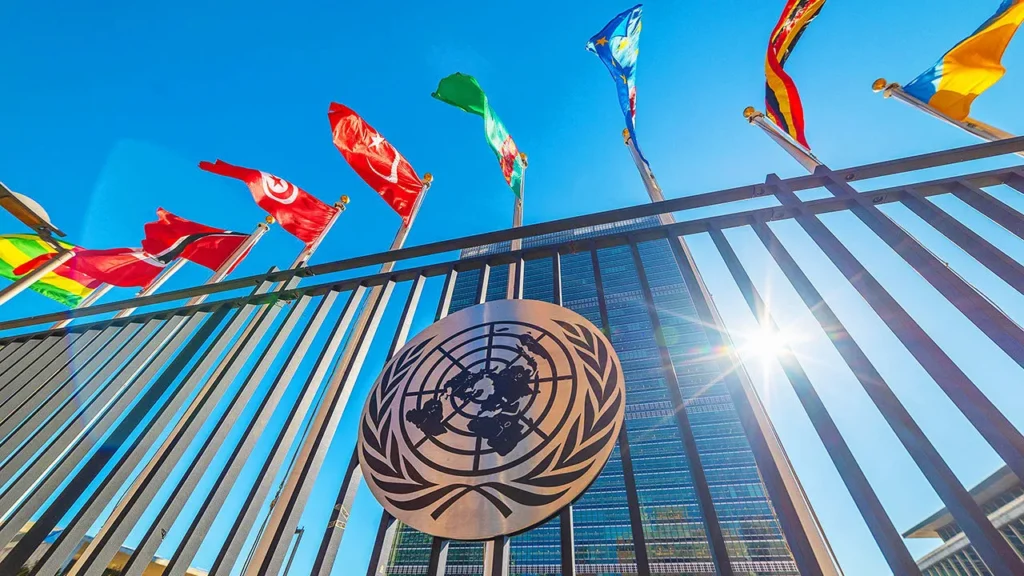
Moreover, international concern intensified at the United Nations Security Council after diplomats and nuclear experts warned that the drone attack near the Barakah Nuclear Power Plant in the United Arab Emirates could have triggered a major nuclear disaster, even though no radiation leak or injuries were reported.
The strongest condemnation came from the United Arab Emirates, which described the incident as an unacceptable attack on civilian infrastructure.
Ambassador Mohamed Issa Abushahab of the United Arab Emirates denounced what he called an “unlawful, unprovoked terrorist attack” targeting the vicinity of the Barakah plant. “The deliberate targeting civilian objects is a flagrant violation of international law,” he stressed.
He noted that Barakah’s multiple layers of safety and security systems had functioned as designed, helping to prevent more serious consequences, adding,“the absence of catastrophic consequences should not diminish the gravity of this attack.”
Ambassador Michael G. Waltz of the United States also condemned Iran’s outrageous and unacceptable attacks in the strongest possible terms. He asked, “what responsible, what sane nation – either directly or indirectly through proxies – sends drone attacks into an active and ongoing nuclear power plant?”
Pakistan expressed “complete solidarity” with the UAE, while Ambassador Asim Iftikhar Ahmad emphasized that “any targeting of nuclear facilities constitutes a grave violation of international law.”
“The inviolability of civilian infrastructure is a well-established international norm and must be upheld without exception.”
Asim Iftikhar Ahmad
He called on all parties to exercise maximum restraint, fulfill their obligations under international law, and avoid any actions that could further escalate tensions.
Ambassador Fu Cong of China also observed that, “as long as armed conflict continues, the safety risks it poses to regional nuclear facilities will persist.”
He added, sooner a way out is found from the war in the Middle East, which originated from illegal military attacks by the United States and Israel against Iran, “the better it will serve the world at large”, adding, “Dialogue and negotiation are the right path forward.”
Furthermore, Ambassador Vassily A. Nebenzia of the Russian Federation described the incident as part of a wider pattern of dangerous attacks in the region.
Ambassador Vassily A. Nebenzia stated that attacks targeting peaceful nuclear facilities in any country of the world, all the more so those that are under IAEA safeguards, are “categorically unacceptable.”
Outside the United Nations, the World Nuclear Association also condemned the strike, describing attacks on energy infrastructure as reckless and unacceptable.
The organization indicated that the Barakah plant remains safe and fully operational, while emphasizing that the protections afforded to civilian infrastructure under international law must be respected.
READ ALSO: Arsenal Secure 14th Premier League Title After City Slip at Bournemouth