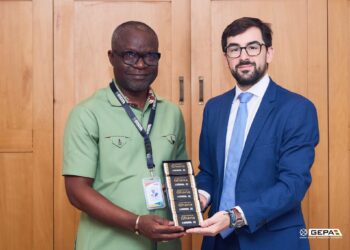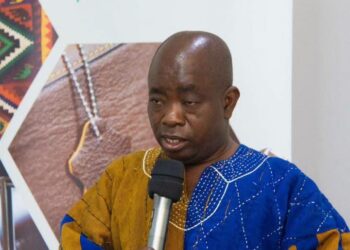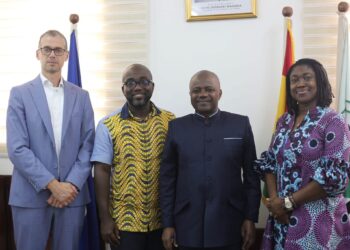
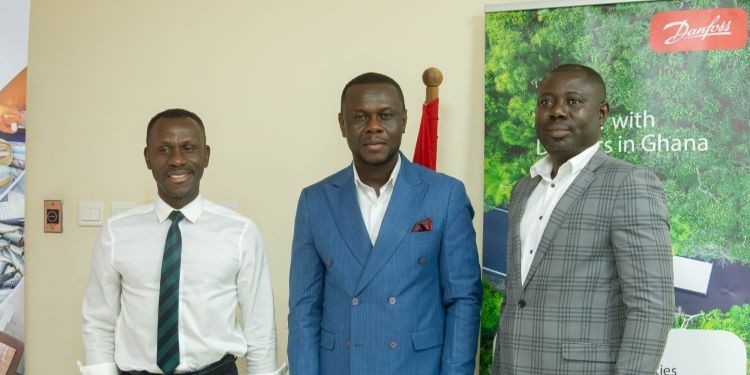
In a move that signals accelerating Western interest in West Africa’s industrial ecosystem, a senior executive delegation from Danfoss Power Solutions – a global leader in high-tech engineering, mobile hydraulics, and electrification systems – has entered direct consultations with the Ghana Free Zones Authority (GFZA).
The high-level working visit, which took place at the Authority’s head office in Accra, was explicitly structured to dismantle information barriers, clarify operational compliance protocols, and evaluate the fiscal incentives available under Ghana’s export-oriented manufacturing framework.
“Danfoss Power Solutions paid a working visit to the GFZA to seek further information and deepen their understanding of Ghana’s Free Zones Scheme. The meeting was aimed at providing detailed insights into the Free Zones concept, its operational framework, available incentives, and the opportunities accessible to international investors”
Ghana Free Zones Authority
The arrival of the multi-billion-dollar engineering multinational underscores a growing trend of global tech and industrial manufacturing entities looking at the Gulf of Guinea as a stable, regulatory-friendly base to anchor their regional supply chains.
The delegation and their corporate associates were officially received by the senior management of the GFZA, led by the Deputy Chief Executive Officer in charge of Operations, Mr. Lateef Apau Wiredu, who directed the bilateral discussions on behalf of the Chief Executive.
The engagement focused heavily on solving complex operational questions raised by the Danfoss team regarding the statutory entry mechanisms of the Free Zones Programme, corporate registration pathways, and the specific physical infrastructure assets available to international manufacturers.
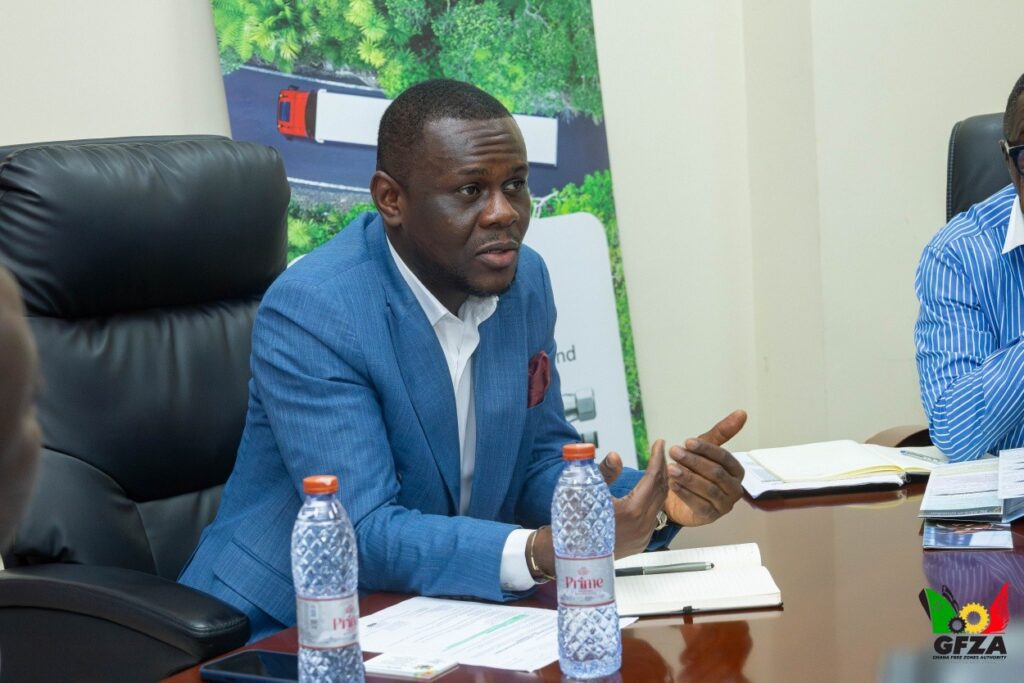
For Danfoss Power Solutions, entering the West African landscape requires a highly predictable regulatory atmosphere, and the GFZA provided exhaustive clarity on how the country guarantees long-term asset protection, tax exemptions on imported manufacturing equipment, and streamlined customs procedures at major maritime hubs.
Infrastructure and Compliance Safeguards
To ensure the Danfoss delegation received a complete operational briefing, the GFZA deployed its core technical leadership to the negotiating table. The discussions featured detailed briefs from the Director of Business Development and Research, Mr. Lawrence Osei Boateng, and the Head of Compliance, Mr. Michael Larbi.
The presence of the compliance and research chiefs was critical, as large-scale technological assembly operations demand absolute clarity regarding local content rules, environmental standards, and cross-border logistics protocols.
Mr. Boateng provided the visiting engineers with fresh research data mapping out local supply chain links, raw material availability, and the proximity of industrial parks to regional transport networks.
On the regulatory front, Mr. Larbi outlined the compliance benchmarks required to maintain active Free Zones Enterprise (FZE) status, reassuring the corporate team that Ghana’s regulatory framework is engineered to eliminate arbitrary bureaucratic bottlenecks while upholding international legal and environmental standards.
“The authority is actively focusing its administrative machinery on providing absolute transparency in investment procedures, ensuring that incoming industrial giants can clear compliance checks with speed and predictability”
Ghana Free Zones Authority
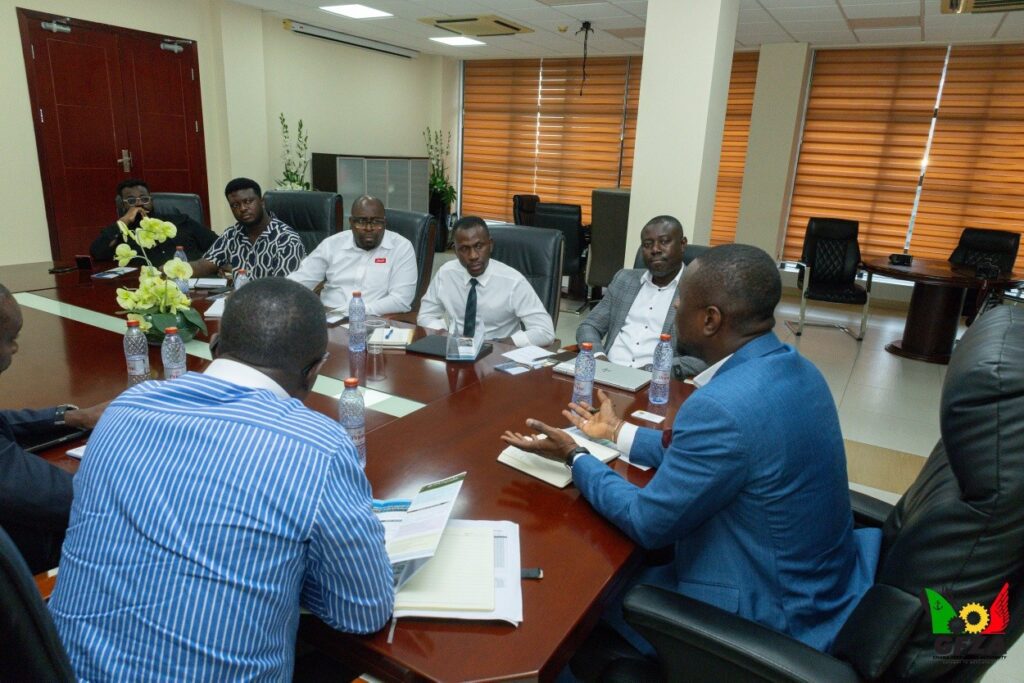
This deep-dive administrative engagement allowed the Danfoss team to verify the ease of doing business within the domestic market, providing their corporate board with a clear roadmap for capital allocation and potential factory localization. A major point of attraction for the international delegation is Ghana’s strategic positioning as the primary commercial gateway to the wider West African market.
Danfoss executives explicitly acknowledged that establishing a footprint in Accra offers a structural launchpad to distribute advanced engineering and sustainable industrial technology across the Economic Community of West African States (ECOWAS) and the broader African Continental Free Trade Area (AfCFTA) corridors.
The GFZA noted that the visit aligns directly with its internal policy evolution, as it is currently shifting away from its legacy, geographically restricted Free Zones model toward a comprehensive Special Economic Zone (SEZ) framework.
This policy modernization is highly attractive to companies like Danfoss, as the SEZ concept removes rigid location mandates, allowing foreign firms to set up specialized manufacturing hubs in closer proximity to urban centers, transport corridors, and key academic institutions.
The consultation concluded with Danfoss Power Solutions expressing strong confidence in the domestic investment climate and praising the authority for providing exceptional granular clarity on the country’s statutory systems. Both parties noted that the potential for future collaboration extends toward technology-driven manufacturing, localized industrial component assembly, and clean-tech infrastructure projects.
The GFZA expressed optimism that this high-level engagement will serve as an administrative template for attracting other Western industrial conglomerates, positioning itself as a reliable partner for global technology firms.
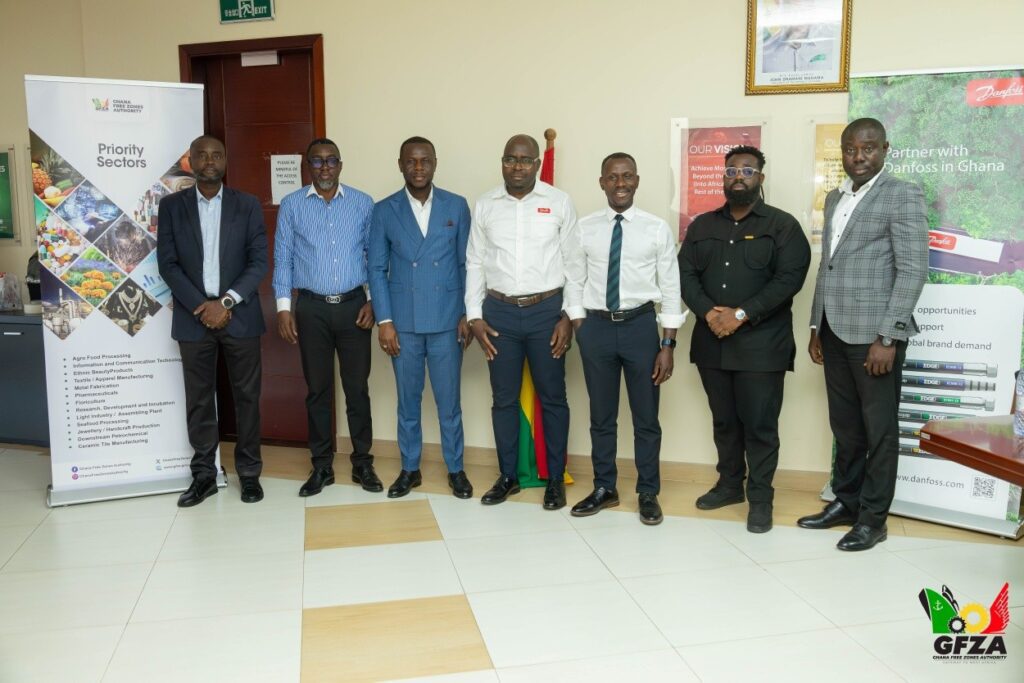
Under the ongoing macro-policy direction of the Ministry of Trade, Agribusiness and Industry (MoTAI), the state is leveraging these precise corporate partnerships to transition the domestic economy away from primary resource extraction toward an era defined by high-value, high-tech manufacturing excellence.
READ ALSO: Rubio Calls for ‘Plan B’ on Hormuz