
Vice President Professor Naana Jane Opoku-Agyemang has called on African nations to aggressively fast-track regional industrialization, in a blunt rejection of Africa’s legacy economic model as a primary commodity supplier.
Delivering the keynote address at the Accelerate Africa’s Growth Connect (AAGC) 2026 conference in Accra, the Vice President warned that the continent’s long-term sovereign survival depends on its ability to systematically dismantle raw material export dependencies and establish localized manufacturing supply chains that place youth and women at the absolute center of value creation.
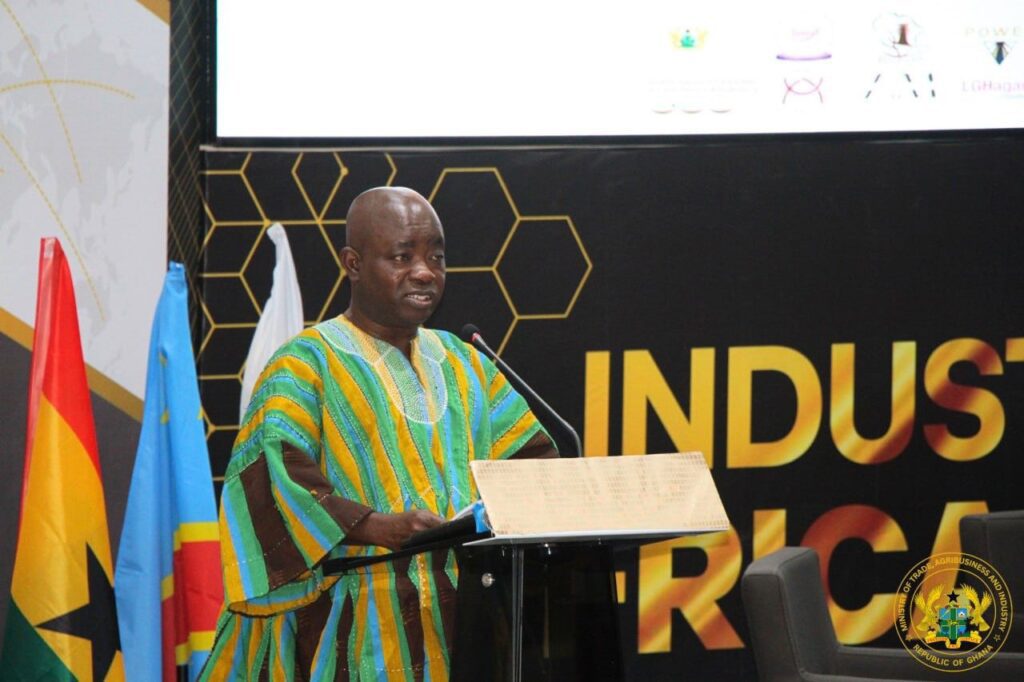
The core argument of the Vice President’s address, which was delivered on her behalf by the Deputy Minister for Trade, Agribusiness and Industry, Hon. Sampson Ahi, representing the sector Minister Hon. Elizabeth Ofosu-Adjare, focused on the severe fiscal drag caused by unequal trade dynamics.
“We are not content to export raw materials while others manufacture finished goods and sell them back to us at a premium. That model has not served us, and we will not sustain it”
Vice President Professor Naana Jane Opoku-Agyemang
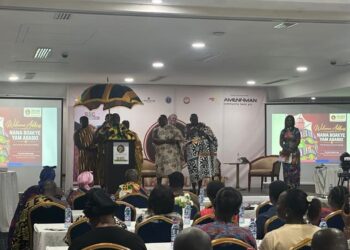
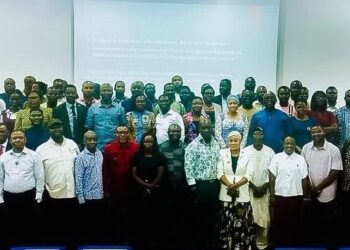
According to the Ministry of Trade, Agribusiness and Industry (MoTAI), the high-level pan-African assembly was convened to commemorate Africa Day – at the University of Ghana Cedi Conference Centre, and drew together state ministers, industrial policy makers, and corporate trade delegations representing more than 30 sovereign African nations.
The timing and location of the conference underscored Ghana’s positioning as the administrative heart of continental trade integration, providing a critical platform to assess the real-world operational bottlenecks hindering comprehensive economic transformation.
African macroeconomic frameworks have been constrained by exporting low-value, unrefined agricultural and mineral commodities, only to import expensive, finished consumer products processed by foreign industries.
This systemic imbalance represents a massive, continuous transfer of wealth and domestic job opportunities out of the continent, leaving African economies permanently exposed to international commodity price volatility and worsening foreign exchange crises.
The Vice President declared an end to polite diplomatic patience, framing the current economic status quo as a direct threat to the continent’s long-term economic independence. Her declarative stance aligned with the policy priorities of MoTAI, linking trade development with agribusiness and industrial processing, to actively move from traditional export promotion to absolute, continent-wide import substitution.
The fiscal consequences of the legacy export model are visible across West Africa’s balance sheets. When Ghana or its neighbors export unrefined commodities, they capture less than 10% of the final global value chain. The remaining profit margins, along with high-paying industrial jobs, are exported to overseas processing centers.
Declaring this arrangement unsustainable established a clear policy benchmark: state financial support and regulatory incentives will increasingly prioritize businesses that achieve full local processing.
Inclusive Value Addition
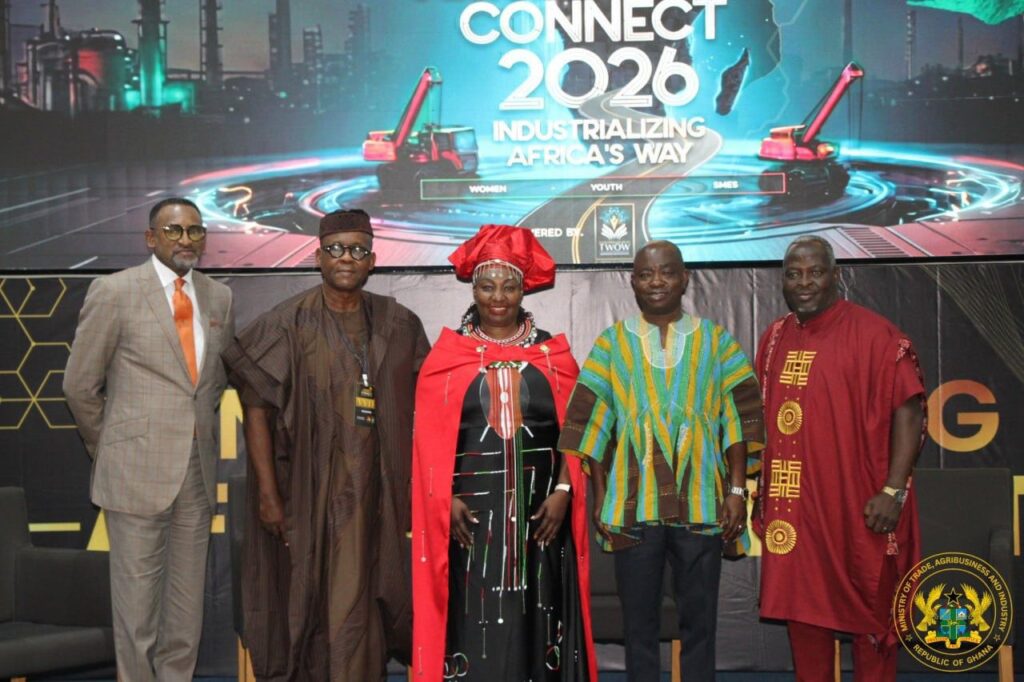
To move past standard pan-African rhetoric and deliver actionable economic progress, the AAGC 2026 operational framework is built upon four foundational pillars: policy and leadership, skills development, job and wealth creation, and knowledge and trade exchange.
MoTAI noted that these pillars are a practical blueprint for Ministries to align their domestic industrial programs with the wider tariff-free trading environment enabled by the African Continental Free Trade Area (AfCFTA). The emphasis on skills development explicitly acknowledged that building physical factories is entirely useless without a highly trained, technically competent domestic workforce to operate them.
Consequently, the conference discussions centered on restructuring national vocational and technical curricula to focus on industrial engineering, automated agri-processing, digital supply chain logistics, and advanced factory operations. This educational realignment ensures that local workforces can effectively absorb and operate modern industrial technologies rather than relying indefinitely on foreign technical experts.
Furthermore, the knowledge and trade exchange pillar targets the historic isolation that has plagued regional markets. Under this framework, cross-border industrial partnerships will be streamlined, allowing a manufacturing firm in Ghana to easily source component inputs or raw agricultural feeds from neighboring states without facing bureaucratic or tariff blockades.
This collaborative approach expands the domestic market size for local factories, providing the necessary economies of scale to compete effectively with cheap imports from Asia and Europe.
A key differentiating feature of the Vice President’s industrial blueprint is the mandatory integration of women and young people into the core ownership structures of the new African economy, as large-scale industrialization programs across the globe have frequently marginalized vulnerable demographic groups, concentrating capital and corporate influence within restricted elite networks.
The government is actively challenging this, arguing that true economic resilience cannot be achieved if the continent’s largest demographic assets are excluded from the wealth-creation cycle. With over 60% of Africa’s aggregate population currently under the age of 25, the youth demographic represents either a devastating socio-economic risk or an unprecedented industrial growth engine.
The AAGC framework intends to steer youth labor away from informal, low-productivity services and route them directly into high-value manufacturing and agribusiness ecosystems, by deliberately focusing on inclusive industrialization.
Diaspora Capital Networks
Amplifying the call for internal structural reform, Her Excellency Nyakan June, the Founder and Global CEO of Twow Africa and the primary Convenor of AAGC Global, delivered a sharp appeal to the African diaspora.
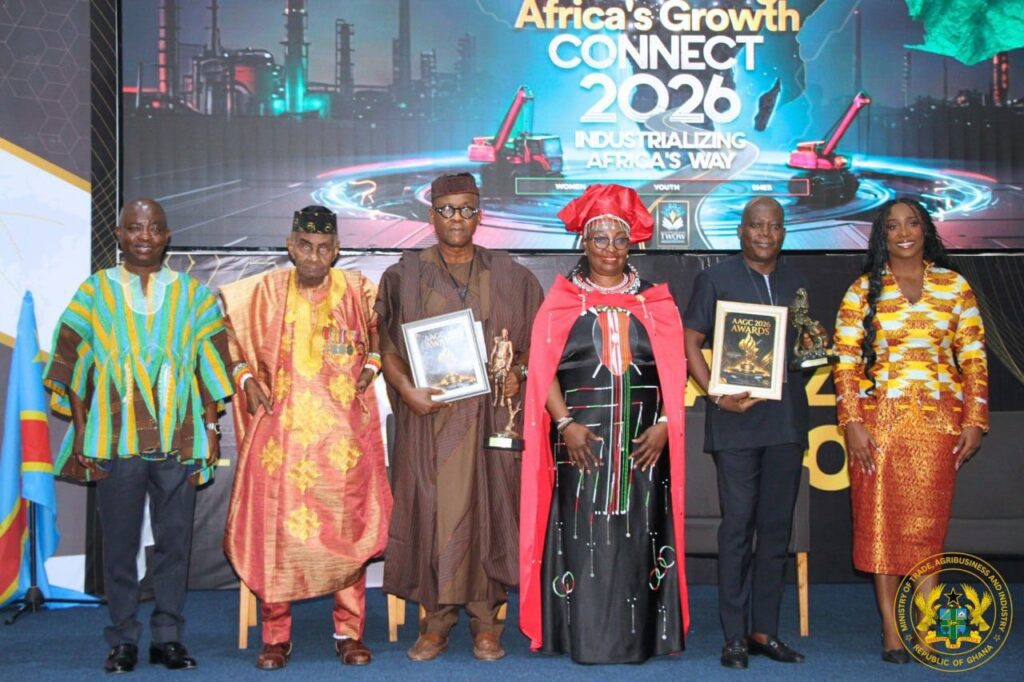
She emphasized that the industrial transformation of the continent cannot rely solely on domestic tax revenue or western developmental aid packages. Instead, it requires the active, coordinated mobilization of diaspora capital, intellectual property, and global market networks.
The diaspora was urged to move past sentimental tourism and cultural engagement, and instead pivot toward direct, high-impact private equity investments in African manufacturing enterprises, specialized engineering firms, and regional logistics hubs.
As the AAGC 2026 sessions concluded at the University of Ghana, the message delivered to international trading partners was unmistakable: Africa is actively closing the chapter on primary commodity exploitation.
Through the systematic deployment of technical skills training, targeted diaspora capital, and the inclusive integration of women and youth into advanced manufacturing, the continent is building a resilient industrial foundation designed to secure food sovereignty, protect national currencies, and deliver sustainable economic prosperity across generations.