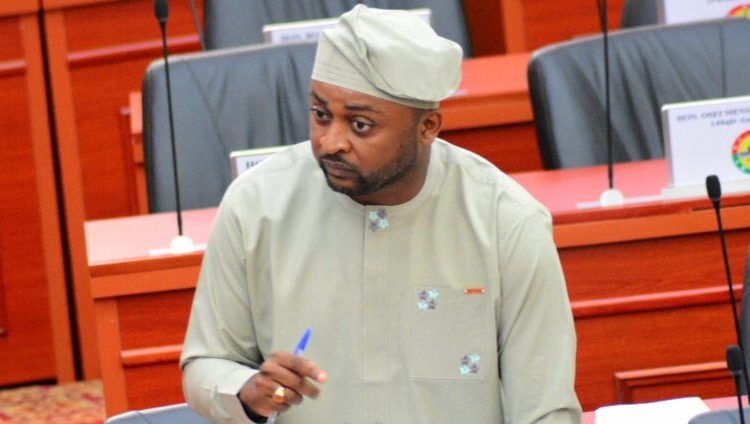
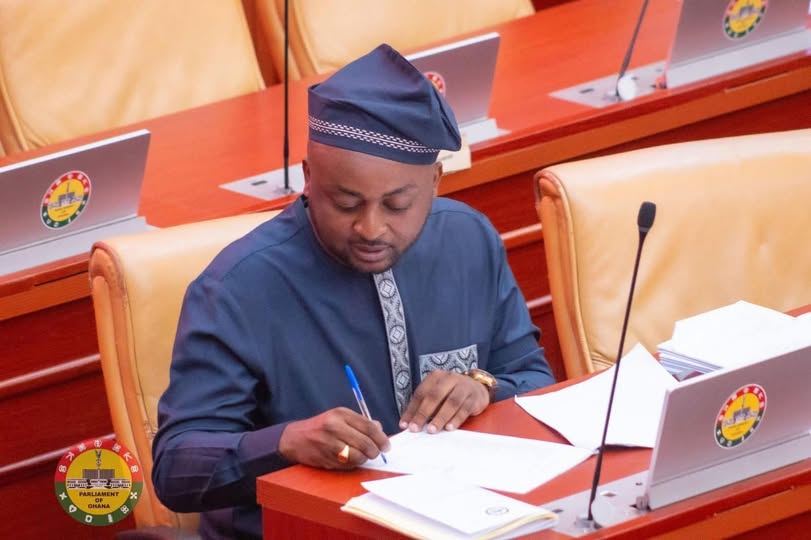
The Member of Parliament for Old Tafo, Hon. Vincent Ekow Assafuah, has raised concerns over what he describes as a growing national emergency following the disqualification of more than 6,000 young Ghanaians from the 2026 security services recruitment exercise due to drug use and mental health challenges.
In a detailed statement issued from Parliament, he said the findings from the recruitment medical screening should compel urgent national reflection on the state of youth wellbeing in Ghana. He argued that the results point to a deeper structural challenge beyond recruitment processes and highlight an emerging public health and security concern.
According to the statement, the medical screening conducted for applicants seeking entry into the security services revealed that out of more than 100,000 candidates who reached the medical stage, over 4,000 tested positive for drug use while a further 2,000 were disqualified due to mental health related conditions.
This brought the total number of disqualified applicants to more than 6,000, representing about six percent of those screened at that stage.
Interior Minister Discloses Screening Outcomes
The findings were first disclosed by the Minister for the Interior, Hon. Mohammed Mubarak Muntaka, during an interview on Pan African Television on 23 May 2026. He explained that the medical screening process for the security recruitment exercise had been expanded to include drug testing and mental health assessments for the first time.

He stated that over 100,000 applicants underwent medical evaluation across the country and that the introduction of the expanded screening was informed by observations within the security services themselves.
The Deputy Chief Executive of the Narcotics Control Commission further clarified that the drug tests could detect substance use within a one month window prior to screening, indicating that the results reflected more than isolated incidents.
MP Warns of Structural Youth Challenges
In his statement, Vincent Ekow Assafuah emphasized that while the figures come from a recruitment exercise, they should not be misinterpreted as a full representation of the national youth population. He noted that the cohort was self selected and comprised individuals who actively sought employment in the security services.
He cautioned against over generalization but stressed that the findings still carry significant weight due to the scale of the exercise. He stated that more than 100,000 young people were assessed across all regions under a uniform medical framework, making it one of the largest coordinated screenings of youth in the country.
He added that the results should be seen as a warning signal rather than a definitive statistical portrait of all young Ghanaians. He said, “These figures are not a judgment on Ghanaian youth. They are a warning signal from a problem we have scarcely begun to measure.”
The MP further argued that the screening likely underestimates the scale of substance use because applicants may have temporarily stopped drug use in anticipation of testing.

Broader Context of Drug Use and Mental Health
The Old Tafo legislator referenced existing data from national and international sources to support his concerns. He noted that studies by the Narcotics Control Commission suggest that about ten percent of young people between the ages of 15 and 35 may be involved in substance abuse.
He also cited research indicating high levels of tramadol misuse among specific populations and mental health studies showing significant prevalence of depression, anxiety, and psychological distress among young people in Ghana.
He pointed out that mental health services in Ghana remain underfunded, receiving less than 1.5 percent of the national health budget, while most psychiatric professionals are concentrated in a few urban facilities. He argued that this reflects a mismatch between the scale of the problem and the resources allocated to it.
Implications for National Security and Public Health
The MP warned that the findings should be treated as a matter of national security, public health, and economic productivity. He noted that the affected youth were applicants to critical security institutions including the Ghana Police Service, Ghana Armed Forces, Ghana Immigration Service, Ghana Prisons Service, and other uniformed services.
He argued that if such a proportion of applicants were found unfit at the medical stage, it raises concerns about broader societal conditions affecting young people outside formal recruitment systems.
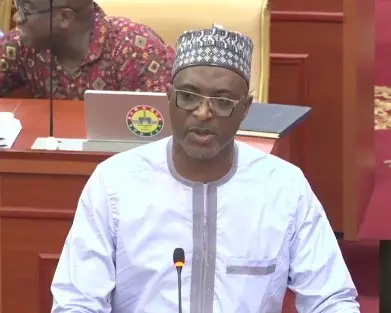
He also referenced earlier remarks attributed to the Interior Minister suggesting that some serving personnel may already be dealing with substance use and mental health challenges, underscoring the urgency of the issue.
Policy Recommendations and Parliamentary Action
Vincent Ekow Assafuah outlined a series of recommendations aimed at addressing the challenges revealed by the recruitment findings.
He called for a multi committee parliamentary inquiry involving the Committees on Youth, Defence and Interior, Health, Education, and Gender to examine the screening process and institutional response.
He also proposed a nationally representative youth health and wellbeing survey to be coordinated by the Ghana Statistical Service and relevant health institutions to generate more comprehensive data on substance use and mental health among young people.
The MP further recommended the public release of anonymised disaggregated data from the recruitment screening exercise, including regional breakdowns and categories of substances detected.
On financing, he urged Parliament to establish a statutory minimum allocation for mental health funding, increasing it progressively from current levels to ensure stronger institutional capacity.
He also proposed a dedicated strategy to address synthetic opioid and tramadol abuse, stronger school based mental health education and screening, and expanded community based treatment and rehabilitation services.
In addition, he called for the creation of a National Youth Mental Health and Substance Use Compact involving government, civil society, religious bodies, and traditional authorities to ensure continuity across political administrations.
A Call for National Response
The Old Tafo MP concluded that the findings should not be treated as routine recruitment statistics but as a national warning requiring coordinated action across all sectors of society.
He emphasized that Ghana’s future depends on the wellbeing of its young population, stating that policy responses must go beyond rhetoric to sustained investment in prevention, treatment, education, and employment opportunities.
He urged Parliament, the executive, and all stakeholders to treat the issue with urgency and unity, stressing that the challenge transcends partisan politics.
READ ALSO: Ghana’s 1200MW Thermal Initiative Firmly on Course – Energy Minister Assures